Back to blog
Article
Air Conditioner in Container House
Admin September 15, 2026
When installing an air conditioner in a container house, it is necessary to select an appropriate model based on the usage scenario, space size, and functional requirements, and pay attention to core parameters such as cooling capacity, installation method, and protection level. Here is a detailed analysis:

1. Select cooling capacity based on space size
The cooling demand of a container house is related to its volume and equipment heat generation.
- Small containers (e.g., energy storage cabinets below 50kWh): With a heat generation of about 200-400W, a cabinet air conditioner with a cooling capacity of 300-400W can be selected, such as the 300W outdoor cabinet air conditioner from Shenzhen Zhongneng Refrigeration Technology Co., Ltd., which is suitable for cooling drone batteries or small power inspection equipment.
- Medium-sized containers (100-500kWh energy storage cabinets): With a heat generation of 800-1500W, a cooling capacity of 1000-1500W is required, such as the container-specific air conditioner from Ruijinte Air Conditioning Equipment Co., Ltd., which can meet the temperature and humidity regulation needs of electrical rooms and unmanned equipment rooms.
- Large containers (energy storage containers above 1MWh): Strong cooling of 3000-7500W is required, such as the BattCool-AF series energy storage container air conditioner, with a rated cooling capacity of up to 20kW, supporting external installation and adapting to cold, hot, and high-altitude environments.
2. Pay attention to installation method and space adaptability
The installation of container air conditioners needs to consider space structural limitations.
- Built-in air conditioners: Such as the Rigao brand DKC3/5KW all-in-one air conditioner, which is suitable for scenarios with sufficient internal space and a need for rapid cooling, but will occupy a certain internal volume.
- External air conditioners: Such as the container energy storage air conditioner from Taibo (Shanghai) Environmental Protection Technology Co., Ltd., which moves the air conditioning system outside the container, saving internal space and being suitable for energy storage projects with high requirements for battery installation density.
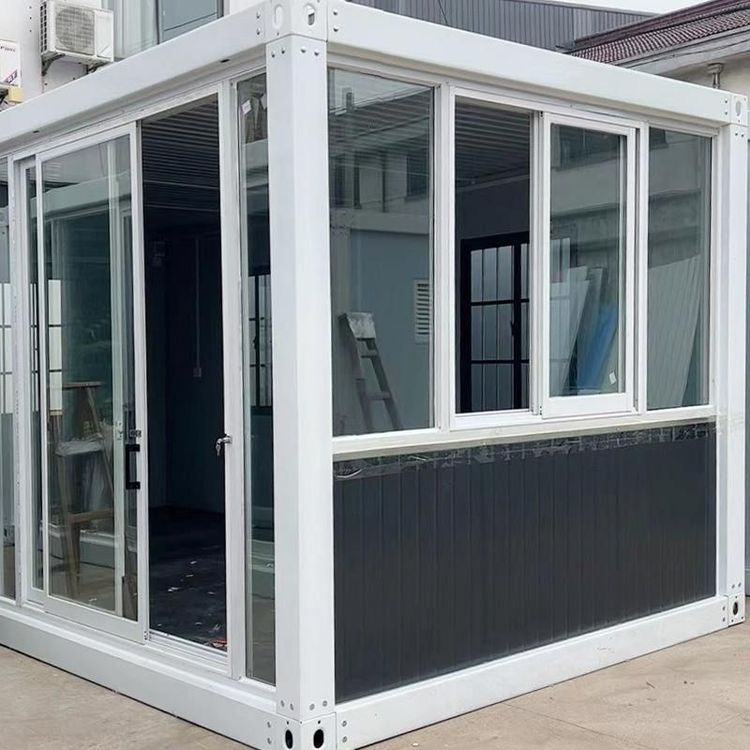
- Mini single-cooling units: For micro containers with an area of less than 10㎡ (such as sentry boxes and coffee pop-up stations), a small 1P single-cooling inverter unit can be selected, with a body thickness of only 60cm. It can be embedded into maintenance seams or interlayers through customized brackets, such as the small 1P single-cooling unit from Lingban brand, which can achieve rapid cooling in 5 minutes.
3. Core functions and protection level
Container air conditioners need to have the ability to adapt to harsh environments.
- Protection level: For outdoor scenarios, a protection level of IP55 or above should be selected, such as the container air conditioner from Taibo Technology, which has waterproof, snowproof, and dustproof functions and strong corrosion resistance.
- Temperature and humidity control: Energy storage containers need to operate continuously throughout the year, and the air conditioner needs to support a wide temperature range (e.g., -30~55℃) and efficient dehumidification design to avoid sharp fluctuations in battery cell temperature.
- Intelligent operation and maintenance: Priority should be given to models that support RS485 communication interfaces, power-off memory, and power-on self-start functions, such as the BattCool-AF series, which can be connected to the energy storage monitoring system for remote temperature control management.
- Energy efficiency and reliability: Select products that have passed CE and 3C certifications, such as the Ruijinte container air conditioner, which adopts full variable frequency control technology, has an annual energy efficiency ratio (AEER) of ≥4.8, and has a design life of more than 10 years for the whole machine.