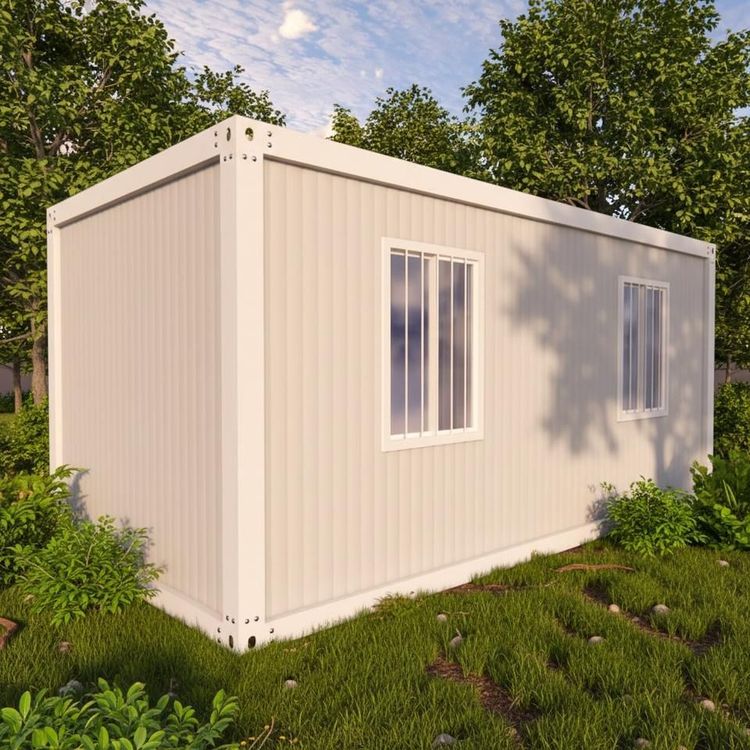
Advantages of Residential Container Houses
The advantages of residential container houses are mainly reflected in their durability, modular design, environmental friendliness and energy efficiency, rapid construction, flexibility and versatility, as well as cost-effectiveness.

Durability: Residential container houses are made of high-strength steel and undergo professional reinforcement, providing excellent structural stability. This design enables them to withstand harsh weather conditions such as strong winds and heavy rain, and even offer reliable safety protection for occupants in the event of natural disasters like earthquakes, ensuring living safety.
Modular Design: Container houses use individual containers as basic units. Each unit can be used independently to meet small-scale residential or office needs, or combined and assembled to form larger building complexes, adapting to different scales and purposes. This modular design makes container houses play an important role in various scenarios such as temporary offices, post-disaster relief housing, and outdoor camps.
Environmental Friendliness and Energy Efficiency: Compared to traditional buildings, residential container houses reduce a significant amount of resource consumption and carbon emissions during construction. Many models are also equipped with solar power generation systems, rainwater harvesting devices, and high-efficiency thermal insulation materials, further reducing energy consumption and achieving the goal of environmental friendliness and energy efficiency.
Rapid Construction: Most components of container houses are prefabricated in factories, and only simple assembly work is required on-site. This construction method significantly shortens the construction period, making it particularly suitable for emergency housing needs or temporary projects, and quickly providing living or office space for people.
Flexibility and Versatility: Residential container houses are suitable for various scenarios, such as shops and offices in urban commercial settings, rural residential needs, and temporary event venues. Their flexibility and versatility meet diverse market demands, providing convenient solutions for different fields.
Cost-effectiveness: Compared to traditional buildings, residential container houses have lower costs and can be reused or relocated. This characteristic reduces long-term investment risks, making container houses more economically advantageous in scenarios with high temporary or periodic demands.