What Are the Other Advantages of Mobile Toilets
Mobile toilets have the following advantages:

1. High mobility, adaptable to site changes The core advantage of mobile toilets lies in their mobility, enabling flexible relocation according to site requirements. For example, during peak tourist seasons in Dalian, mobile public toilets are deployed in high-traffic areas to alleviate toilet pressure. Shanxi Jinci Scenic Area transformed buses into mobile men's toilets and temporarily adjusted the functions of fixed toilets, resulting in a nearly 70% increase in daily reception capacity. This flexibility avoids resource waste caused by the demolition or site changes of traditional fixed toilets, making it particularly suitable for temporary events, construction sites, or scenarios with seasonal fluctuations in passenger flow.
2. Diverse treatment methods, suitable for different environments Mobile toilets can choose from various treatment technologies based on usage scenarios, including but not limited to:
- Microbial degradation: Decomposes excreta through specific bacterial strains, reducing sewage discharge, suitable for water-scarce or ecologically sensitive areas;
- Vacuum adsorption: Utilizes a negative pressure system to reduce water consumption, suitable for arid regions or high-altitude scenarios;
- Packaging treatment: Seals and stores excreta for regular removal, preventing soil or water source pollution. This technological diversity enables them to overcome geographical limitations and function in areas where traditional toilets are difficult to cover, such as deserts and mountains.
3. Small footprint, saving land resources Compared to traditional fixed toilets, mobile toilets have a compact structure, with the footprint of a single toilet typically less than one-third of that of a traditional one. For example, the mobile toilets in Shanxi Jinci Scenic Area have improved reception capacity within limited space through optimized layout. Additionally, their modular design supports rapid assembly and disassembly, allowing for overall relocation without damaging the original environment in case of road construction or urban planning adjustments, significantly reducing land occupation costs.
4. Fashionable appearance, enhancing public space quality Mobile toilets break free from the monotonous design limitations of traditional toilets, adopting streamlined appearances, color schemes, or bionic shapes that blend better with the landscapes of tourist attractions, parks, and other venues. For example, some scenic areas design mobile toilets as ancient-style buildings or natural element shapes, meeting functional needs while also serving as decorative elements in the environment, enhancing the visitor experience.
5. Low construction cost, high cost-effectiveness Mobile toilets are usually factory-prefabricated products that can be installed and used on-site, eliminating the complex processes of site selection, material procurement, and construction required for traditional toilets. According to statistics, their comprehensive cost is 30%-50% lower than that of traditional toilets, and the construction period is shortened to a few days. Additionally, the modular design supports expansion or reduction in scale as needed, further optimizing resource investment.
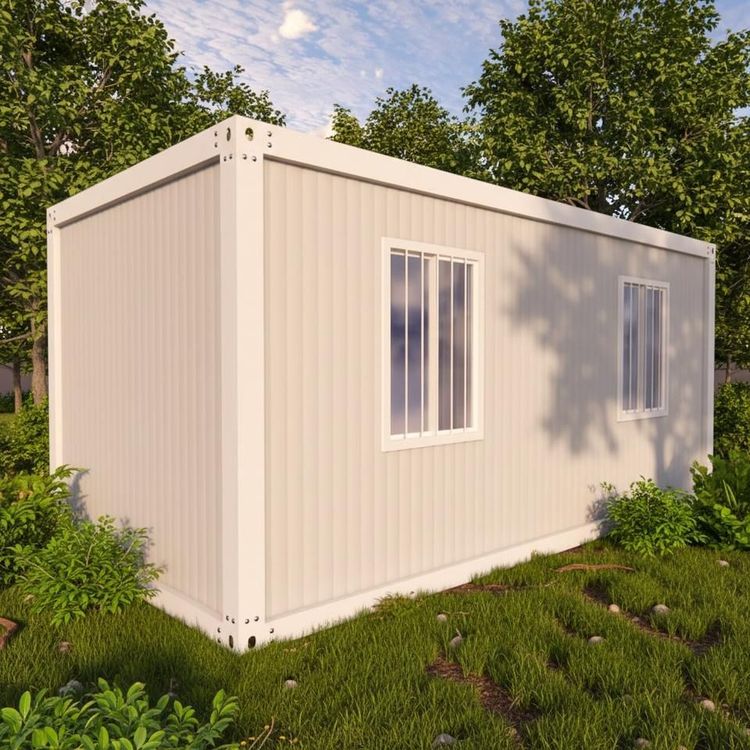
6. Outstanding environmental performance, reducing pollution Mobile toilets use environmentally friendly materials (such as reinforced EPS panels) to construct walls, with sealed and large-capacity fecal storage tanks that effectively control odor diffusion. Some models are equipped with biological degradation or circulation filtration systems to achieve harmless treatment of excreta, preventing sewage leakage from polluting soil and groundwater, in line with sustainable development concepts.