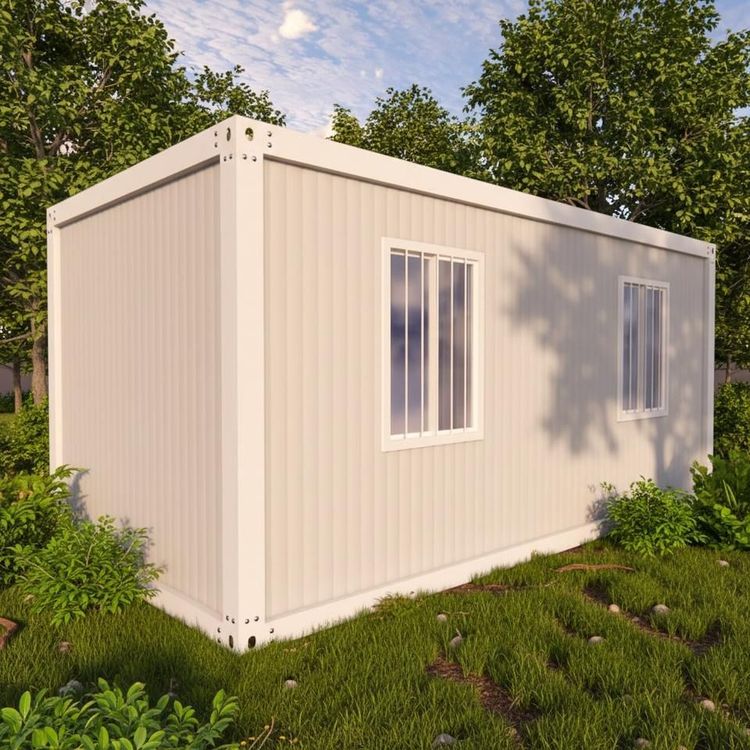
Advantages of Mobile Toilets
The advantages of mobile toilets are mainly reflected in multiple aspects such as convenience, environmental protection, cost-effectiveness, safety, applicability, maintainability, customization, deployment speed, hygiene standards, aesthetic design, and social benefits.

Convenience and Flexibility: Mobile toilets do not require a fixed foundation and can be quickly installed, disassembled, and transported, making them suitable for temporary use or scenarios with frequent site changes, such as construction sites and large-scale events, significantly improving resource allocation efficiency.
Environmental Protection: Equipped with advanced sewage treatment systems, some of which use solar power for electricity, mobile toilets achieve sewage recycling. Through water-saving technologies (such as high-pressure air-water flushing and foam sealing), water usage is reduced by 80%-90%. Microbial degradation technology transforms excreta into harmless substances, while vacuum toilets reduce odors and energy consumption. The selection of materials emphasizes recyclability and corrosion resistance, comprehensively reducing environmental burdens.
Cost-Effectiveness: Modular design reduces initial investment by eliminating the need for civil engineering and pipeline laying. The rental model further compresses short-term costs. Automated cleaning and low failure rates reduce maintenance expenses, with degradation-type toilets having a cleaning cycle of up to 1-2 years, significantly improving resource utilization.
Safety: Manufactured from high-strength materials, mobile toilets possess compression and wind resistance capabilities, adapting to complex environments. The internal layout is reasonable, equipped with facilities such as sinks and ventilation systems to enhance the user experience.
Wide Applicability: Mobile toilets cover diverse needs in construction sites, large-scale events, tourist attractions, parks, highway service areas, and disaster relief areas, especially suitable for regions with high population density or weak infrastructure.
Easy Maintenance: The cleaning and disinfection process is simplified, with most models supporting automated operations and having a low failure rate, ensuring hygiene standards are met.
Customization: The appearance design and internal facility configuration can be adjusted according to needs to meet the personalized requirements of specific scenarios.
Rapid Deployment: Under mass production conditions, a single toilet can be designed and manufactured in just one week. In emergency situations (such as disaster relief), installation and disassembly can be completed within a few hours, saving time and labor costs.
High Hygiene Standards: Odor control systems and ventilation equipment ensure a clean and comfortable use environment, while compartment design enhances privacy protection.
Aesthetic and User-Friendly Design: The exterior offers a variety of color and material options to blend into the environment. The interior is equipped with non-slip floors, barrier-free facilities, and lighting systems, with high-end models integrating sinks to enhance comfort.
Social Benefits: Mobile toilets improve public health conditions and reduce the risk of disease transmission. They occupy a small area, alleviating land pressure. They also promote the modernization and humanization of public facilities, enhancing social civilization levels.