
Back to blog
Article
Advantages and Disadvantages of Prefabricated Houses
Admin September 18, 2026
The advantages of prefabricated houses include fast construction speed, lower cost, excellent environmental performance, stable quality, and good earthquake resistance; the disadvantages include poor integrity, short service life, easy leakage, poor thermal insulation, poor sound insulation, limited design flexibility, quality risks, and high costs for some types.
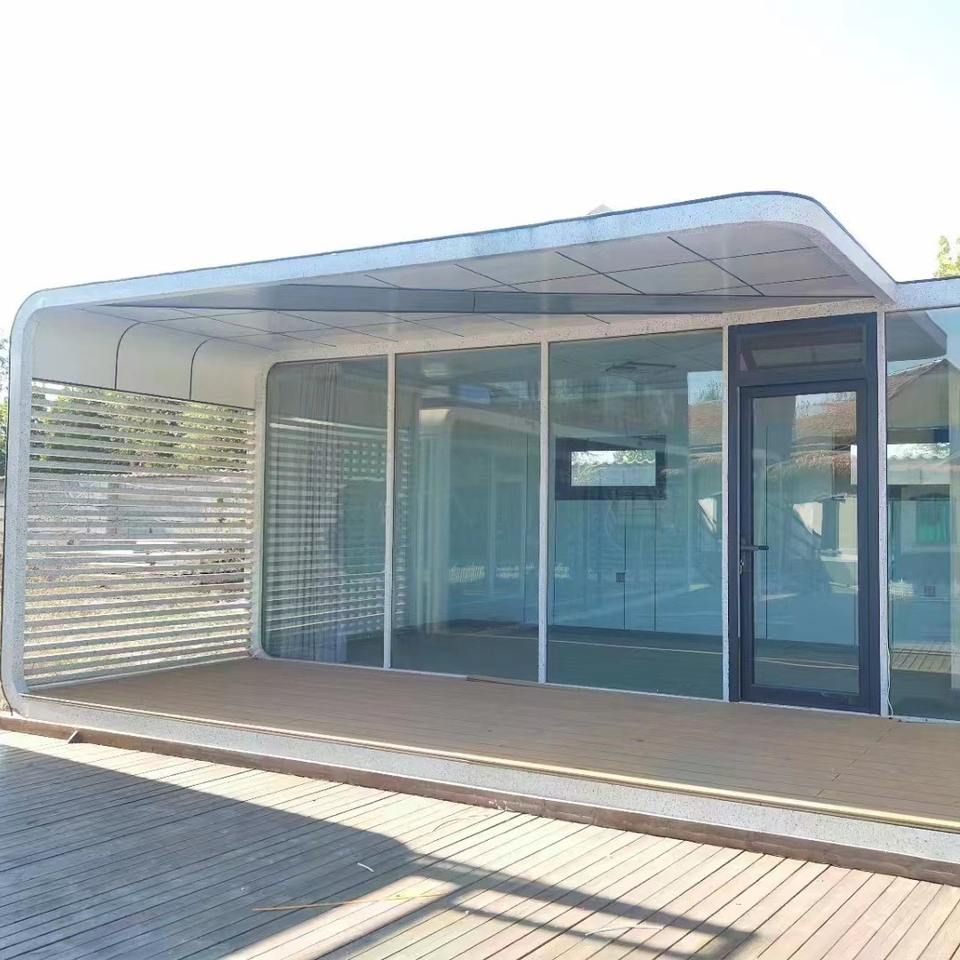
Advantages:
- Fast Construction Speed: Components are prefabricated in the factory in advance, and on-site assembly is highly efficient, 60%-70% faster than traditional construction. For example, modular components can be shipped from the factory in 7 days, and the house frame can be erected within a few days.
- Lower Cost: The cost of the main structure is about 30% lower than that of a brick house, saving an average family 40,000-50,000 yuan. There is less material waste, and the later maintenance cost is 40% lower than that of traditional houses. The cost of prefabricated slabs is about 60%-70% of that of cast-in-place slabs.
- Outstanding Environmental Performance: The recycling rate of construction waste reaches 40%, and carbon emissions are reduced by 50%. Some projects have obtained international environmental certifications.
- Stable Quality: Standardized factory production ensures uniform strength grades of components. Local damage can be replaced individually, making maintenance convenient.
- Good Earthquake Resistance: Lightweight materials are used, and the structural self-weight is 20%-30% lighter than that of brick-concrete structures, with strong resistance to deformation, suitable for earthquake-prone areas.
Disadvantages:
- Poor Integrity and Earthquake Resistance: The splicing of prefabricated slabs results in poor structural firmness. Slight vibrations may loosen the joints, and earthquakes can easily cause dislocation or collapse.
- Short Service Life: Wall cracks and ceiling leakage may occur within 30 years. Old prefabricated houses are often identified as dangerous buildings, with high repair costs.
- High Leakage Risk: The leakage rate of exterior wall panel seams is nearly twice that of traditional buildings, requiring regular leakage prevention treatment.
- Poor Thermal Insulation: The thermal insulation performance of wall materials is insufficient, resulting in cold winters and hot summers, and low comfort in extreme weather.
- Poor Sound Insulation: The thickness of prefabricated slabs is limited, resulting in poor sound insulation performance and affecting living privacy.
- Low Design Flexibility: The architectural appearance is单一 (monotonous), with a prominent contradiction between standardization and diversification. Currently, it is only suitable for buildings up to three stories. The color difference of the exterior facade may reach 15%-20% after 5 years, requiring frequent maintenance.
- Quality Risks: When construction is not standardized, the probability of foundation settlement or wall cracks within 5 years can reach 7%. Problems are more prominent in low-temperature construction environments, and later maintenance costs may account for 25% of the construction cost.
- High Cost for Some Types: Panel assembly-type buildings use a large amount of steel, with construction costs 10%-15% higher than those of brick-concrete structures.
Related



