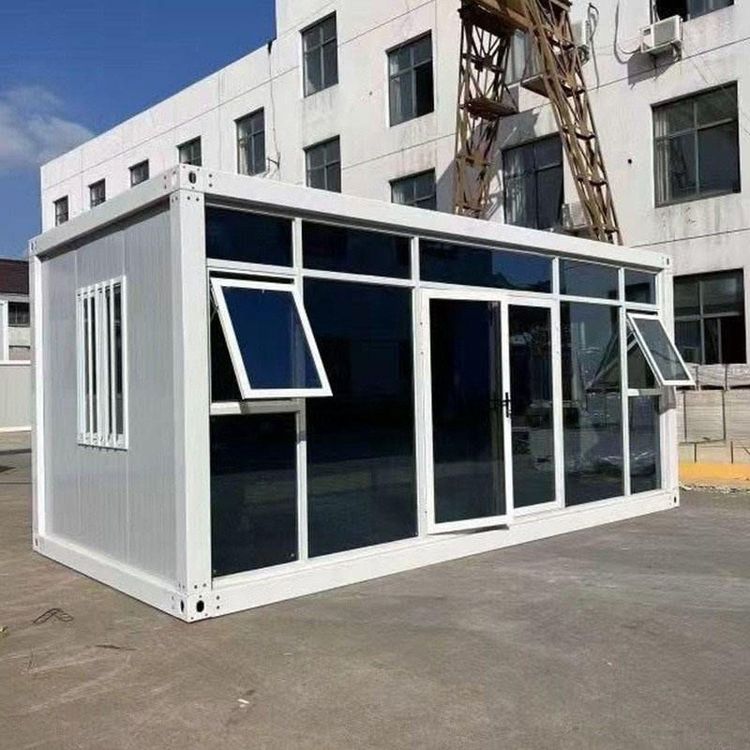
Advanced Mobile Toilet Rental Promotion
The promotion of advanced mobile toilet rentals should focus on their functional features, application scenarios, and core advantages, emphasizing modular design, technological adaptability, and dynamic service capabilities.

1. Modular Design Enhances Spatial Adaptability
Advanced mobile toilets feature a modular structure, with each unit measuring approximately 2-4 cubic meters. They can be transported by standard trucks and are equipped with adjustable legs at the bottom, enabling stable use on uneven surfaces such as grass and gravel. Some folding structures can reduce transport volume by 60%, making them suitable for narrow alleys, construction trestles, and other special terrains. For example, during the renovation of old urban areas or outdoor activities in mountainous regions, their flexible deployment capabilities can quickly fill coverage gaps left by fixed public toilets, avoiding service disruptions caused by terrain limitations.
2. Water-Saving and Sewage Disposal Technologies Overcome Environmental Constraints
To meet the sewage disposal needs of different scenarios, advanced mobile toilets offer a variety of technological solutions:
- Vacuum toilet systems: Require only 0.5-1 liters of water per flush, achieving a water-saving rate of over 80%, suitable for water-scarce regions or temporary events;
- Biodegradation technology: Uses microorganisms to decompose feces, enabling zero-emission treatment without the need for external sewage networks, ideal for wilderness expeditions, music festivals, and other infrastructure-free settings;
- Chemical reagent circulation systems: Reduce sewage production and lower maintenance costs through reagent disinfection and recycling.
3. Health and Safety Management Enables Intelligent Operation and Maintenance
Some service providers use “electronic health records” to track equipment usage data and optimize maintenance schedules. For example, real-time monitoring of waste capacity and usage frequency allows for dynamic scheduling of cleaning vehicles, preventing sanitation issues caused by toilet congestion during large events. Additionally, environmental control modules such as negative-pressure intelligent deodorization systems, anti-slip floors, and temperature regulation ensure a high-quality user experience, meeting stringent standards for high-end events or medical emergency scenarios.
4. Dynamic Service Models Break Through Traditional Infrastructure Limitations
The rental model allows the number of sanitation facilities to be dynamically adjusted according to demand curves, shifting from “fixed-point coverage” to “on-demand response.” For example, during marathons, toilets can be flexibly deployed based on peak人流 (foot traffic) at starting points, finish lines, and aid stations, then quickly removed afterward to avoid resource idleness. In temporary markets, construction sites, and other settings, their self-contained nature—requiring no external water or electricity connections and occupying minimal space—enables rapid supplementation of public service gaps while reducing long-term construction costs.
Core Promotional Value: Advanced mobile toilet rentals leverage technological adaptability, spatial flexibility, and service dynamism to cover scenarios beyond the reach of fixed public toilets, providing efficient and eco-friendly sanitation solutions for outdoor events, emergency response, and urban renewal.