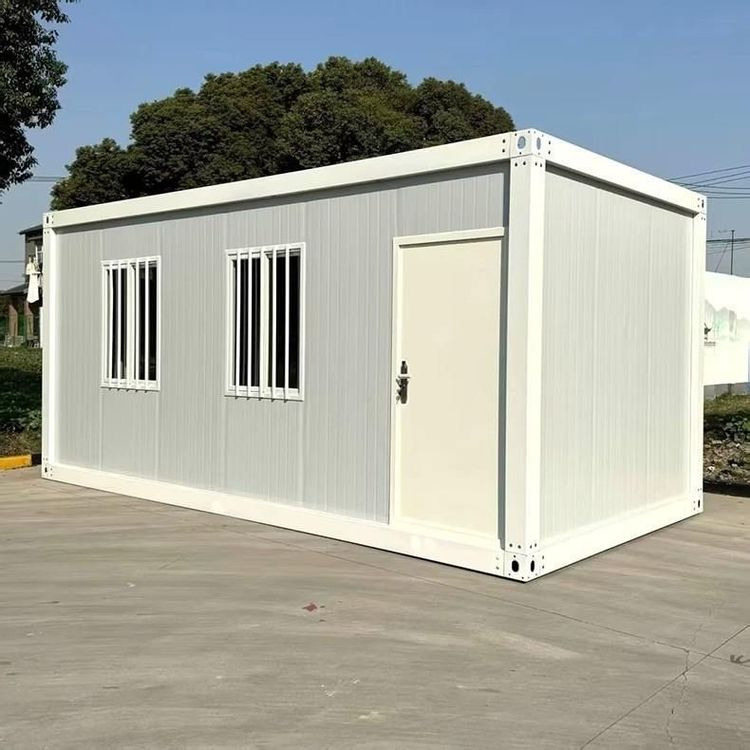
100 Square Meter Prefabricated House
A 100 square meter prefabricated house features rapid construction, controllable costs, environmental protection, energy efficiency, and high flexibility, but attention should be paid to its monotonous appearance and sound insulation and heat preservation issues.

Efficient Construction Speed
The core advantage of prefabricated houses lies in their efficient construction speed. Their components are prefabricated in factories and only need to be assembled on-site, shortening the construction period by more than 50% compared to traditional buildings. For example, a 100 square meter prefabricated residence usually takes only 1-2 months to complete, while traditional buildings may take 3-6 months or even longer. This rapid construction characteristic makes it suitable for emergency housing needs or short-term projects.
Controllable and Lower Costs
The construction cost of prefabricated houses is significantly lower than that of traditional buildings. The cost of an ordinary prefabricated house typically ranges from 1,000 to 3,000 yuan per square meter, while the cost of a traditional high-end residence may exceed 5,000 yuan per square meter. For example, the price of a 100 square meter light steel villa prefabricated assembly building starts at 1,280 yuan per square meter, offering stronger overall cost controllability and being suitable for users with limited budgets.
Outstanding Environmental Protection and Energy Efficiency
Prefabricated houses excel in environmental protection and energy efficiency. Factory production reduces dust, noise, and waste pollution from on-site construction, while the use of recyclable materials such as light steel and wood reduces resource consumption. Some high-end prefabricated residences also integrate solar panels, insulation materials, and intelligent energy-saving systems, further improving energy utilization efficiency and aligning with the development trend of green buildings.
High Flexibility and Mobility
Modular design endows prefabricated houses with a high degree of flexibility. Users can customize the house layout according to their needs and even disassemble and reassemble it to other locations in the future. This characteristic is particularly practical in scenarios requiring frequent relocation, such as temporary offices, tourist resorts, or disaster emergency housing. Container houses and light steel structure houses are typical representatives of this advantage.
Limitations to Note
Despite their obvious advantages, prefabricated houses also have some limitations. For example, the appearance of overall prefabricated concrete houses is relatively monotonous and may not meet individual aesthetic needs; for long-term residence, it is recommended to install sound insulation cotton and insulation boards to improve living comfort; in addition, waterproofing should be done well at roof joints to avoid leakage problems. These details require special attention during the design and construction phases.