
Zhejiang Mobile Toilet Container
The Zhejiang mobile toilet container is based on a standard container structure, featuring both mobility and reusability, making it suitable for sanitation facilities in various temporary or mobile locations.
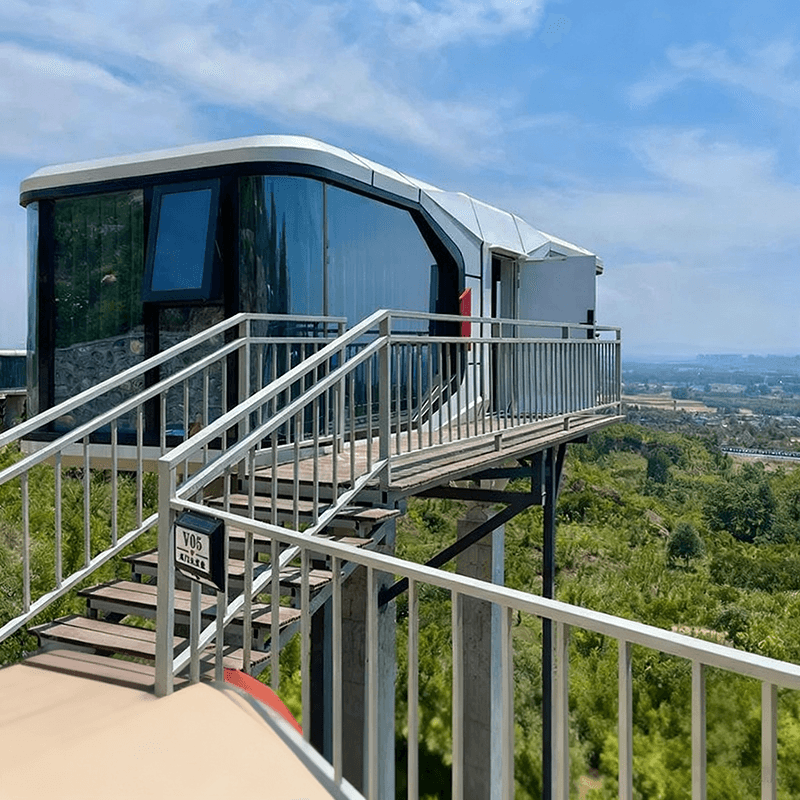
Structure and Design Features
The main frame is made of steel, ensuring a sturdy and durable structure. The external dimensions are consistent with standard containers, facilitating easy transportation and stacking. Internally, functional areas are divided according to needs, such as toilet areas and handwashing areas. The stalls are equipped with ceramic or stainless steel toilets or squat toilets, while the handwashing areas are furnished with sinks, mirrors, and other facilities, with some designs considering accessibility needs. The interior walls and floors are made of waterproof materials for easy cleaning and maintenance. The ventilation system ensures air circulation through windows or exhaust fans, and energy-efficient lighting is used.
Functions and Uses
It is primarily used to meet sanitation needs in temporary or mobile locations. On construction sites, it provides basic sanitation facilities for workers; during large-scale festivals or events, it is temporarily set up to meet the needs of concentrated crowds; in temporary markets or exhibition activities, it serves as a supporting service facility; and in natural disasters or emergencies, it can be quickly deployed to provide emergency sanitation services.
Installation and Maintenance Procedures
Before installation, site conditions need to be evaluated to ensure a flat ground and easy vehicle access. The installation process includes lifting and positioning, connecting water and electricity pipes, etc. Water and electricity connections usually use external interfaces, and some designs are equipped with water storage tanks and solar power systems. Maintenance tasks include daily cleaning, garbage removal, and facility inspections. Cleaning personnel regularly disinfect interior surfaces, replenish sanitary supplies, and regularly inspect pipes and electrical systems. Waste disposal is achieved through septic tanks or mobile cleaning services.
Material and Environmental Characteristics
Material selection focuses on durability and environmental friendliness. The main structure uses recyclable steel, and interior decoration materials often use easy-to-clean, eco-friendly panels. Some designs incorporate water-saving technologies, and waste disposal uses biodegradation technologies or centralized collection methods. The reusability of containers extends the product lifecycle.
Cost and Benefits
Costs include initial purchase expenses and subsequent operational expenditures. Purchase expenses vary from tens of thousands to hundreds of thousands of yuan depending on specifications and configurations, while operational expenses involve maintenance, cleaning, water and electricity consumption, etc. Benefits include improving sanitation levels at locations, reducing open defecation, improving environmental quality, enhancing participant satisfaction in commercial activities, indirectly promoting event effectiveness, and reducing replacement frequency due to durability in long-term use.



