
Prefabricated Housing for Young People
Young people's acceptance of prefabricated housing varies by type. Traditional prefabricated panel houses are being shunned due to poor living experiences, while new modular prefabricated houses may become a new choice, though their acceptance in rural China is limited.
Traditional Prefabricated Panel Houses: Gradually Shunned by Young People
Traditional prefabricated panel houses, born between the 1950s and 1980s, once provided shelter for many families. However, they now face issues of aging and poor living experiences. Existing prefabricated panel houses generally suffer from weak earthquake resistance, poor sound insulation and thermal insulation, leading to a transformation in living experience from 'comfortable' to 'uncomfortable'. Specifically, poor sound insulation allows external noise to easily penetrate indoors, affecting occupants' rest and daily life. In summer, it is sweltering, and in winter, it is freezing cold, as the poor thermal insulation makes it difficult to maintain a comfortable indoor temperature. The outdated floor plan design fails to meet modern young people's needs for diverse and personalized living spaces. The lack of elevators or insufficient natural light makes it inconvenient for young people living on higher floors to go up and down, and insufficient lighting makes the indoor environment dim, affecting mood and health. These factors have led young people to grow tired of living in such environments.
New Modular Prefabricated Houses: Popular Overseas, Limited Acceptance in Rural China
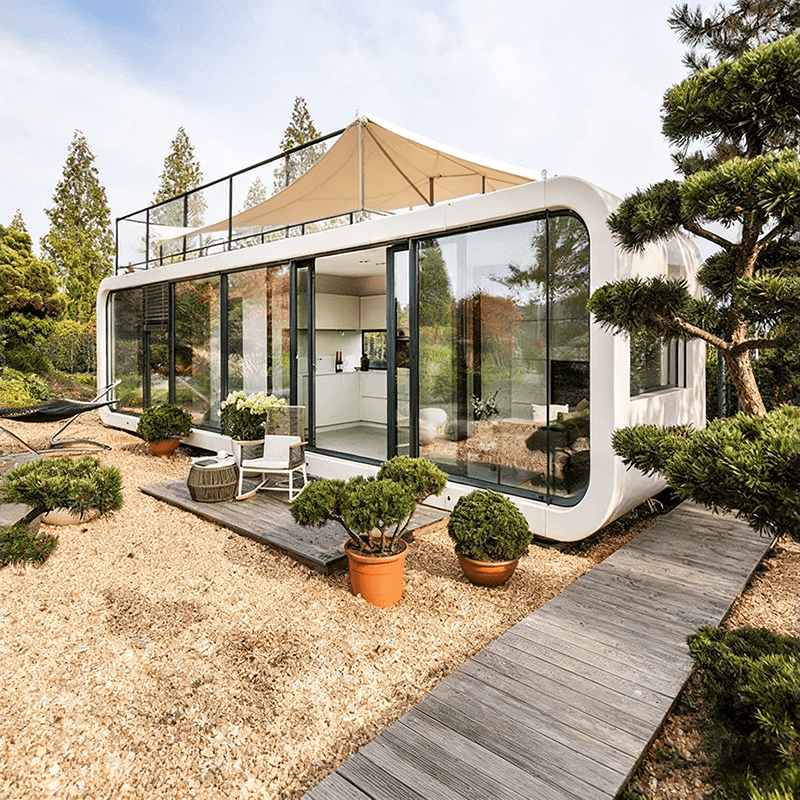
China's 'prefabricated houses' (modular buildings), which are currently all the rage overseas, differ from traditional prefabricated panel houses. Modular buildings are disassembled into independent modules and prefabricated in factories before being transported to the site for assembly. They offer advantages such as short construction periods, controllable quality, energy efficiency, environmental protection, and ease of maintenance. For example, a set of prefabricated houses produced in China can be delivered to your doorstep for just 200,000 RMB, making them popular in European and American countries due to their cost-effectiveness. Many bloggers showcase their new homes on social media, sparking a buying frenzy. This new type of prefabricated house may offer young people a new housing option. However, it has not yet become widespread in rural China, where the general public is not particularly enthusiastic about it. The main reasons are the quality gap compared to self-built houses, insufficient structural stability, and the tendency for cracks and water leakage at module connections, which to some extent affect rural young people's acceptance of them.



