
Yangzhou Steel Structure Mobile Toilet
The steel structure mobile toilets in Yangzhou are mainly produced by multiple professional manufacturers, featuring various types, structural characteristics, and strict quality inspection processes.
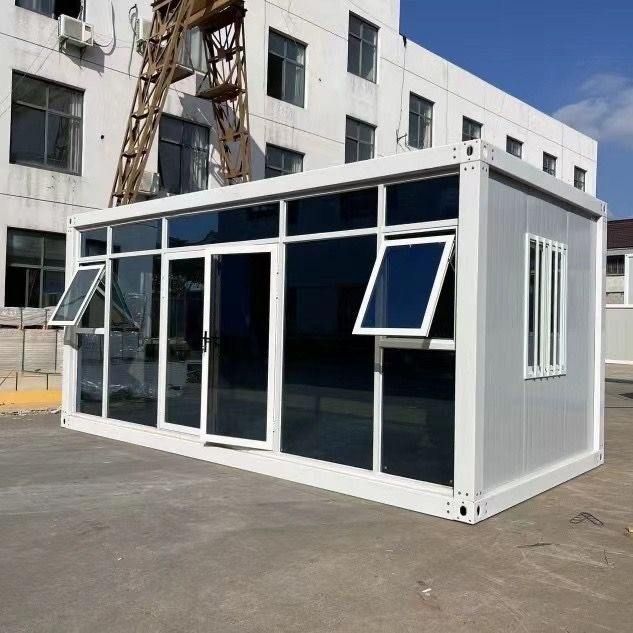
Manufacturers and Product Types: The Lvjie Sanitation Mobile Toilet produced by Yangzhou Lvjie Public Facilities Co., Ltd. is an assembled environmental-friendly restroom that can be customized. It is a smart environmental-friendly toilet with dimensions of 260018002800mm. The materials include steel structures, integrated wall panels, and fiberboard, among others. It has advantages such as mobility, sound insulation and warmth retention, and durability, with a service life of 10 - 30 years. It is suitable for outdoor areas, streets, municipal areas, scenic spots, etc. Yangzhou Yuyuan Environmental Protection Technology Co., Ltd. specializes in the design and production of mobile public toilets, offering a wide range of product types, including foam-sealing type, biodegradable type, water-flushing type, vacuum self-priming type, vehicle-mounted traction type, and waterless packing type. In addition, Jinhua Xin'an Steel Structure Engineering Co., Ltd. also provides customized design solutions for mobile restrooms and other products, covering a one-stop service of design, production, sales, and installation.
Structural Characteristics: The steel structure mobile toilet is composed of a frame structure welded from steel. The bottom is generally welded with channel steel or I-beams, and the columns are made of square steel. Wall materials are installed on the wall foundation, including color steel plates, metal carved plates, aluminum-plastic plates, and anti-corrosion wood. This frame structure meets the requirements for hoisting, facilitating easy movement and installation.
Quality Inspection: To ensure the quality and safety of steel structure mobile toilets, multiple inspections are carried out. In terms of building and structural verification, handheld laser rangefinders and steel tapes are used to conduct sampling verification of the distribution of toilet walls, the positions and dimensions of doors and windows, and other building layouts, as well as the axis dimensions and heights of structures. Structural damage inspection checks whether the main load-bearing components show obvious aging, deformation, etc., whether the joints of load-bearing steel components are abnormal, whether the connections between steel beams and steel columns are reliable, and whether the welds are intact without obvious cracks. Structural safety calculation and analysis are carried out based on relevant codes and on-site investigations, considering various loads and material parameters, combined with on-site inspection data, original design and construction information, and using PKPM software for bearing capacity calculation and analysis. Steel material performance inspection mainly involves non-destructive testing of welds in the steel structure part and testing the mechanical properties of the steel to measure its tensile strength, yield strength, and impact test.



