
Xingtai Container House Market
The Xingtai container house market is primarily characterized by second-hand container trading, customized integrated housing production, and the expansion of diverse application scenarios, forming a full-chain service system covering sales, leasing, modification, and installation.
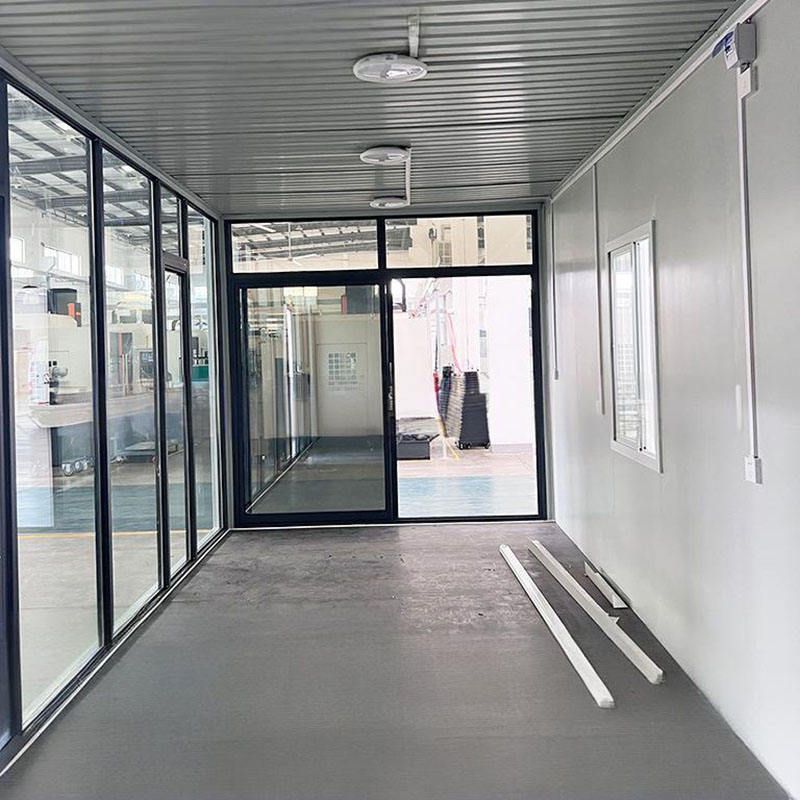
1. Active Second-Hand Container Trading with Wide-Ranging Services
The second-hand container market in Xingtai is well-stocked, offering standard sizes such as 6-meter and 12-meter containers, as well as specialized types like refrigerated, frozen, and special containers, meeting basic needs for construction site housing, warehousing, and cold chain logistics. Several companies provide integrated rental and sales services, such as Shanghai Lanzhixin Industry and Zhongshuo Containers, supporting spot supply across Xingtai with rents as low as 6 yuan per day. They also offer platform-guaranteed transactions to reduce user risks. Additionally, local companies like Handan Zhifan Integrated Housing Co., Ltd. provide second-hand container recycling, modification, and customization services, forming a resource recycling chain.
2. Specialized Integrated Housing Enterprises with Product Upgrades
Local integrated housing enterprises in Xingtai, represented by Tiancheng Jiaye and Hebei Jiacheng, drive product upgrades from traditional mobile homes to high-end forms such as container houses, foldable mobile homes, and light steel villas. For example, Tiancheng Jiaye Integrated Housing Hebei Co., Ltd. specializes in the production and sales of container houses and light steel buildings, with business covering steel structure fabrication, building material sales, and import-export, possessing full-chain service capabilities. Hebei Jiacheng Integrated Housing Co., Ltd. emphasizes the four major advantages of containers: structural stability, easy assembly and disassembly, low carbon and environmental protection, and wide application scenarios. Its products have been applied in residential buildings, office buildings, agricultural exhibition halls, and other architectural fields, receiving policy support from countries such as the UK, Japan, China, and France.
3. Enhanced Technical Standards to Meet Diverse Needs
The market demands increasingly stringent quality standards for integrated housing, with core evaluation criteria including:
- Production Process: Adoption of full-weld roofing techniques to prevent leaks, with fire-resistant, flame-retardant, and thermal insulation properties;
- Material Configuration: Use of thickened hot-dip galvanized square steel frames, 75mm rock wool color steel plates, and double-layer waterproof roofing to enhance structural lifespan and comfort;
- Customization Capabilities: Support for personalized adjustments in size, door and window positions, balcony size, etc., with pre-installed strong and weak current wiring and kitchen and bathroom plumbing for "move-in ready" convenience. Such products (e.g., "internet-famous containers") can be applied in homestays, commercial streets, campsites, live streaming studios, and other scenarios, supporting overall lifting and relocation to meet low-carbon operational needs.
4. Fragmented Market Landscape with Enterprise Qualifications and Experience as Key Competitive Factors
The Xingtai container house market has numerous participants with significant size disparities. For example, Tiancheng Jiaye is a micro-sized sole proprietorship with only one employee, while companies like Hebei Jiacheng expand their influence through multi-regional layouts (e.g., Beijing, Tangshan, Handan). When selecting suppliers, it is crucial to examine their qualifications (e.g., whether they cover the full chain of container manufacturing and design services) and the experience of their core teams (e.g., Xingtai Yunsheng Integrated Housing Co., Ltd. with over 30 years of industry experience) to avoid cost overruns and quality risks.



