
Wuhan Mobile Toilet Design
The design of mobile toilets in Wuhan focuses on multiple aspects such as material technology, functionality, appearance, and intelligence to meet urban needs.
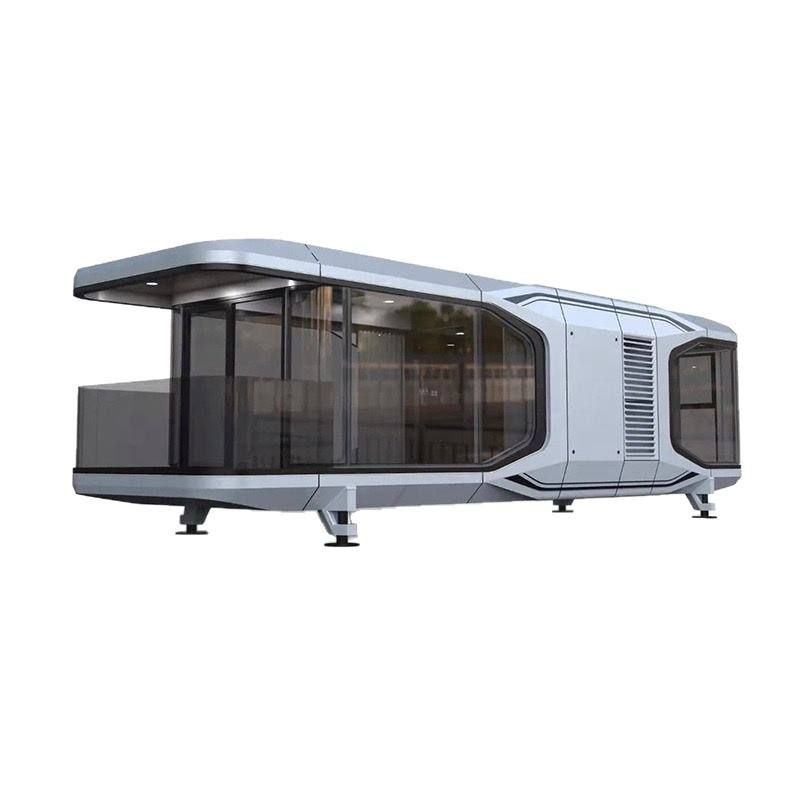
In terms of materials and technology, the box body is made of double-layer sandwich panels filled with polyurethane or rock wool in the middle. The interlayer air insulation is used to delay heat transfer. The high closed-cell rate of polyurethane reduces condensation water generation, and the surface coating is UV-resistant. There are two technologies for the sewage discharge system: vacuum negative pressure and microbial degradation. The vacuum system significantly saves water, while microbial degradation is suitable for sites without a water source. For structural components, trapezoidal reinforcing ribs are used at key parts. The chassis is made of thick checkered steel plates with pressure relief holes reserved, and the top lifting rings are embedded in I-beam skeletons. The ventilation system combines forced convection and natural exhaust. The fan is triggered by a humidity sensor, and the exhaust pipes are made of UPVC with a smooth inner wall. For rust prevention, a double-layer protection of hot-dip galvanizing and epoxy sealing paint is used, and key welds are additionally brushed with aluminum-powder-containing zinc-rich paint.
In terms of functional design, taking the public toilet in Ziyang Park, Wuchang, Wuhan as an example, before the renovation, there were problems such as an imbalance in the ratio of side compartments and single functionality. After the renovation, the functions were improved, with third toilets and baby care rooms set up to facilitate the use of the elderly, children, and families with babies, reflecting a human-centered design concept.
In terms of appearance design, also taking the public toilet in Ziyang Park as an example, the white exterior wall is paired with hollowed-out textures that allow light to pass through, creating a mottled light and shadow effect. The exterior facade uses perforated aluminum plate technology to replicate the texture of metasequoia tree shadows, turning the toilet into a clean white landscape feature in the park. At the same time, to protect the metasequoia forest, during construction, 20 metasequoias with an age of over 10 years were preserved in their original state, and two metasequoias were directly incorporated into the open space inside the public toilet, achieving harmonious coexistence between the building and nature.
In terms of intelligent design, the public toilet in Ziyang Park is equipped with an intelligent monitoring and purification system. The air quality monitor operates 24 hours a day. Once an odor or substandard air quality is detected, the fresh air and dust removal equipment automatically start up to keep the indoor air fresh and improve the user experience.



