
Which Type of Prefabricated Concrete House is Best
Prefabricated reinforced concrete full-frame shear wall structure houses (cement houses) are a prominent type among prefabricated concrete houses, excelling in comprehensive performance, cost-effectiveness, and environmental friendliness. The specific advantages are as follows:
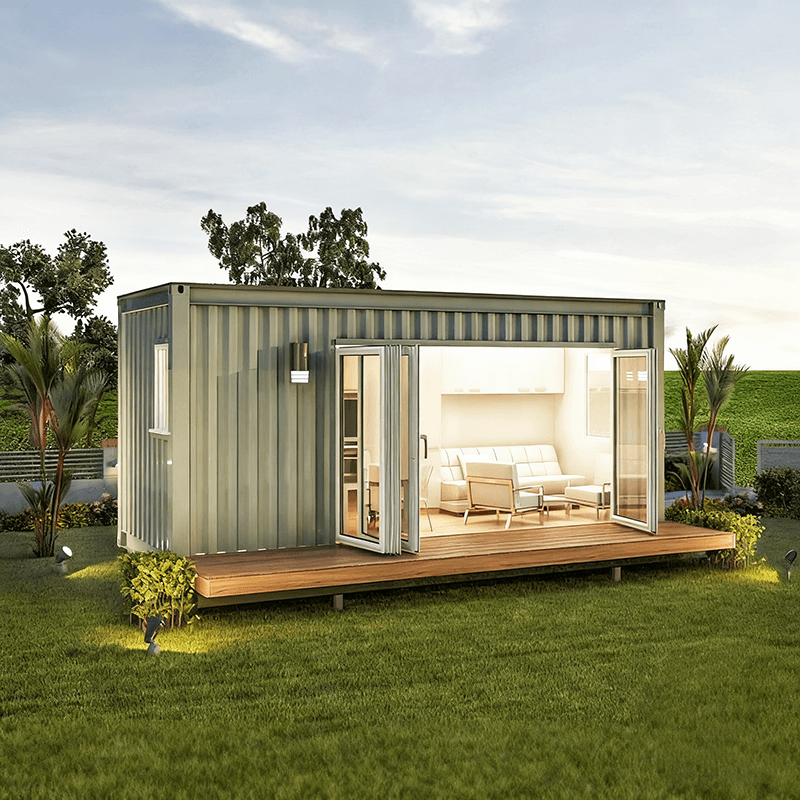
1. High construction efficiency, significantly shortened project duration
This structure adopts a 'factory production + on-site hoisting' model. A single 30㎡ module can be prefabricated in the factory in just 7 days. After being transported to the site, three workers, in cooperation with a crane, can complete the installation of a single module in 4 hours. Taking a 100㎡ house as an example, the entire construction process takes only 2 days, while traditional brick-and-mortar structures require 1-2 months, resulting in an over 80% increase in construction efficiency. This model is particularly suitable for projects with urgent deadlines, such as post-disaster reconstruction or emergency housing needs.
2. Low overall cost, significant economic benefits
Taking a 120㎡ self-built rural house as an example, the cost of a traditional brick-and-mortar structure is approximately 180,000-220,000 yuan (including labor), while the cost of the main modules of a cement house is only 120,000-150,000 yuan. Including interior and exterior decoration, the total cost can be controlled within 200,000 yuan, representing a 30% reduction in overall cost. If a leasing model is adopted, the annual rent can be as low as 5,000 yuan per room, further reducing initial investment. Additionally, factory production reduces reliance on labor, minimizes material waste, and results in lower long-term maintenance costs compared to traditional construction.
3. Environmentally friendly, meeting sustainable development requirements
Factory production is fully controllable, with a 95% recycling rate for offcuts. There is no dust or sewage discharge at the construction site, and construction waste is only 10% of that generated by traditional construction methods. Environmentally friendly concrete and water-based paints are used, with formaldehyde emissions ≤0.05mg/m³, well below the national standard (0.1mg/m³), enabling 'immediate occupancy upon installation'. This environmental friendliness gives it an advantage in ecologically sensitive areas or scenarios with high air quality requirements.
4. Excellent structural performance, safe and durable
Using C30-C40 grade concrete with built-in Φ8-Φ12 steel reinforcement mesh, the compressive strength reaches 25-30MPa, 1.5 times that of traditional brick-and-mortar structures. The walls are pre-slotted for EPS insulation layers, improving thermal insulation by 40%, resulting in significant warmth in winter and coolness in summer. Modules are connected via pre-stressed bolts + welded steel plates, forming an integrated frame with a wind resistance rating of Level 10 and a seismic fortification intensity of 7 degrees (equivalent to the destructive force of the Wenchuan earthquake), meeting the safety requirements of most regions.
Subdivided by purpose, prefabricated cement houses can also be classified into three categories: Rural self-built houses focus on economic practicality and outstanding moisture resistance; rural villas emphasize exterior design and spatial layout, with optional floor heights of 3.3 meters or 3.6 meters; and commercial buildings (such as office buildings and hotels) are widely used in homestays and small commercial buildings due to their span advantages and construction speed. Users can choose the appropriate type based on their specific needs.



