
Wheeled Mobile Container House
The wheeled mobile container house is a modular and movable dwelling that achieves flexible mobility and spatial reorganization through a 'building-block combination + wheel-set drive' design, offering both living comfort and scenario adaptability.
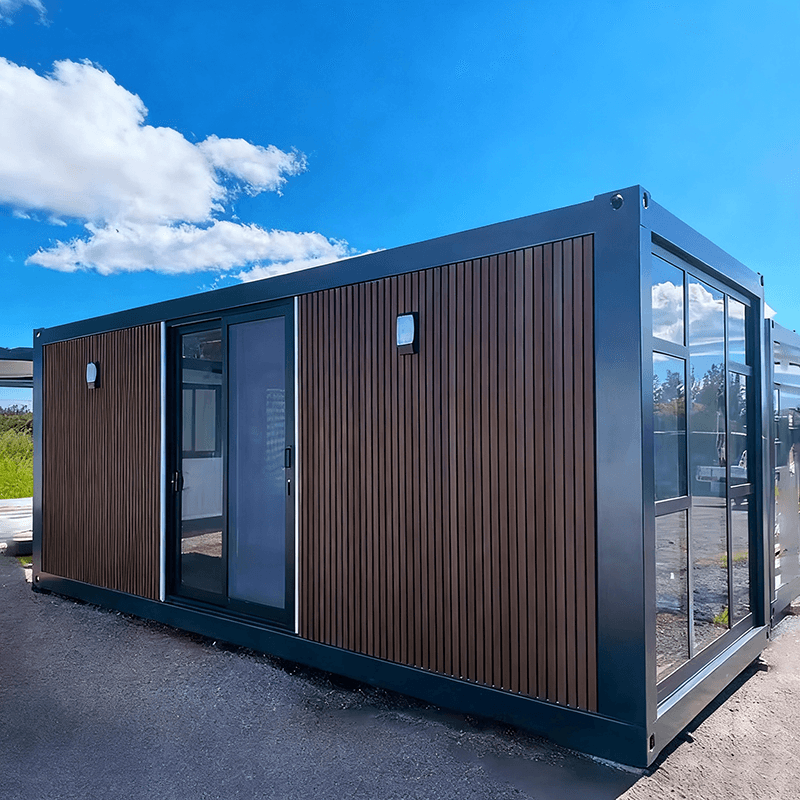
Significant Advantages in Living Experience
The wheeled mobile container house breaks through the spatial limitations of traditional mobile dwellings. Compared to RVs, its interior space is more expansive, eliminating the need to fold furniture to save space. It can comfortably accommodate large appliances like double-door refrigerators, and children are less likely to bump into furniture corners during activities, enhancing safety. Compared to tents, it features an aluminum alloy frame and double-glazed structure, capable of withstanding extreme weather conditions such as heavy rain and typhoons, with excellent cold resistance, making it suitable for long-term residence. Compared to traditional wooden houses, it can be relocated as a whole without disassembly, and can be towed by a pickup truck to a new location within half an hour, offering far greater flexibility than fixed buildings.
Flexible Spatial Reorganization Function
This type of house supports 'building-block' spatial reorganization, allowing users to dynamically adjust functional zones according to their needs. For example, the living room can be transformed into a temporary workspace in the morning, and the dining table can be extended into a children's drawing board in the evening, seamlessly integrating into wall decorations when stored, achieving 'multi-purpose use of a single item'. This design meets the space efficiency demands of urban dwellers and adapts to the rapid functional switching needs in scenarios such as camping and emergency response.
Diverse Application Scenarios Covering Multiple Needs
Its modular nature enables a wide range of application scenarios: urban nomads can relocate with a full set of furniture, reducing rental costs; camping enthusiasts can bring their bedrooms directly into the forest, enhancing outdoor living quality; in emergency disaster relief, entire houses can be rapidly deployed to disaster areas with rescue vehicles, providing temporary medical and accommodation infrastructure. Additionally, some products support eco-friendly functions such as solar power supply and rainwater harvesting, further expanding their usage scenarios.
Significant Differences in Market Product Parameters
Currently, there are numerous brands on the market, such as Ziyan, Honghao, and Xinpu, with product styles including light steel mobile houses and color steel mobile houses. Materials cover steel structures, color steel, and light steel, with load capacities ranging from 120kg to 1800kg. Taking Beijing Fali Lai Mobile Panel Houses as an example, their container mobile houses are made of color steel plates, with specifications of 362.7 meters and price ranges from 5000 to 29000 yuan. Functional differences mainly lie in insulation performance, wheel-set drive methods, and the configuration of additional equipment (such as air conditioners and bathrooms). Users need to make comprehensive choices based on their budget, usage frequency, and scenario requirements.



