
What is the Prefabricated Structure of a House
A prefabricated structure of a house is a building form that involves the industrial production of building components and their assembly on-site. Specifically, it is a construction mode where the building is broken down into individual modules, manufactured in a factory, and then transported to the construction site for assembly.
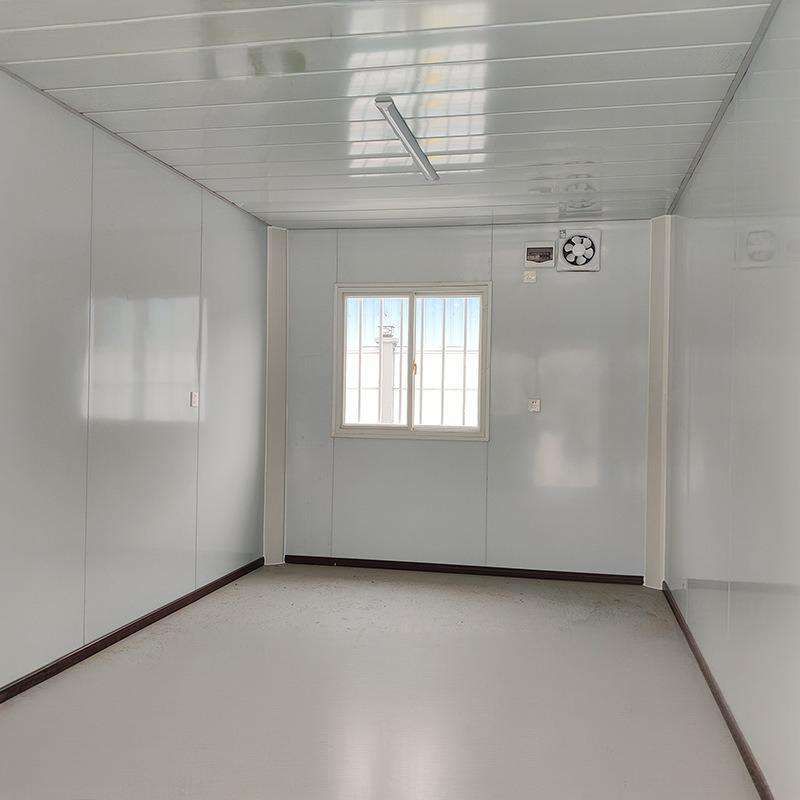
From the perspective of component production, the prefabricated structure of a house involves pre-casting parts of the house's structure with materials such as cement in a factory. For example, common prefabricated hollow columns have specific shapes and structures. They are made in a factory using precise molds and processes, ensuring dimensional accuracy and quality stability. Another example is prefabricated bay windows with window frames, which can be manufactured in one piece in a factory, avoiding potential dimensional discrepancies and workmanship flaws that may occur during on-site construction.
In terms of construction mode, the prefabricated structure of a house divides the house into several independent modules. In the factory, these modules undergo integrated prefabrication and acceptance for various disciplines, including architecture, structure, mechanical and electrical systems, and interior decoration. This means that in the factory, the building structural parts such as walls and floors, as well as the mechanical and electrical systems like internal wires and water pipes, and the decoration parts such as walls and floors, are all integrated and manufactured according to design requirements. For example, for a bedroom module, decorative materials for the walls will be installed, floors will be laid, wires and water pipes will be pre-buried, and the installation and commissioning of lighting fixtures and sockets will be completed in the factory.
When these prefabricated modules are transported to the construction site, they only need to be simply assembled for use. This construction method significantly shortens the construction period, reduces the workload and time of on-site construction, and improves construction efficiency. At the same time, since most of the work is completed in the factory, it is less affected by environmental factors such as weather, ensuring better construction quality and safety. Moreover, factory-based production facilitates the standardization and large-scale production of building components, reducing production costs and improving resource utilization efficiency.



