
Welded Integrated Container House
A welded integrated container house is a type of integrated housing that adopts a fully welded structure, possesses multiple excellent properties, and has a wide range of application scenarios.
Performance Characteristics
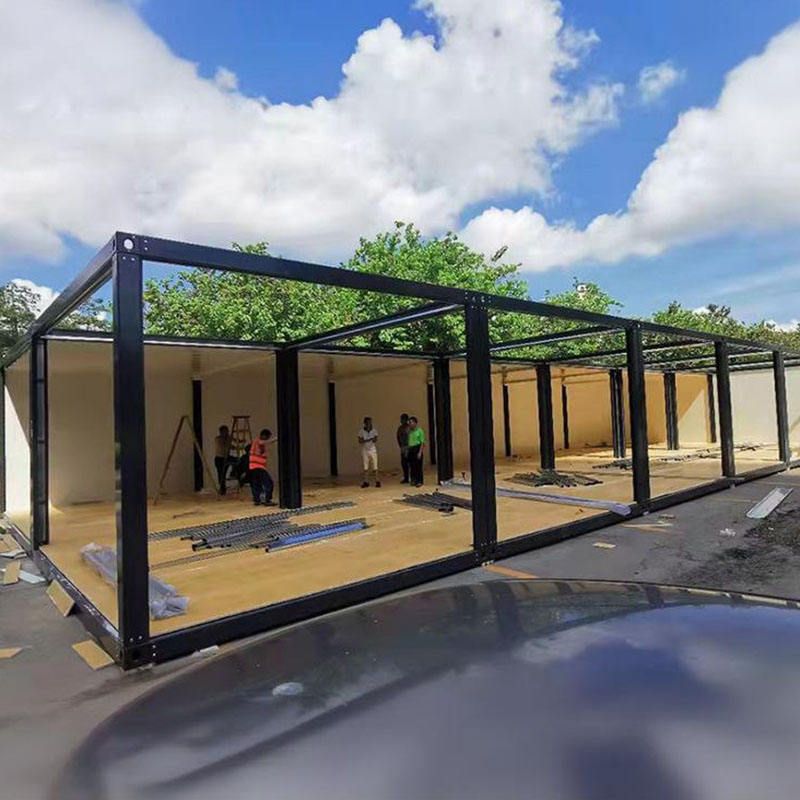
The core advantage of a welded integrated container house lies in its fully welded structure. This structure provides exceptional overall sealing, effectively preventing the intrusion of external factors such as rainwater and dust, and offering good waterproof and moisture-proof properties. For example, the Falilai residential container houses and temporary buildings around Daxing, Beijing, after adopting a fully welded structure, are not only environmentally friendly and energy-saving but also reusable, with a lifespan of up to 10 years. Meanwhile, its Class A fire resistance enables it to effectively resist combustion in the event of a fire, providing safety protection for occupants. In addition, the welded structure endows the house with sturdy and durable characteristics and excellent earthquake resistance. The welded residential containers produced by Nanjing Changyou Intelligent Integrated Housing Technology Co., Ltd. have a wind resistance rating of over 10 and an earthquake resistance design intensity of 9 degrees, enabling them to cope with harsh natural environments. In terms of corrosion resistance, welded integrated container houses also perform well, which can extend the service life of the houses. Their appearance is usually aesthetically pleasing, and the design of the roof panels and floors is also very meticulous. For example, the standard containers produced by Nanjing Changyou Intelligent have double-layer composite roofs and fire-resistant magnesium oxide board floors, further enhancing the practicality and safety of the houses.
Application Scenarios
Due to its superior performance, welded integrated container houses have a wide range of application scenarios. On construction sites, they can serve as temporary dormitories for workers, providing a safe and comfortable living environment. In disaster relief areas, they can be quickly set up as temporary shelters to meet the housing needs of affected people. In some tourist attractions, they can be used as characteristic homestays, offering tourists a unique accommodation experience. In addition, they can also be used in commercial offices, warehousing, and other fields to meet different usage requirements.



