
Vehicle-mounted Bus Mobile Toilet
The vehicle-mounted bus mobile toilet is a movable toilet facility suitable for temporary places with dense crowds, featuring water conservation, flexibility, and environmental protection.
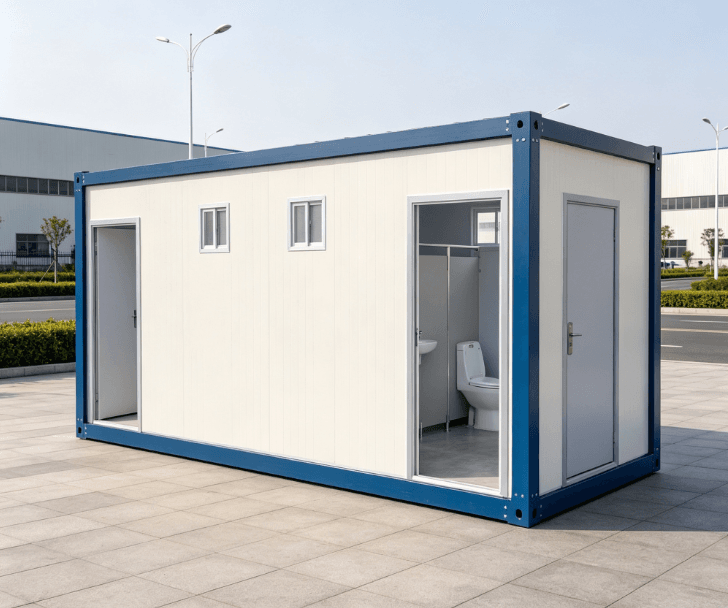
I. Size and Facility Configuration
The vehicle-mounted bus mobile toilet is typically modified from a bus body, with a length of approximately 10.9 meters. Inside, it employs a bubble-sealed high-pressure water-saving flushing system that mixes excreta with a small amount of water using high-pressure airflow for flushing. Each flush uses over 60% less water than traditional toilets, significantly conserving water resources. The men's toilet is equipped with 3 sitting positions and 2 urinals, while the women's toilet has 5 sitting positions, all with independent hand-washing sinks. The ventilation system combines a top ventilation window with an in-vehicle fresh air device to ensure air circulation; an emergency call button is connected to a management terminal to ensure user safety.
II. Customization and Price Differences
This facility supports customization according to needs, with prices significantly influenced by brand, configuration, and region. For example:
- The Xiamen Golden Dragon model in Xuhui, Shanghai, is priced at 800,000 yuan per vehicle, featuring high-end antibacterial materials and an intelligent deodorization system;
- The basic model in Suizhou, Hubei, is priced at 1,600 yuan per vehicle, with simplified functions suitable for short-term temporary use;
- The scenic spot-specific model in Chengdu, Sichuan, is priced at 8,000 yuan per unit, optimized for space layout in high-traffic scenarios.
Prices vary widely, so it is essential to choose a suitable model based on the usage scenario and budget.
III. Core Advantages and Application Scenarios
Its greatest advantage lies in its mobility, allowing it to be quickly deployed to stations, docks, tourist attractions, large construction sites, and other places via a towing vehicle, especially suitable for areas without fixed sewage pipelines. For example, it can be arranged in advance at music festival sites and transferred to other venues after the event to avoid resource waste. Additionally, its modular design supports the combination of multiple units to meet the toilet needs of thousand-person events.
IV. Technical Characteristics and Design Principles
Technically, it adapts to the vehicle chassis structure, with internal space optimized through 3D modeling to ensure unobstructed passage for individuals with mobility impairments. The deodorization technology employs a composite filter of photocatalyst and activated carbon, achieving an ammonia removal rate of over 95%. The design follows lightweight principles, with the vehicle body made of high-strength aluminum alloy, reducing its self-weight by 40% compared to traditional steel structures while meeting wind and earthquake resistance standards. The moving device is equipped with an independent suspension system to adapt to complex road conditions during transportation.
V. Environmental Protection and Sustainability
Excreta is suctioned by a vacuum pump into a sealed fecal storage tank and regularly cleaned by a suction truck to avoid soil pollution. Some high-end models integrate a biodegradation module that converts feces into organic fertilizer, achieving resource recycling. The vehicle body materials comply with RoHS standards, posing no risk of heavy metal leaching, and have a service life of over 10 years.



