
Ultra-Small Mobile Toilet
An ultra-small mobile toilet is a facility that can be moved as a whole and is suitable for fixed or temporary locations, featuring mobility, modularity, and ease of transportation. The following provides an introduction from the perspectives of types, structure, advantages, and application scenarios:
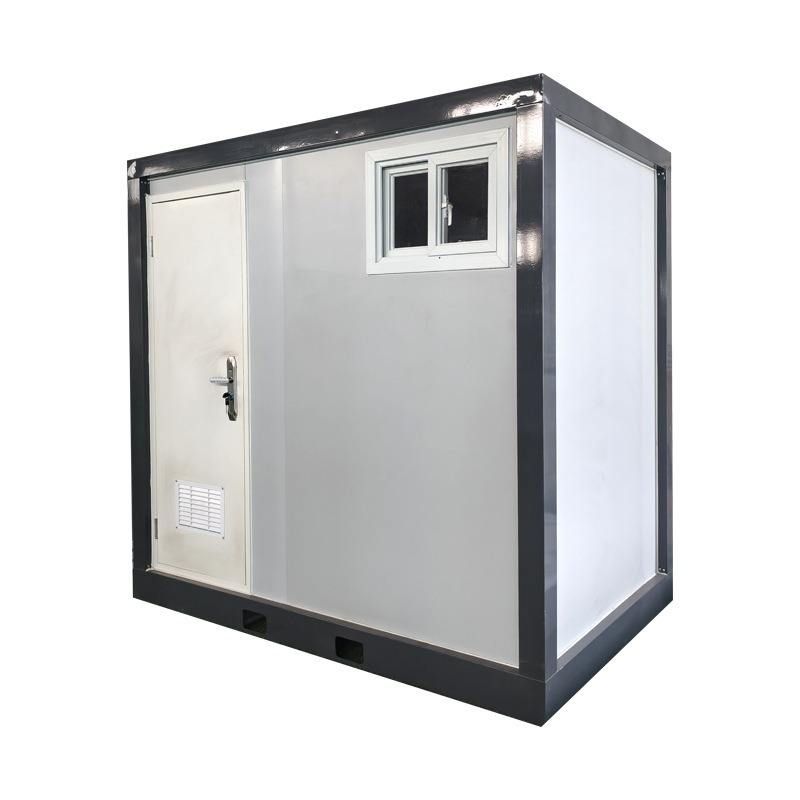
In terms of types, ultra-small mobile toilets come in various forms. For example, the ultra-mini modular mobile public toilet built with building blocks has a futuristic appearance and achieves flexible combination and rapid construction through modular design. The small mobile toilet launched by Sichuan Xinbaiting Integrated Housing measures 4 meters in length and 2 meters in width, and its size can be customized to meet the spatial requirements of different venues, especially those where civil construction is not feasible.
In terms of structural composition, a mobile toilet generally consists of several key parts. The fecal sewage storage tank (or fecal sewage treatment device) is used to collect and treat excreta, ensuring hygiene and environmental protection. The floor provides a stable standing and moving space. Sanitary fixtures such as toilets and squat pans meet basic usage needs. The walls serve to isolate and protect privacy. The washing equipment, including sinks, facilitates user cleaning. The water tank supplies water for the fixtures and washing. The roof provides shelter from wind and rain. The mobile device enables the entire toilet to be moved, facilitating flexible placement at different locations.
The advantages are significant. Its mobility allows it to quickly adjust its position according to actual needs, providing sanitary facilities in a timely manner for temporary events, construction sites, or remote areas. Its modularity allows multiple mobile toilets to be combined into sanitary areas of different sizes based on the venue size and the number of users. The ease of transportation reduces construction costs and time, eliminates the need for complex civil engineering, and minimizes environmental damage.
The application scenarios are extensive. At large outdoor events such as music festivals and sports events, they can be quickly set up to meet the toilet needs of a large number of people. On construction sites, they provide convenient sanitary conditions for workers. In tourist attractions and remote villages where civil construction is not possible, they effectively solve the toilet problems for tourists and residents.



