
Two-Story Container House
Container houses can be designed as two-story structures, and there are already various application cases in the market.
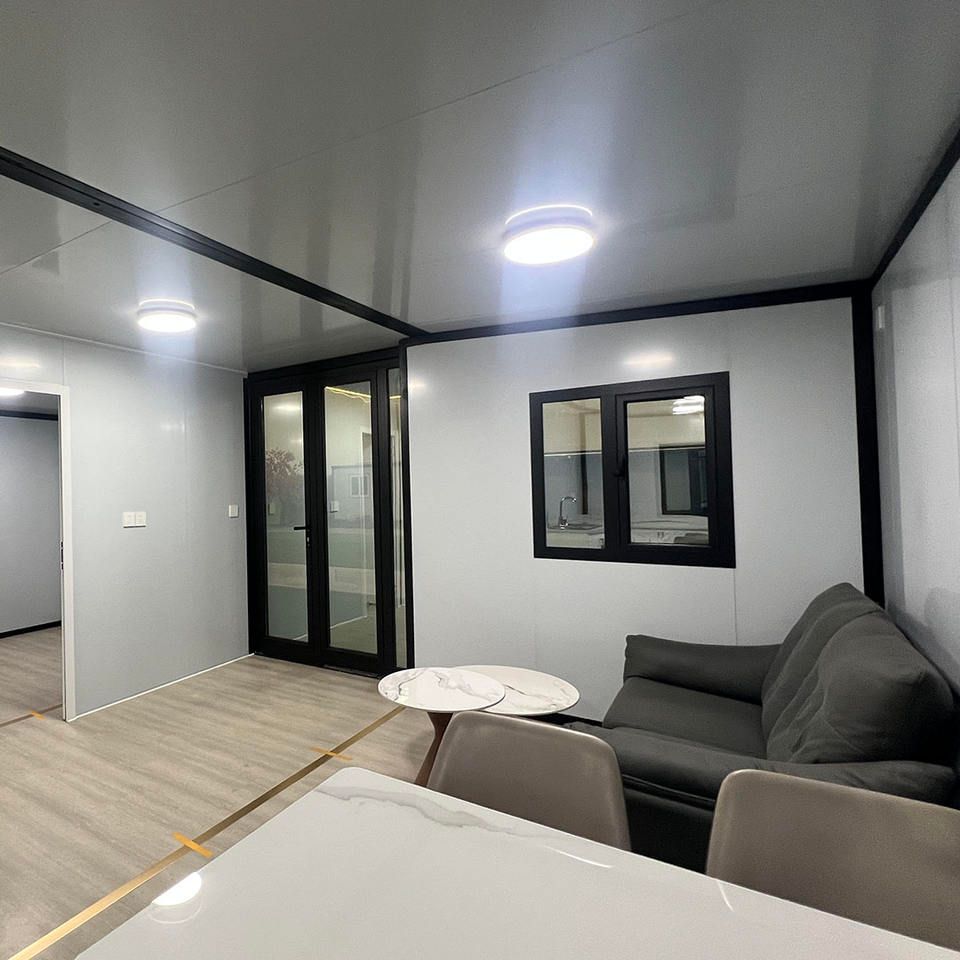
1. Practical Applications of Two-Story Container Houses
Two-story container houses are not just theoretical concepts; multiple practical cases have verified their feasibility. For example, a post-90s young man built a two-story container house in his hometown village, achieving residential functionality through reasonable design. Some enterprises customize two-story packing-box units according to customer needs for use in supermarkets, temporary commercial venues, and other scenarios, demonstrating that their structural stability can meet the requirements of public spaces. Additionally, foreign trade prefabricated houses, container houses for construction site employee dormitories, and quick-assembly two-story mobile offices are all formed into two-story structures through modular combinations, adapting to large-scale use in different scenarios.
2. Design Features of Two-Story Structures
Two-story container houses typically use standard container units as basic modules, achieving vertical stacking through welding or bolt connections. When designing, the following factors need to be considered:
- Load-Bearing and Stability: The ground-floor container needs to have its structure reinforced to support the weight of the upper floor. Common methods include adding internal frames, using high-strength steel, or thickening the container wall panels.
- Connection Method: The upper and lower floors are fixed with special connectors to ensure that the overall wind and earthquake resistance meet building codes.
- Functional Zoning: The two-story layout allows for flexible space division. For example, the ground floor can be used as a public activity area, while the upper floor can serve as a residential or office area, improving space utilization.
3. Factors Affecting Price
The price of two-story container houses is influenced by multiple factors:
- Material Differences: Ordinary carbon steel containers have lower costs, while stainless steel or aluminum alloy containers are more expensive but offer stronger corrosion resistance.
- Specifications and Sizes: Standard containers (such as 20-foot and 40-foot) have transparent pricing, while non-standard customized containers have higher costs due to increased processing difficulty.
- Manufacturer and Configuration: Houses provided by well-known manufacturers may include insulation layers, doors, windows, electrical circuits, and other supporting facilities, resulting in higher prices than basic models; simple two-story structures have lower costs.
4. Expansion of Application Scenarios
In addition to residential and commercial uses, two-story container houses can also be applied in post-disaster temporary shelters, tourist attraction homestays, military camps, and other fields. Their modular characteristics support rapid assembly and disassembly as well as relocation, adapting to dynamic demand changes.



