
Truck Container Mobile House
Truck container mobile houses are movable residential or office units transformed from standard containers, featuring sturdy structures, convenient transportation, and flexible assembly and expansion capabilities.
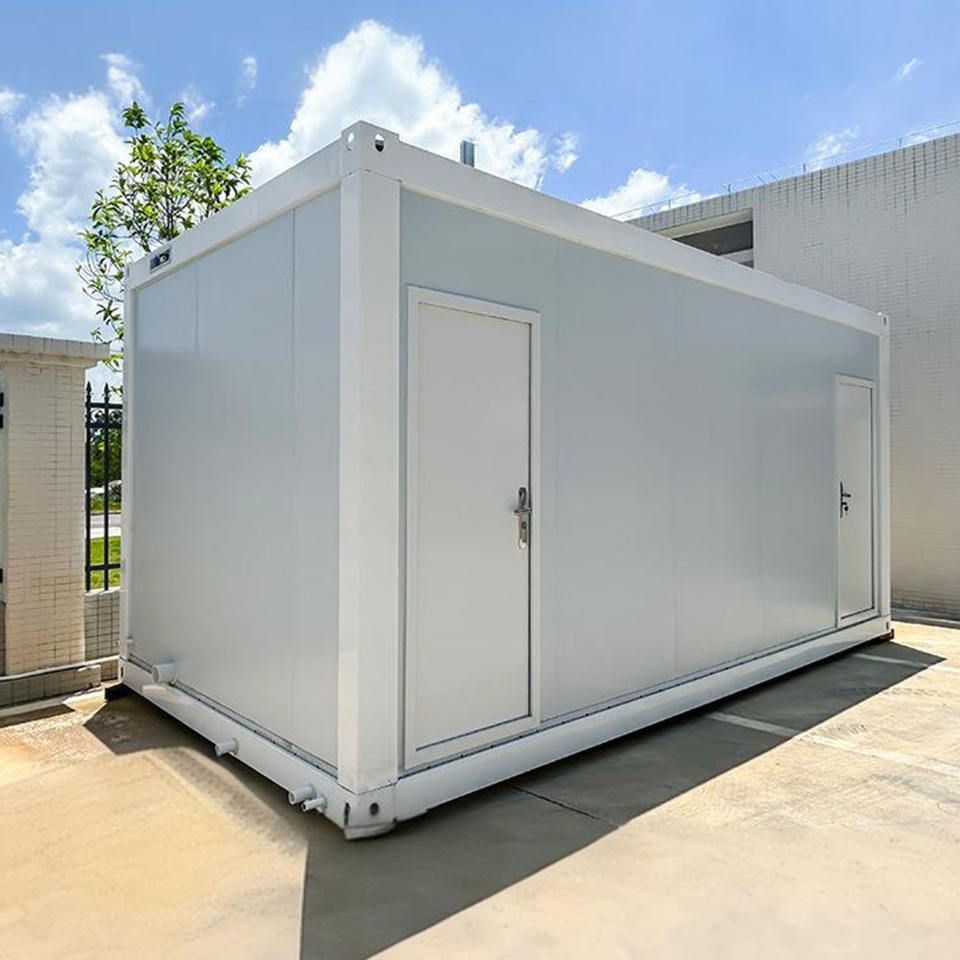
I. Structure and Types Truck container mobile houses are based on standard containers (such as 20-foot and 40-foot ones) and are structurally modified to form independent functional spaces. Depending on the design differences, they can be classified into the following types:
- Basic Container Type: It directly utilizes the container frame, modifies the internal layout, retains the original structural strength, and is suitable for short-term project departments or construction site command centers.
- Foldable Type: It adopts a foldable structure, compressing the volume during transportation to 1/4 to 1/5.5 of the expanded state. A single truck can carry 15-20 sets, significantly reducing transportation costs. For example, the folding container from Suzhou Zhongnan has a single-trip transportation cost as low as 150 yuan per set, making it suitable for emergency rescue or frequent relocation scenarios.
- Expandable Type: It adds side or end expansion modules to the container, increasing the usable area by 30%-50% after expansion to meet the space comfort requirements for long-term on-site office work.
- Modular Combined Type: It is assembled with light steel keels and color-coated steel plates, supporting multi-container assembly or functional area expansion, commonly seen in temporary office spaces in industrial parks or event planning sites.
II. Transportation and Deployment Advantages
- Transportation Efficiency: Standard container trucks (about 16 meters long) can accommodate 20-foot or 40-foot containers, enabling whole-container transportation without disassembly. The foldable design further optimizes the loading capacity. For example, a single truck from CIMC Modular Building Systems can carry 16 sets, reducing the unit transportation cost.
- Rapid Deployment: The expansion time of foldable containers can be controlled within 5-10 minutes (for example, the hydraulic automatic expansion structure from Suzhou Zhongnan only takes 5 minutes), supporting rapid response in emergency scenarios.
- Warehousing Flexibility: After folding, the volume is reduced to less than 20% of the expanded state. A 100㎡ warehouse can store 60-80 sets, resulting in lower long-term storage space costs.
III. Application Scenarios
- Emergency Support: Such as earthquake rescue and temporary medical stations, which require rapid deployment and strict cost control.
- Construction Projects: Short-term or medium-term on-site needs such as project departments and construction site command centers.
- Commercial and Cultural Tourism: Pop-up stores, vacation cottages, mobile clinics, etc., which require flexible mobility and complete functionality.
- Residential Expansion: Such as worker dormitories and temporary residential houses, supporting multi-container assembly to form a community-like layout.
IV. Technological Development Trends With the progress of material science and automation technology, truck container mobile houses are developing towards lightweight and intelligent directions. For example, the use of high-strength lightweight alloys reduces the self-weight, the integration of solar panels enables energy self-sufficiency, or remote monitoring of structural conditions through the Internet of Things technology enhances safety and sustainability.



