
Quay lại blog
Bài viết
Transportation Plan for Mobile Toilets
Quản trị 20 tháng 9, 2026
The transportation plan for mobile toilets should be selected comprehensively based on type, size, distance, and scenario. Common plans and key points are as follows:
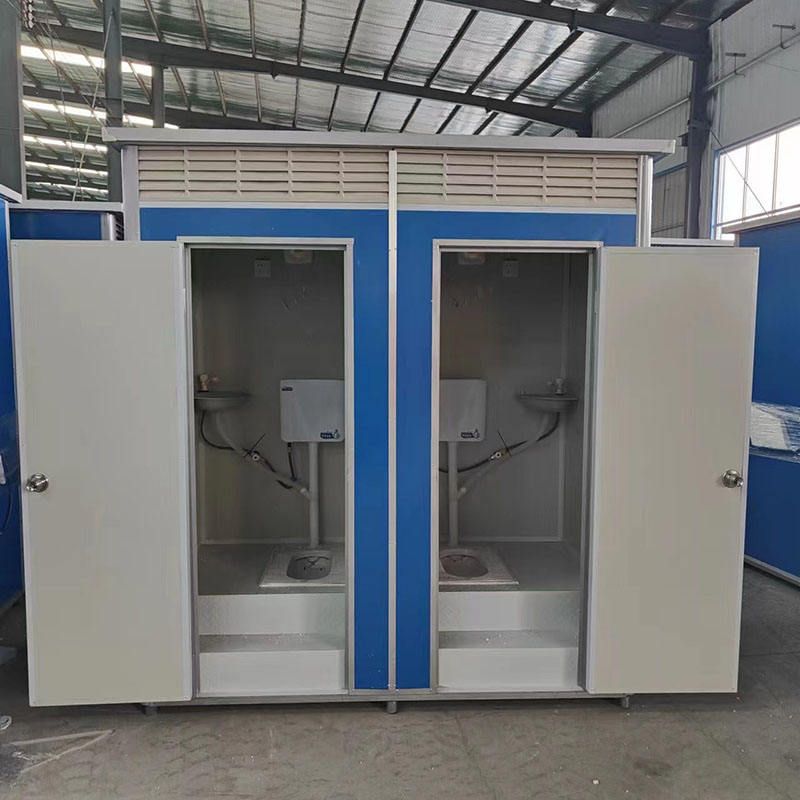
I. Classification by Transportation Method
Road Transportation
- Flatbed Truck Transportation: Suitable for small single-unit toilets (e.g., single-stall, simple models), directly fixed to flatbed trucks, low cost, and ideal for short-distance delivery within or around cities.
- Enclosed Truck Transportation: For multi-stall combined or high-end customized toilets (e.g., with sinks, smart systems), enclosed space protects against wind and rain damage, suitable for long-distance or inter-provincial transportation.
- Specialized Transport Racks: Used for large or irregularly shaped toilets (e.g., multi-story structures, barrier-free designs), customized transport racks distribute pressure, reduce deformation risk, and provide door-to-door service.
Rail Transportation
- Container Transportation: Toilets are disassembled into modules and loaded into standard containers, transported by rail to nearby stations, and then transferred to road delivery, suitable for long-distance, large-volume transportation with lower costs than road transport.
- Full-Vehicle Transportation: Directly loading complete small single-unit toilets onto rail flatbed trucks, suitable for non-disassemblable models.
Water Transportation
- Full-Container Transportation: For bulk exports, toilets are loaded into containers and transported by cargo ships, suitable for cross-border or cross-sea scenarios.
- Bulk Cargo Transportation: Large toilets are directly fixed to the deck of cargo ships, requiring additional reinforcement, suitable for non-disassemblable models.
Special Scenario Transportation
- Hoisting Transportation: For large toilets (e.g., multi-story structures) that cannot be transported by conventional vehicles, cranes are used to hoist them onto vehicles or installation sites.
- Manual Handling: For ultra-small toilets (e.g., portable eco-friendly toilets) or narrow sites, handled by manpower or small equipment (e.g., forklifts, hand trucks).
II. Transportation Precautions
- Vehicle Selection: Match the carrying capacity according to the number and size of toilets, equipped with fixing devices (e.g., ropes, straps, brackets).
- Route Planning: Survey road conditions, traffic conditions, and weather in advance, avoiding peak hours and severe weather.
- Secure Fixing: Use anti-slip mats or cushioning materials to avoid scratches, evenly distribute pressure with straps or chains to prevent local deformation.
- On-Site Installation: Unloading requires professional equipment (e.g., forklifts, cranes), ensure level placement, connect to septic tanks or drainage pipes, and check system operation.
- Sanitation Handling: Empty and clean the interior before transportation to avoid spillage of residual waste; for post-use transportation, discharge and disinfect first.
III. Suggestions for Selecting Transportation Methods
- Short-Distance (<500 km): Prioritize road transportation for flexibility and efficiency.
- Long-Distance (>500 km): Combine rail and road transportation to reduce costs.
- Cross-Border/Cross-Sea: Mainly use water transportation, supplemented by road/rail transportation.
- Special Sites: Plan hoisting or manual handling solutions in advance.



