
Trailer-mounted Container House
A trailer-mounted container house is a type of dwelling that is based on a container and is designed to have residential functions through modifications, and can be moved by a trailer. The following is an introduction from the aspects of design, functions, application scenarios, and advantages:
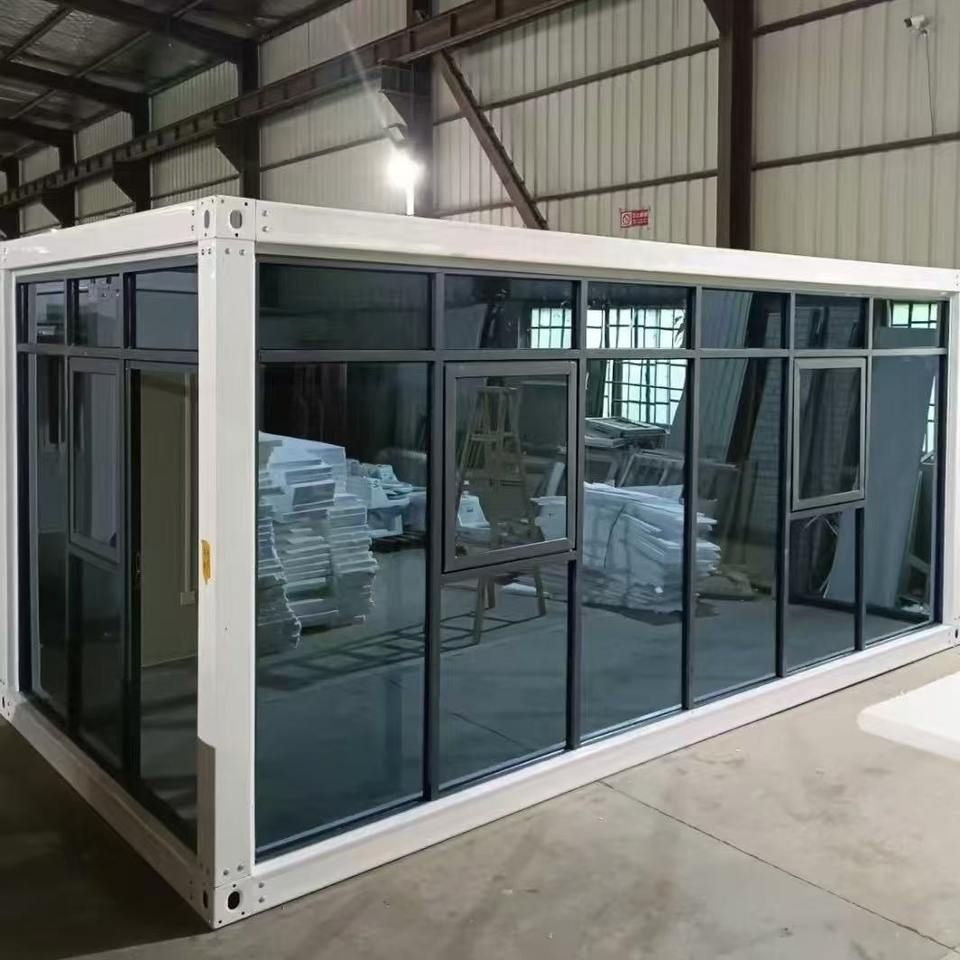
Design Features
Trailer-mounted container houses take standard containers as prototypes and achieve residential functions through structural modifications. For example, the R4 mobile home is transformed from a container. Its interior space can be designed according to needs, equipped with ceiling, floor, furniture, and other facilities. To meet ventilation requirements, two windows are opened on each side of the container. Plastic-steel doors and windows are used to achieve north-south ventilation and double-sided lighting. The windows are equipped with anti-theft nets and rain shelters, and the door is a sturdy and sealed anti-theft door to ensure safety and comfort. Some designs also fill hard polyurethane foam between the steel frame and the inner wall panel and install rubber thermal insulation pads at the keel connections, reducing the heat exchange efficiency by about 40% and improving thermal insulation performance.
Functional Configurations
Trailer-mounted container houses have complete functions and can meet diverse living needs. The basic configurations include areas such as bedrooms, kitchens, and bathrooms. Some high-end models are also equipped with air conditioners, heating equipment, and self-circulating sewage systems. For example, Baotou Camp Container House Company uses a broken-bridge lining structure and a self-circulating sewage system to make the indoor temperature of the house 8 to 10 degrees Celsius higher than the outside temperature in winter without heating, and at the same time achieve autonomous sewage treatment, reducing the impact on the environment.
Application Scenarios
Due to their mobility and modular design, trailer-mounted container houses are widely used in temporary accommodation, mobile offices, tourism and camping, and other fields. For example, construction sites often use such houses as temporary office areas or living areas; tourist attractions transform them into camping bases, bed and breakfasts, and other facilities; in addition, they can also be used as rapidly deployable housing for post-disaster reconstruction, military camps, and other scenarios.
Core Advantages
- Environmental friendliness: The materials can be recycled throughout their entire life cycle. The carbon emissions are only 1/2.3 of those of traditional concrete temporary houses, and the disassembly and assembly loss rate is controlled within 5%, greatly reducing construction waste.
- Economy: They can be built quickly and at a low cost, and can be reused, reducing long-term costs.
- Flexibility: They can be moved by a trailer or a heavy-duty truck, adapting to different site requirements.



