
Mobile Toilets for Tibet Entry
Mobile toilets for Tibet entry are modular sanitation facilities designed specifically for the unique high-altitude environment, addressing challenges such as low oxygen, low temperature, and low air pressure through structural optimization and functional adaptation to ensure stable operation in areas above 4,000 meters in altitude.
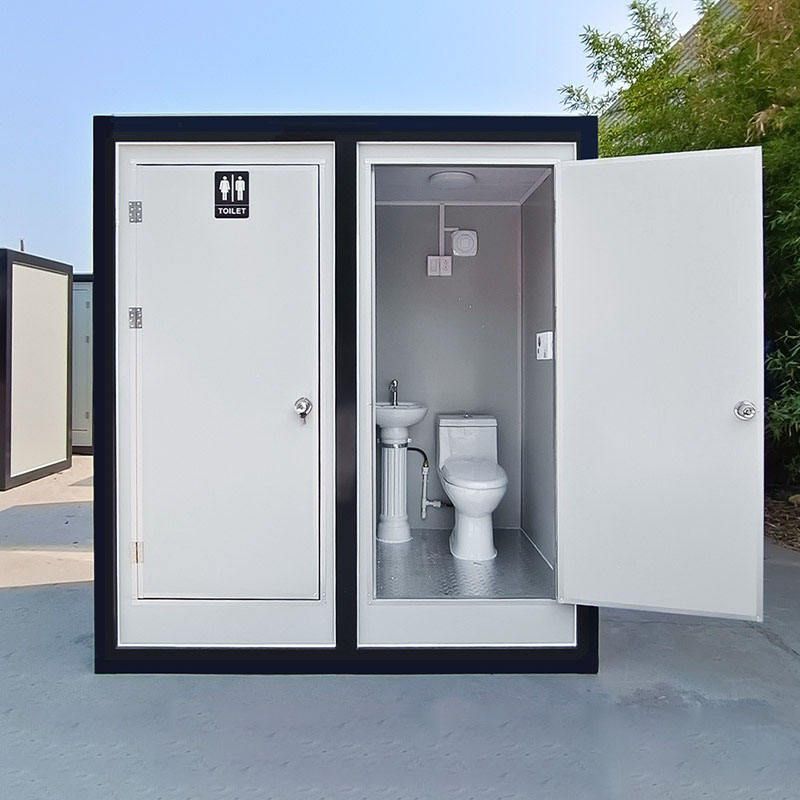
I. Core Modules and Functional Design
Treatment Unit
- Utilizes biodegradation or physical separation technology to process solid waste, with an independent urine diversion device to prevent increased load from mixed treatment.
- At altitudes exceeding 4,000 meters, the biodegradation unit requires a pressure regulation device to maintain microbial reaction efficiency and prevent degradation stagnation due to low oxygen environments.
Storage Unit
- Features two isolated chambers for temporary storage of solid decomposition products and liquids, reducing odor diffusion.
- The insulation layer is twice as thick as that in low-altitude areas, using thickened polyurethane foam boards combined with a high-altitude-specific fuel-fired heater to ensure that waste does not freeze in winter, ensuring smooth removal.
Auxiliary Systems
- Ventilation Device: A passive air duct design utilizes natural wind pressure differences at high altitudes for air circulation without continuous power consumption; the exhaust area is enlarged, the intake number is increased, and an air filtration device is equipped to adapt to low oxygen environments.
- Solar Power Supply Equipment: Provides energy for lighting, temperature control, and other systems, reducing reliance on traditional power sources.
II. High-Altitude Environmental Adaptability Adjustments
Materials and Structure
- Selects UV-resistant plastic or metal panels to prevent exterior aging and interior decoration fading.
- The foundation is reinforced with additional wind-resistant supports, and all pipes use flexible connection materials to prevent structural damage from thermal expansion and contraction.
Water Supply and Drainage System
- Adjusts water tank pressure settings in low-pressure environments and uses high-altitude-adapted water heaters; features a closed-loop water resource design where handwashing wastewater is filtered for toilet flushing, with a single flush water consumption of ≤0.5 liters, and can switch to a waterless mode in winter.
Enhanced Insulation and Ventilation
- The insulation layer is thickened to twice that of low-altitude areas, combined with a fuel-fired heater to cope with extreme cold.
- The ventilation system optimizes air duct design to ensure air circulation efficiency in low oxygen environments.
III. Installation and Maintenance Specifications
Site Selection Requirements
- Comprehensively considers geological stability and ecological sensitivity, conducting soil permeability tests before installation, with an elevated bottom design to minimize interference with the thermal balance of permafrost layers.
- Uses dark colors for exterior appearance to harmonize with the environment and reduce visual pollution.
Cleaning and Maintenance
- Waste transport uses dedicated sealed containers to prevent leakage pollution; maintenance personnel must receive specialized high-altitude operation training and master operational norms in low oxygen environments.
Mobile toilets for Tibet entry achieve efficient operation under extreme high-altitude conditions through modular design, environmental adaptability adjustments, and scientific maintenance procedures, providing reliable sanitation support for individuals entering Tibet.



