
Quay lại blog
Bài viết
Thermal Insulation Flat Panel for Container House
Quản trị 15 tháng 9, 2026
The thermal insulation flat panel for container houses typically adopts a multi-layer composite structure, combining materials such as anti-corrosion color-coated steel plates, polyurethane foam layers, and fire-resistant gypsum boards to achieve efficient thermal insulation. Some products also optimize thermal performance through designs like aluminum foil reflective layers and ventilation channels.
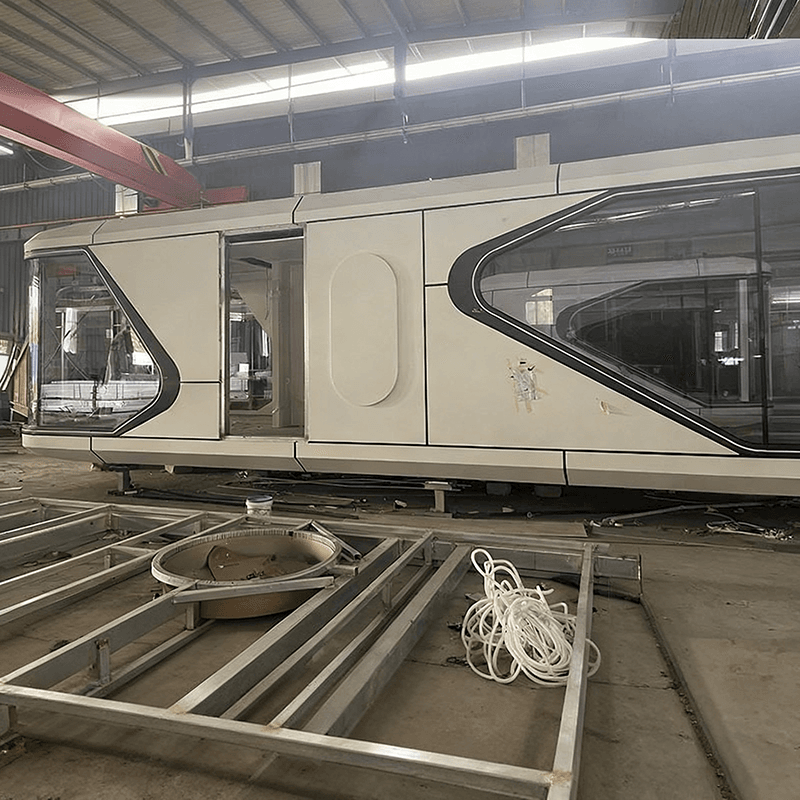
I. Core Thermal Insulation Structure and Materials
The thermal insulation performance of container houses primarily relies on three key structural layers:
- Outer Anti-Corrosion Color-Coated Steel Plate: As the first line of defense, it reduces heat absorption by reflecting sunlight while offering strong corrosion resistance and weatherability, suitable for humid or corrosive environments.
- Middle Polyurethane Foam Layer: Typically exceeding 50mm in thickness, it achieves efficient thermal insulation by blocking heat conduction. With a low thermal conductivity coefficient, it effectively delays temperature changes inside the container. For example, in summer, the interior temperature rises 22 minutes slower than the outside at noon, and in winter, the temperature drops by only 1.3℃ after 8 hours of closure.
- Inner Fire-Resistant Gypsum Board + Moisture Barrier: These work together to control humidity and temperature stability, preventing condensation while meeting fire safety requirements. According to China's 'Technical Standard for Steel Structure Integrated Housing', the heat transfer coefficient of residential container walls must be ≤0.45W/(㎡·K), with an insulation efficiency 1.8 times that of traditional brick-concrete walls.
II. Special Designs and Optimization Solutions
Some products further enhance thermal insulation through additional designs:
- Aluminum Foil Reflective Layer Sandwich Panel: Reflects thermal radiation to reduce heat transfer into the container. For instance, a café in Mogan Mountain uses such panels, maintaining comfort inside without air conditioning.
- Adjustable Sunshade Roof and Bottom Ventilation Channels: These lower interior temperatures by blocking direct sunlight and promoting air circulation, preventing a stuffy feeling.
- Double-Layer Container Structure: Further blocks heat conduction through an air layer, suitable for scenarios with extremely high thermal insulation requirements.
III. Material Selection and Performance Differences
The thermal insulation performance varies significantly among different materials:
- Glass Fiber Reinforced Plastic (FRP) Panel: Lightweight and high-strength, with UV resistance and impact resistance, but weaker thermal insulation than polyurethane sandwich panels, mostly used for skylights or non-residential areas.
- EPS Sandwich Panel: Lower cost but inferior fire resistance and durability compared to polyurethane, suitable for temporary housing.
- Graphene EPS Modular Roof: A new material with superior thermal insulation but higher cost, mostly used in high-end camping or vacation homestays.



