
Temporary Housing Container Welding
The welding of temporary housing containers requires special attention to four core aspects: structural safety, material selection, process precision, and anti-corrosion treatment. The following analysis is conducted from the perspectives of technical specifications, material properties, process essentials, and industry practices:
1. Structural Safety and Welding Specifications
Container welding must strictly adhere to the "Steel Structure Welding Specification" (GB 50661), ensuring that the main frame is made of high-strength weather-resistant steel (such as Q235 or Q345), with weld grades meeting design requirements. The welded container body is formed through overall factory welding, with roof loads transferred through sidewall columns to the bottom sill, and then evenly distributed to the ground, creating a direct load path that is highly resistant to deformation and suitable for frequent lifting and movement. Key welds (such as those at the top and bottom frame connections) require CNC plasma cutting and fully automated welding processes, with planarity errors controlled within ±2mm to prevent misalignment or leakage during lifting and assembly.
2. Material Selection and Thermal Performance
Wall materials directly affect insulation and heat retention. High-end products use a "sandwich" composite panel structure filled with rock wool (Class A fire resistance) or glass wool, with thermal conductivity as low as 0.022-0.045 W/(m·K), meeting energy efficiency requirements. For example, basalt wool color-steel composite panels maintain physical stability in environments ranging from -30°C to 70°C, with a Class A fire rating, replacing traditional polystyrene foam and addressing issues of condensation and mold in insulation layers.
3. Process Precision and Functional Integration
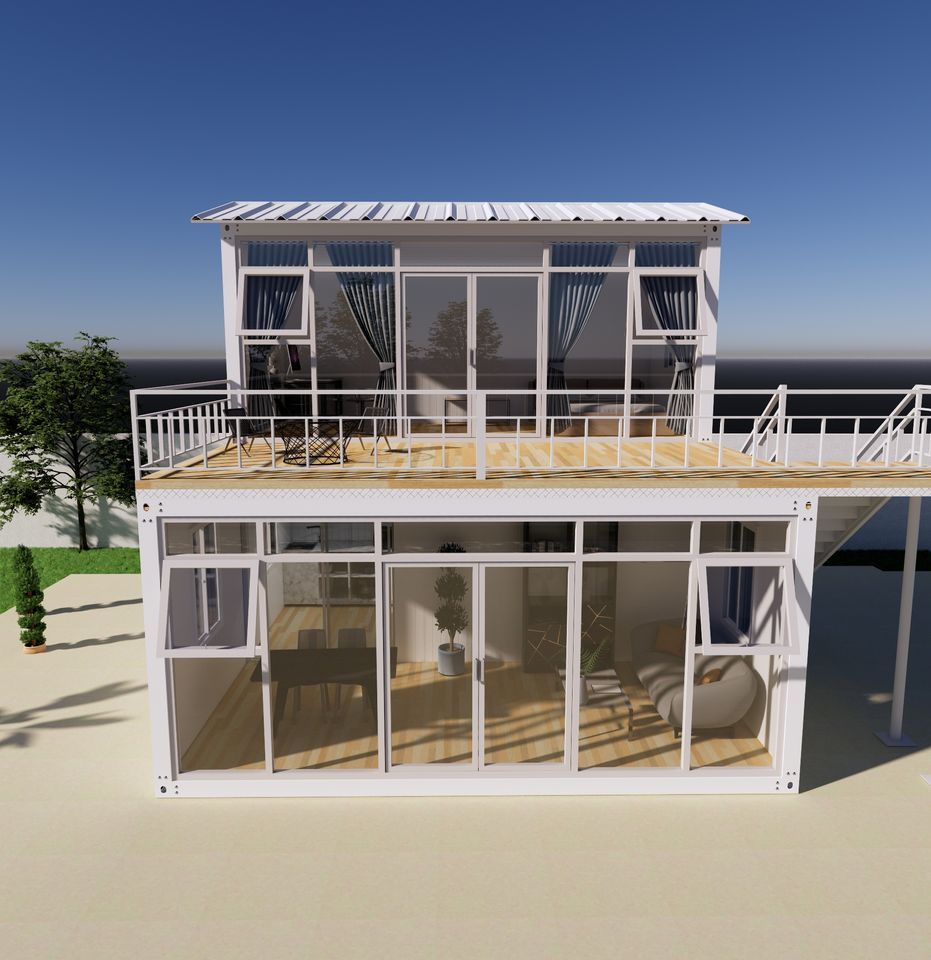
Welding precision is controlled through parameters such as weld penetration, leg height, and container diagonal errors. Automated welding lines reduce weld slag residue, lowering the risk of rust in marine or humid environments. In terms of functional integration, the pre-embedding of internal water and electricity pipelines, integration of bathroom modules, and connection of intelligent systems must be planned in advance. Non-standard sizes or special shapes (such as large-span glass curtain walls or folding balconies) require reinforcement welding based on mechanical calculations.
4. Anti-Corrosion Treatment and Durability
Steel anti-corrosion treatment directly impacts service life. The industry recommends using overall hot-dip galvanizing or high-adhesion epoxy zinc-rich primer processes, with sandblasting for rust removal followed by spraying to ensure the anti-corrosion layer meets thickness standards. For example, production lines certified by the International Institute of Welding (IIW) can systematically address weld rust issues, extending the container's service life in harsh environments.
Industry Practice Recommendations:
- For long-term projects requiring multiple relocations, modular assembly structures (such as packing containers) are preferred for their ease of disassembly and high turnover rate;
- For budget-constrained or simple accommodation needs, welded corrugated residential containers with overall full-weld structures are durable and cost-effective;
- For cultural tourism and homestay scenarios, emphasis should be placed on non-standard customization capabilities, selecting suppliers with Class A fire resistance, insulation, waterproofing, and personalized design capabilities.



