
Temporary Housing Container House
A temporary housing container house is an independent temporary building unit transformed from a standard container. It features a sturdy structure, convenient transportation, and rapid deployment, making it widely used in scenarios such as construction site offices, temporary accommodations, and commercial pop-up events.
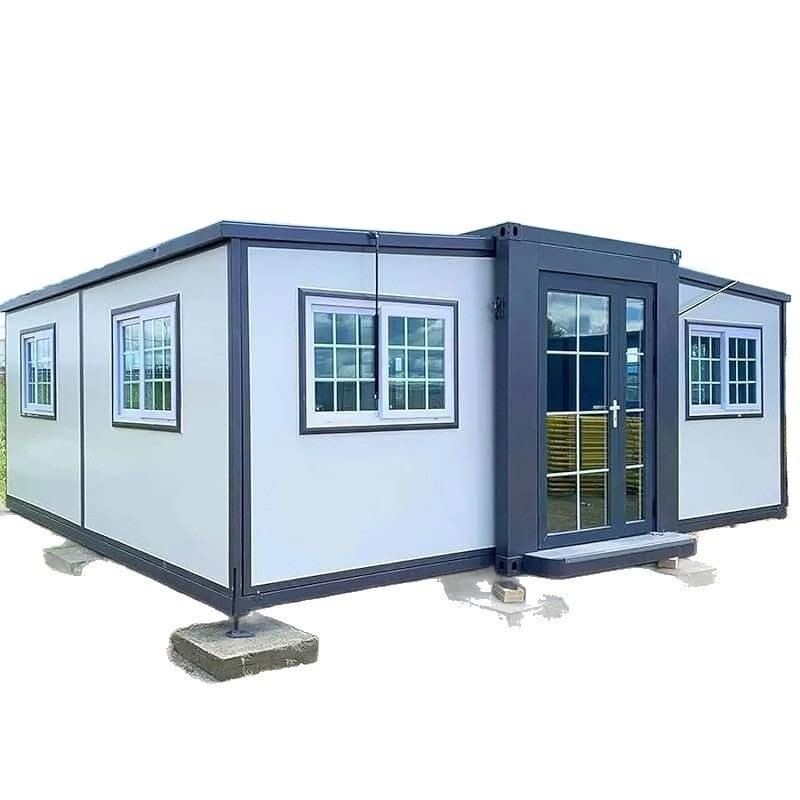
Structure and Types
Container houses are based on standard containers, with common sizes of 20 feet and 40 feet. They can meet different needs through single-unit use or multi-unit combination. According to their structure and purpose, they can be divided into four categories:
- Container-style office buildings: Transformed from standard containers, these buildings have a sturdy structure and are suitable for project departments and construction site command centers.
- Foldable office buildings: These buildings feature a foldable design, which compresses their volume during transportation and allows for quick deployment upon arrival. They are suitable for exploration teams and temporary command posts that require frequent relocation.
- Modular office buildings: These buildings are assembled from light steel frames and color-coated steel sheets on-site. They can be flexibly expanded according to the number of occupants and functional areas and are commonly found in temporary offices in industrial parks and event planning sites.
- Expandable office buildings: These buildings add lateral or end expansion modules to the container base, increasing the usable area by 30%-50% after expansion. They are suitable for long-term on-site office use.
Performance and Safety
The core performance of container houses includes structural stability, wind resistance, and earthquake resistance. Products from leading companies (such as Suzhou Zhongnan and CIMC) use a fully steel structural frame, with a wind resistance rating of up to Level 12 and an earthquake resistance rating of Level 8. The frame deformation rate is far below the industry threshold. Non-standard white-label products, due to the use of thin steel sheets or inferior steel, have a wind resistance rating of only Level 8 and are prone to safety hazards such as wall cracking and frame tilting under extreme conditions.
Application Scenarios and Advantages
Container houses have become a core solution for temporary offices, accommodations, and event support scenarios due to their flexibility and cost-effectiveness. For example, the Qatar World Cup Fan Village project adopted a 'factory prefabrication + on-site rapid assembly' model, completing the delivery of 1,000 accommodation modules within three months, shortening the construction period by 40% compared to the industry average. In addition, container houses support multiple disassemblies and reuses, and their low-carbon circular characteristics throughout their lifecycle align with green construction policy guidelines.
Purchase Considerations
It is essential to prioritize verifying the product's wind and earthquake resistance test reports and production qualifications (such as ISO quality system certification and CE certification) to avoid selecting unqualified white-label products. At the same time, appropriate products should be selected according to the scenario requirements. For example, overseas projects need to comply with cross-border compliance requirements, and emergency rescue scenarios require portable and quickly deployable products.



