
Suzhou Container House Construction
Suzhou container house construction is characterized by modularity, efficient installation, and recyclability. Combined with local industrial advantages and technological accumulation, a mature construction system and industrial chain support have been formed.
1. Construction Mode and Efficiency Advantages
Suzhou container house construction generally adopts the "factory prefabrication + on-site assembly" mode, completing over 90% of the processes (such as steel structure welding, water and electricity pipeline embedding, and interior decoration) in the factory, with only lifting and assembly required on-site. Taking the Wujiang packing-box units as an example, the on-site installation of a single unit takes only 2-4 hours and can be operated by 2-3 people, with the fastest installation allowing for occupancy on the same day. This mode significantly shortens the construction period, improving efficiency by over 80% compared to traditional prefabricated temporary buildings, making it particularly suitable for scenarios such as temporary office spaces on construction sites and emergency shelters with tight schedules.
2. Technical Standards and Structural Performance
Suzhou enterprises strictly adhere to domestic and international technical specifications, with products generally achieving wind resistance ratings of 10-12 and seismic resistance ratings compliant with the GB50011-2010 standard. Some products have passed the ASTM E119 fire test and SGS Class A1 fire detection. For example, the packing-box units of Suzhou Zhongnan Steel Structure Co., Ltd. feature a fully steel structural frame, with weld strength meeting the GB/T 19001-2016 standard. Under the action of a 12-level strong wind, the frame deformation is only 2mm, far below the national standard limit, making them suitable for long-term use in extreme environments.
3. Industrial Support and Cost Advantages
As the core area of the modular construction industry in the Yangtze River Delta, Suzhou has gathered leading enterprises such as Suzhou Zhongnan and Suzhou Zhishang, forming a complete industrial chain from steel processing and component production to finished product assembly. Local enterprises control the cost of a single container house at a relatively low level through large-scale production and industrial collaboration, while supporting multiple disassembly and reassembly cycles. The average number of disassembly and reuse cycles reaches over 8 times, with construction waste emissions reduced by about 90% compared to traditional fixed temporary buildings, significantly improving resource utilization.
4. Scenario Adaptation and Customized Services
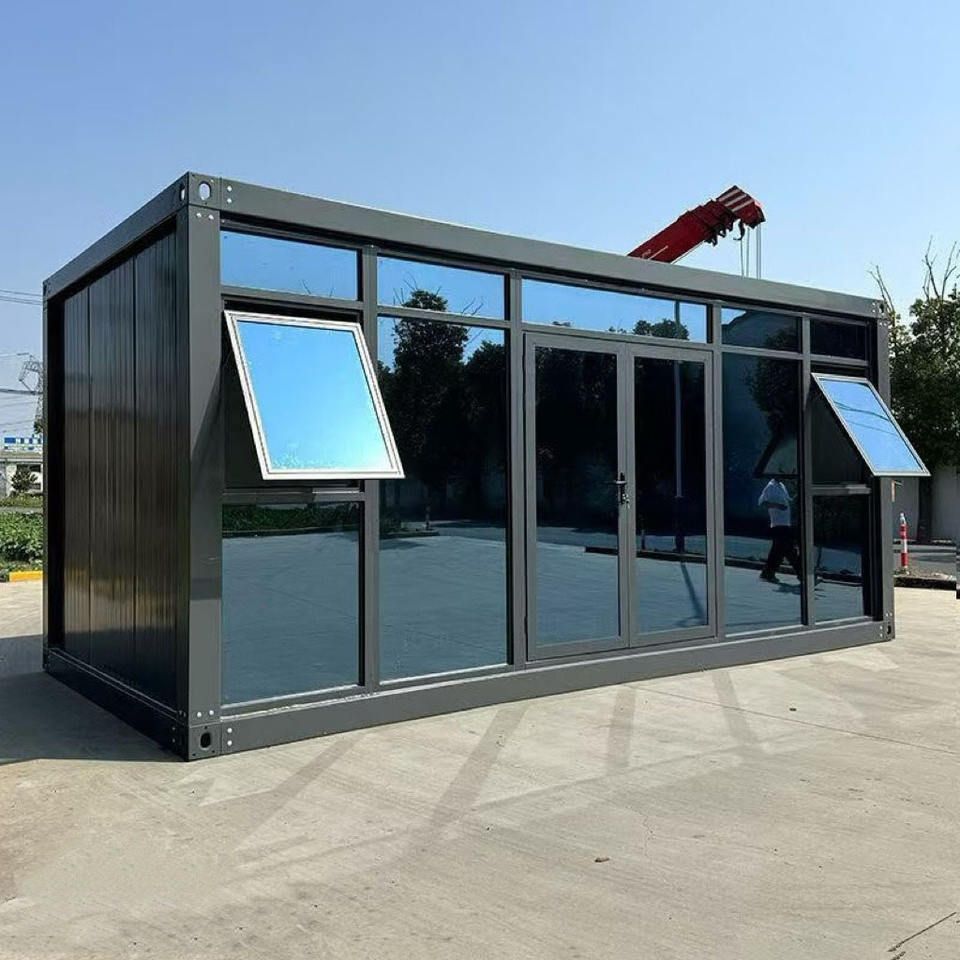
Suzhou enterprises can provide full-chain services from drawing refinement and production manufacturing to global transportation and on-site installation, supporting multi-scenario needs such as engineering camps, commercial pop-ups, emergency rescue, and overseas projects. For example, for commercial pop-up store scenarios, the products support customized designs such as curved walls and floor-to-ceiling glass windows, with interior space utilization exceeding 90%. The number of reuse cycles reaches over 15 times, with the cost per use being only one-third of that of a new product.



