
Quay lại blog
Bài viết
Super Prefabricated Housing
Quản trị 17 tháng 9, 2026
"Super prefabricated housing" generally refers to China's modular buildings or prefabricated houses, which are constructed by breaking down the building into independent modules, prefabricating them in factories, and then transporting them to the site for assembly.
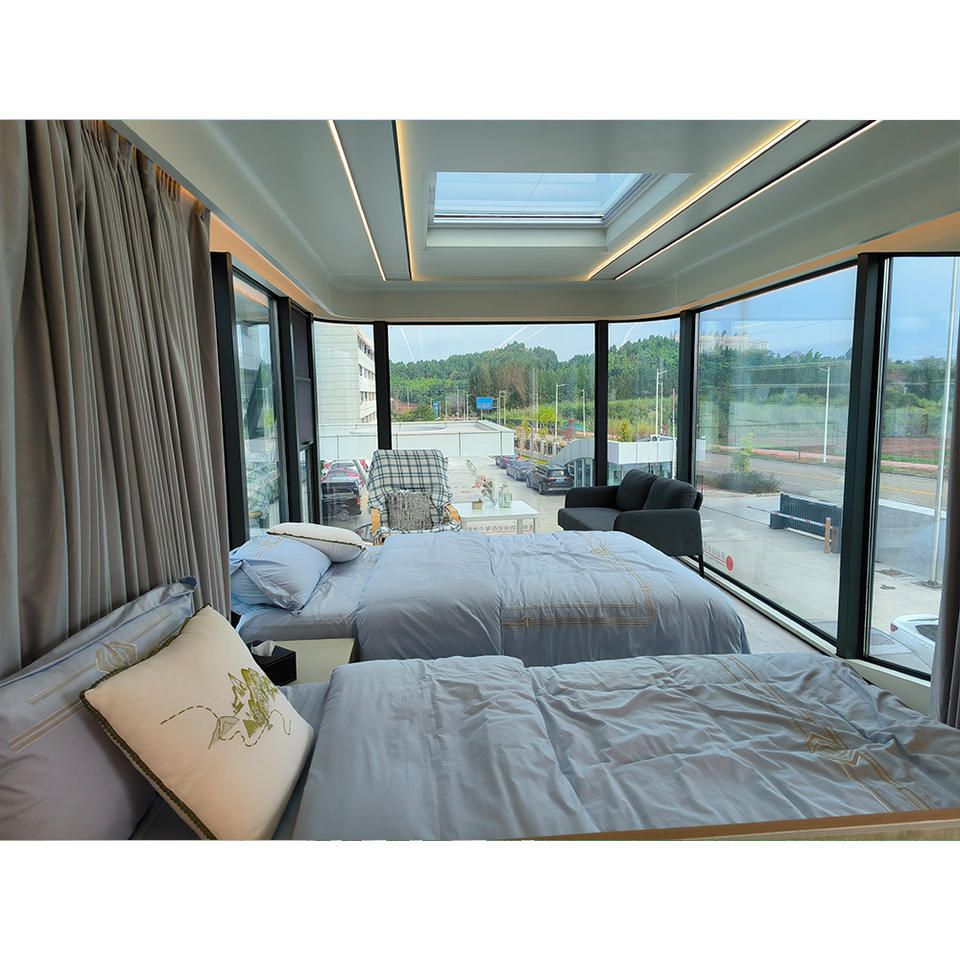
Construction Modes
- Factory Prefabrication: Ceilings, walls, bathroom waterproof layers, plumbing and electrical lines, etc., are all prefabricated on factory assembly lines. For example, the CSCEC HaiLong Intelligent Construction Industrial Park in Shenzhen, Guangdong, adopts parallel operations and automated production lines, capable of delivering 20,000 to 30,000 modules annually.
- On-site Assembly: After being transported to the site, the prefabricated modules are assembled like building blocks. For instance, at a construction site of a real estate project in Shanghai, tower cranes are used to transport and install the prefabricated modules, with each "block" having a detailed "ID card" containing information such as the project name, product model, and production date.
Technical Characteristics
- High Precision: The design is meticulous, with each steel bar's position precisely located, and errors and precision controlled in millimeters.
- Intelligence: Some factories employ production lines driven by full-servo motors, with welding robots, assembly robots, and grinding robots working in tandem, maintaining precision at the millimeter level.
- Efficient Production: Some factories have significantly higher production efficiency than their foreign counterparts. For example, CSCEC Steel Structure's first national steel structure modular intelligent production line can produce 50 modules per day, while similar factories in North America can only produce 5 per day.
Application Scenarios and Advantages
- Wide Application Scenarios: Can be used for constructing hotels, apartments, hospitals, affordable housing, etc.
- Significant Advantages: Short construction period, reducing the construction cycle by more than 60% compared to traditional building methods; controllable quality, ensuring quality through laser cutting, welding, and concealed work inspection robots; energy-saving and environmentally friendly, significantly reducing noise, dust, construction waste, and traffic congestion at construction sites; easy maintenance, with modular design facilitating later repair and replacement.
Market Situation
- Export Growth: From 2015 to 2025, China's prefabricated building exports increased from $1.472 billion to $4.339 billion, with a 45% year-on-year increase in exports in the first quarter of 2024. It is expected that the global modular building market size will exceed $142.8 billion by 2030.
- Reasons for Popularity Overseas: European and American countries face housing shortages, while developed countries suffer from a severe shortage of construction workers, driving up labor costs. Chinese prefabricated houses are low-priced and have short construction periods, making them very popular overseas.



