
Stilt-style Container House
Currently, no specific cases or related descriptions of stilt-style container houses have been found. There are differences in structural form and design concept between the two, making their combination quite challenging. The following is an analysis of the characteristics of stilt houses and container houses respectively:
Characteristics of Stilt Houses
Stilt houses are a branch of stilt-style architecture, featuring unique regional cultural characteristics and architectural forms. The main house is usually built on solid ground, while the side rooms are suspended on three sides, supported by pillars, with only one side connected to the main house on solid ground. This design is mainly to adapt to different terrains and landforms. In mountainous and hilly areas with complex terrains, it can make full use of the terrain, avoid excessive modification of the terrain, and also prevent moisture and insects and snakes. Moreover, the architectural style of stilt houses is often closely linked to the local ethnic culture, possessing a rich historical and cultural heritage and artistic value. The architectural components and decorative details all reflect the wisdom and aesthetic concepts of the local people.
Characteristics of Container Houses
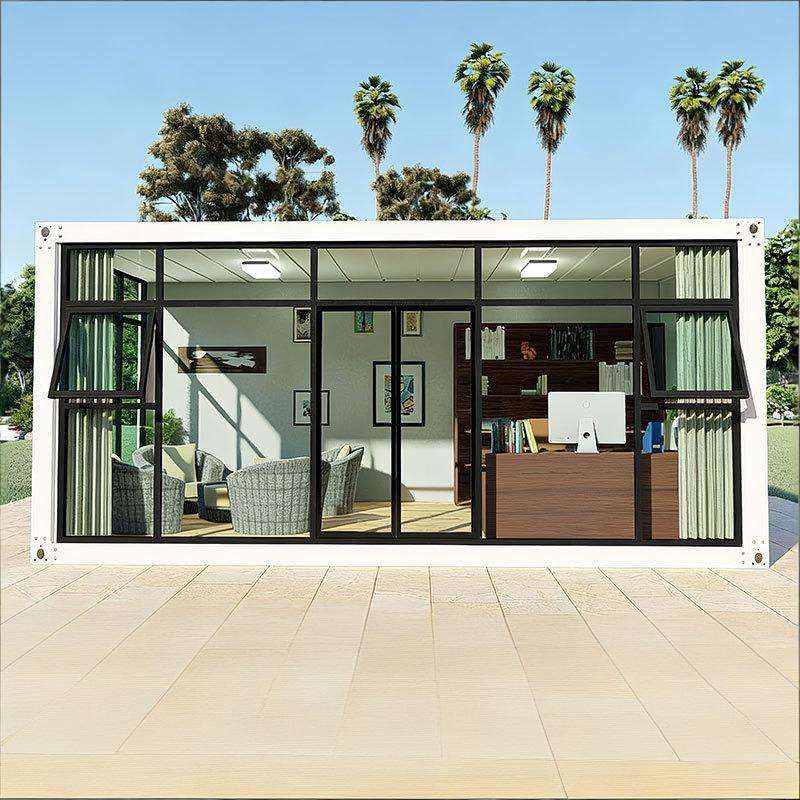
Container houses are a movable and modular architectural form, commonly including color-steel hoisting houses and foldable container houses. They use containers as basic units and construct building spaces of different scales and functions through splicing and combination. Container houses have advantages such as fast construction speed, relatively low cost, and reusability, and are widely used in temporary buildings, construction site dormitories, tourist resorts, and other fields. Their structural design is mainly based on the standard dimensions and strength of containers, focusing on functionality and practicality, and can quickly meet people's needs for building space.
Difficulties in Combining the Two
Since stilt houses emphasize the combination with the terrain and unique architectural styles, while container houses focus more on modularity and mobility, there are significant differences in their structural forms and design concepts. To combine the two, it is necessary to solve problems such as how to make containers adapt to the suspended structure of stilt houses and how to ensure the stability and safety of the overall building, while also taking into account the aesthetic appeal and cultural connotations of the building. Therefore, no specific cases of successfully combining stilt houses and container houses have been found so far.



