
Production of Steel Structure Mobile Toilets
The production of steel structure mobile toilets requires comprehensive consideration of multiple aspects, including design, materials, processing, installation, and after-sales service.
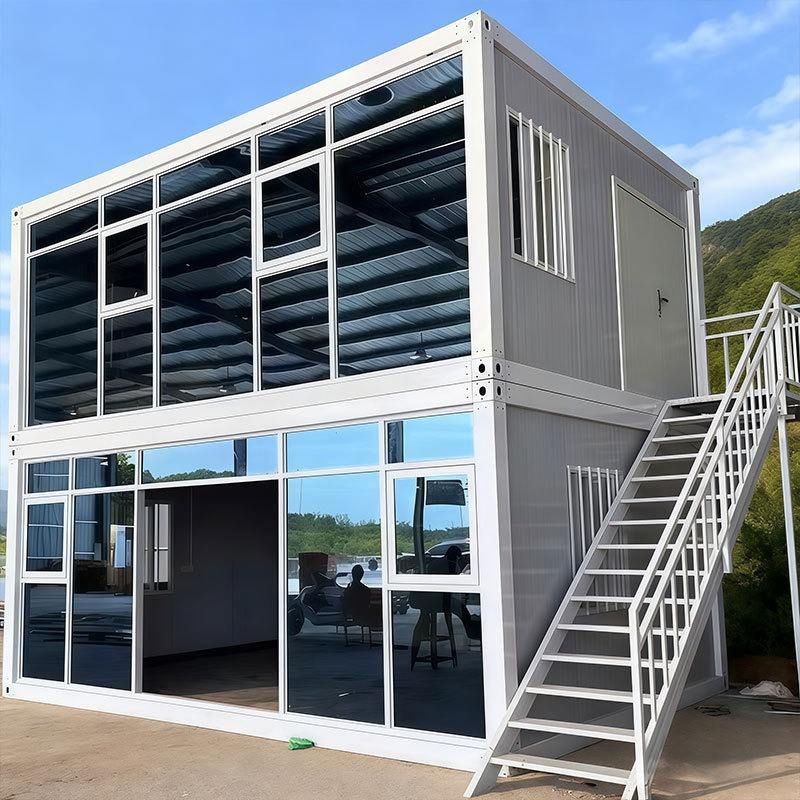
I. Design Phase
The design of steel structure mobile toilets should be customized according to the usage scenario and customer requirements. For instance, some designs employ an overall welding process for the steel structure framework to ensure structural stability. The front can incorporate handcrafted grille designs to enhance aesthetics. The internal layout should be reasonably planned with functional partitions such as separate restrooms for men and women and partitioned urinals, along with pre-embedded water and electricity pipelines to ensure convenience of use. During the design phase, the applicable temperature range should also be considered; for example, some products can withstand extreme environments ranging from -30℃ to 50℃, meeting the needs of different regions.
II. Material Selection
The main structure typically uses galvanized steel pipes or square tubes, which are welded to form a framework that combines strength and corrosion resistance. For exterior wall materials, options include metal carved panels or color-coated steel sheets; the former offers decorative effects such as imitation wood grain or stone patterns, while the latter is notable for its lightweight and waterproof properties. Internal partitions can be made of compact laminate or PVC panels, providing both privacy protection and ease of cleaning. Additionally, facilities such as LED lights, switches, and barriers should be equipped, with some high-end models integrating sinks and hand dryers to enhance the user experience.
III. Processing and Installation
The processing phase should strictly adhere to the design drawings, ensuring component precision through CNC cutting and bending processes. For example, companies like Shanghai Guyi Construction Engineering Co., Ltd. offer one-stop services from on-site measurement to production and processing, ensuring that the product matches the site. During installation, a modular design is adopted, with components connected by bolts to shorten on-site construction time. Some factories support customization of product specifications; for instance, manufacturers in Wuhu and Hangzhou can adjust dimensions and functional configurations according to customer requirements.
IV. After-sales Maintenance
Reputable manufacturers typically provide a warranty service of 1-3 years, covering structural repairs and equipment replacement. For example, the after-sales team of Shanghai Guyi Construction Engineering Co., Ltd. conducts regular inspections to promptly address issues such as water leakage and electrical failures. Users should choose enterprises with production qualifications and request documents such as material test reports and installation acceptance certificates to ensure that product quality meets standards.



