
Space Aluminum Container House
The space aluminum container house is a movable house constructed using aluminum alloy as the primary structural material, combined with the modular design concept of containers. It features lightweight construction, corrosion resistance, and rapid assembly, making it widely applicable in tourism homestays, temporary housing, commercial offices, and other fields.
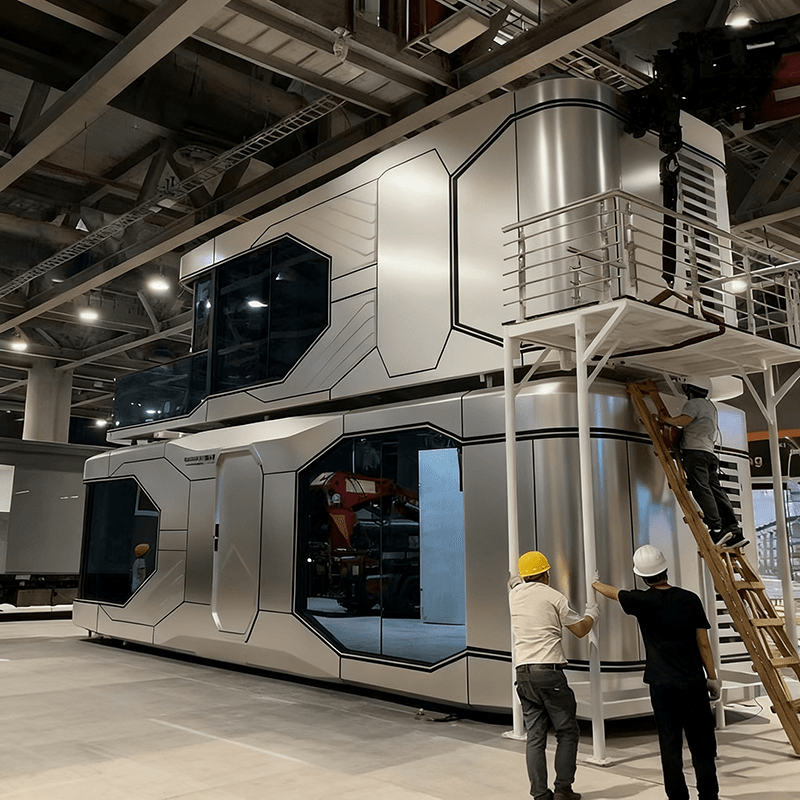
1. Material and Structural Characteristics
The core material of the space aluminum container house is aluminum alloy, particularly space aluminum (usually referring to high-strength, lightweight aluminum alloy materials). It has the characteristics of low density, strong corrosion resistance, and good thermal conductivity. Compared to traditional steel containers, aluminum alloy structures are lighter and easier to transport and lift, while also having a longer service life, especially suitable for humid or coastal environments. Its modular design retains the standard dimensions of containers (such as 20 feet and 40 feet), but improves thermal insulation and sound insulation performance by optimizing the structure (such as using steel-wood composite frames and Low-e insulated glass). Some products even feature 720-degree panoramic viewing capabilities.
2. Application Scenarios and Functions
- Tourism Homestays: For example, the "Starry Sky" creative container house combines a sci-fi theme with nature in its design concept. It is equipped with floor-to-ceiling windows and a starry sky dome, suitable for scenic spots, hotels, and other scenarios, supporting flexible movement and a land-house separation model.
- Temporary Housing: Used for construction site dormitories, post-disaster relief housing, etc., it can be quickly assembled and has lower costs than traditional buildings. For example, the price of a 20-foot prefabricated container house ranges from ¥2,947.87 to ¥4,672.47.
- Commercial Offices: The modular design supports customized office spaces, such as 20-foot container houses with electrical systems that can be paired with solar systems for off-grid operation.
3. Price Range and Influencing Factors
Prices are significantly influenced by size, configuration, and material:
- Basic Models: Simple mobile homes or small space capsules have lower prices, such as the ecological aluminum villa offered by Guangdong Changting at ¥200.0 per square meter, but with relatively simple functions.
- Mid-to-High-End Models: Products equipped with high-end decorations and intelligent control systems have higher prices, such as the customized space capsule homestays offered by Foshan Davis, priced at US$18,999-29,999 (approximately ¥130,000-210,000).
- Bulk Purchase Discounts: Some suppliers offer discounts for large orders, such as a 5% reduction for bulk purchases of prefabricated container houses from Suzhou Tengda.
4. Advantages and Limitations
- Advantages: Lightweight construction reduces transportation costs; aluminum alloy corrosion resistance extends service life; modular design supports rapid setup and expansion.
- Limitations: Aluminum alloy costs are higher than ordinary steel, resulting in higher initial investments; thermal insulation performance may be weaker than traditional buildings in extreme climates; some creative designs require additional customization, leading to longer lead times.



