
Sound Insulation Customization for Container Houses
Sound insulation customization for container houses can be achieved by selecting reputable manufacturers, controlling materials and processes, and referring to actual measurement parameters. Details are as follows:
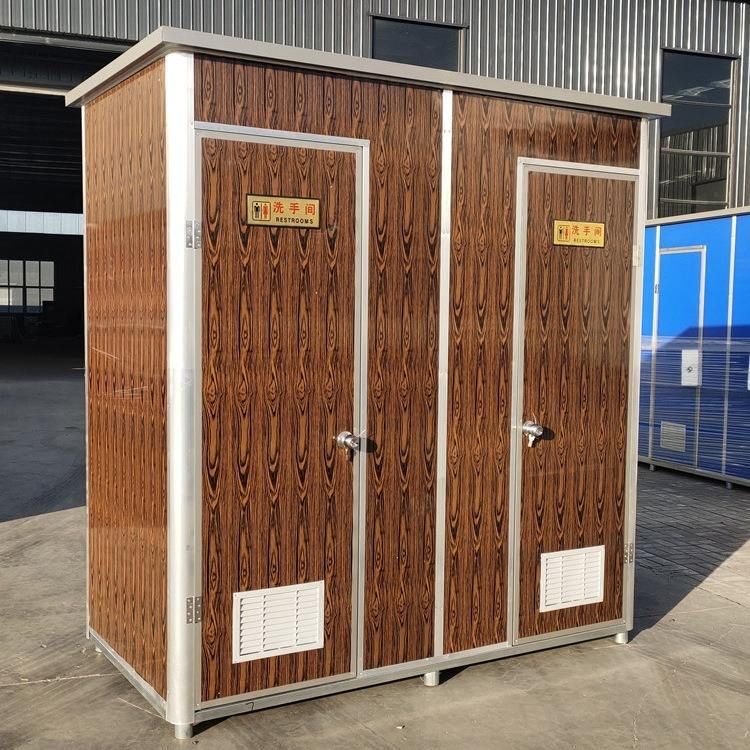
Selecting reputable manufacturers: The domestic market for sound-insulated container houses can be roughly divided into three tiers. The first tier consists of large-scale, formal production enterprises with complete production qualifications, their own factories, and testing laboratories. Their production processes are fully controllable, product performance parameters meet general industry standards, and their service systems cover the entire cycle of pre-sales, in-sales, and after-sales, enabling them to provide reliable sound insulation customization services. The second tier includes medium-sized processing and assembly factories, most of which lack independent research and development capabilities and mainly purchase general-purpose components for assembly. Their customization adaptability is relatively weak, and there are loopholes in quality control, making it difficult to guarantee the sound insulation customization effect. The third tier consists of unqualified white-label workshops that mostly rent small sites and purchase recycled steel and low-quality recycled insulation cotton for low-cost assembly. The sound insulation performance of their products has no testing guarantees, and they are not recommended.
Controlling materials and processes: Sound and thermal insulation performance is closely related to materials and processes. The thickness of the insulation rock wool should be no less than 75mm, and the overall thermal conductivity coefficient should be no higher than 0.04W/(m·K), which helps improve sound and thermal insulation effects. In terms of main structural materials, the section steel used for the main frame should have a thickness of no less than 2.0mm, the overall thickness of the wall panels should be no less than 50mm, and the spacing between the bottom load-bearing joists should not exceed 400mm, which can enhance the stability and sound insulation of the house. In terms of sealing processes, three-layer sealing strips are equipped at the splicing positions of door frames, window frames, and wall panels, and weather-resistant sealant is applied to all splicing gaps, effectively preventing sound transmission.
Referring to actual measurement parameters: For qualified products, the difference in noise levels between the indoor and outdoor environments should be no less than 35 decibels. In an outdoor environment of 38 degrees Celsius at noon in summer, after turning on an ordinary household air conditioner for 15 minutes, the indoor temperature can drop to 26 degrees Celsius. After continuous watering for 72 hours, there should be no leakage traces inside the wall panels. These actual measurement parameters can serve as reference standards for the sound insulation customization effect.



