
Small-Size Residential Container House
A small-size residential container house is a habitable architectural form transformed from a container as its basic structural module. It comes in various common sizes and structures, featuring characteristics such as sturdiness, durability, and ease of construction, with a wide range of application scenarios.
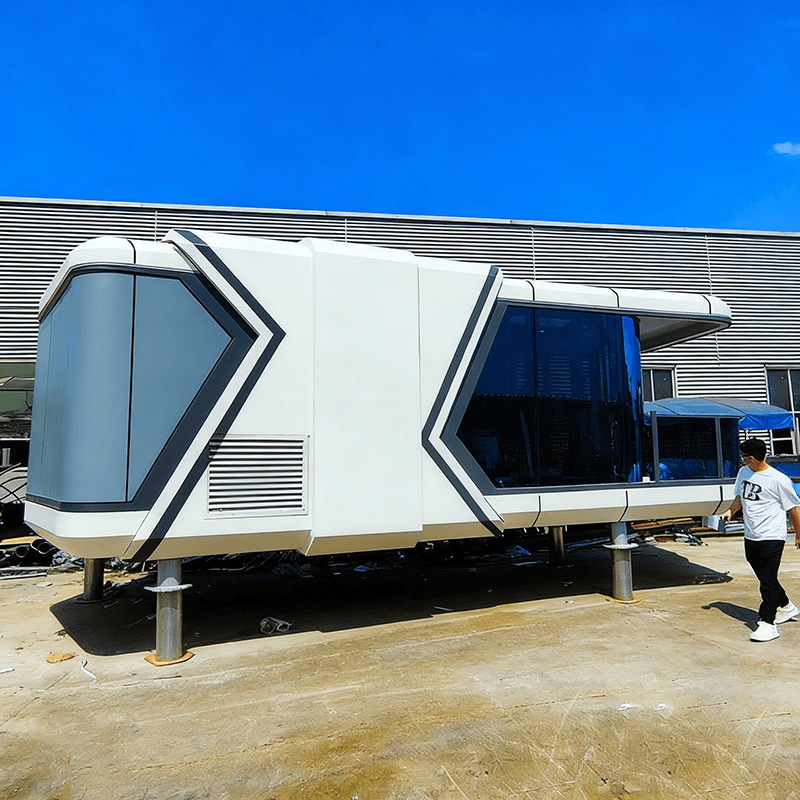
Common Sizes and Structures
The size of a small-size residential container house varies according to design requirements. For example, a container home located in the Sonoran Desert outside Tucson, Arizona, is 8 feet wide (approximately 2.44 meters), 40 feet long (approximately 12.19 meters), and has a total area of 320 square feet (approximately 29.7 square meters), representing a typical elongated single-container structure. Another design adopts a modular combination approach, such as a small-size house assembled from three containers: two standard containers stacked vertically to form a two-story structure, with one side cantilevered to increase spatial hierarchy; the ground floor uses a custom-widened container as the main body, with an indoor living area of 138 square meters and an equally sized outdoor space. This design breaks through the size limitations of a single container through flexible combinations while maintaining structural stability.
Core Characteristics
- Sturdy and Durable: Containers are made of high-strength steel, capable of withstanding extreme weather and geological conditions, such as strong winds and earthquakes, making them suitable for long-term use or temporary emergency scenarios.
- Easy to Construct: Container modules can be prefabricated in factories, requiring only assembly and connection on-site, significantly shortening the construction period and reducing labor costs.
- Flexible Functionality: Through internal partitions, window and door installations, and decorative modifications, they can meet various needs such as residential, office, and commercial purposes. For example, adding insulation layers, ventilation systems, or solar equipment can enhance comfort.
Application Scenarios
Small-size residential container houses are widely used in temporary housing, such as construction site worker dormitories and post-disaster emergency shelters; they are also common in creative space renovations, such as cafes and art studios; some regions use them as rental housing, balancing economy and practicality. Their modular nature enables them to quickly respond to the changing needs of different scenarios, making them a low-cost, high-efficiency solution in modern architecture.



