
Small Container All-Round House
The small container all-round house is a green modular building that uses containers as basic module units, is prefabricated industrially, and can be quickly assembled on-site, featuring multiple functions such as living, office, and commercial use. The following is an introduction from four aspects: structural performance, application scenarios, design features, and cost advantages.
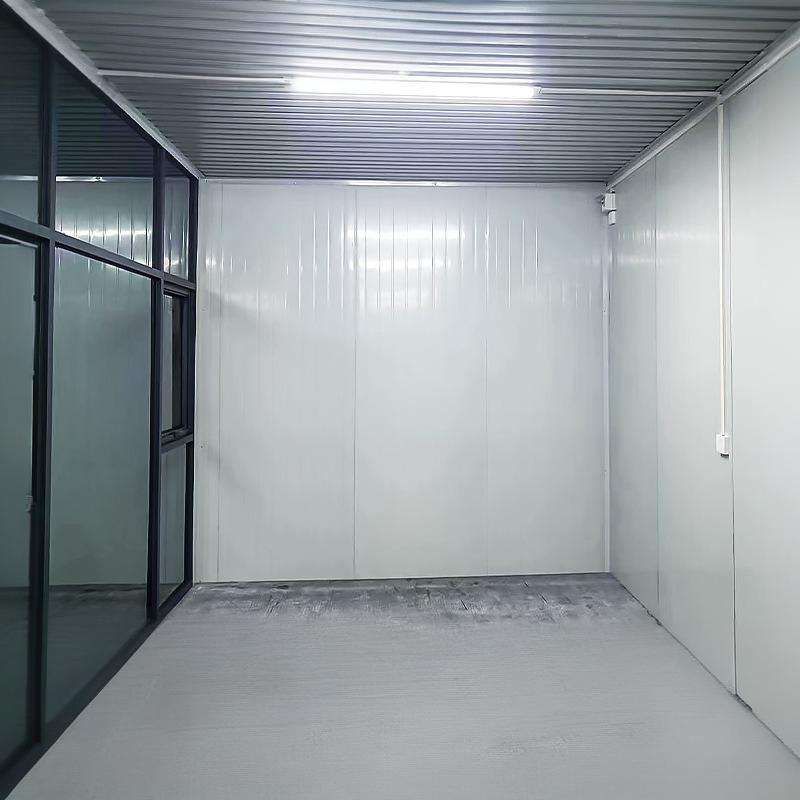
In terms of structural performance, the all-round container house adopts a high-strength steel frame, ensuring strong structural stability. For example, the product of Suzhou Zhongnan Steel Structure Co., Ltd. has a maximum frame deformation of only 2mm under the action of a Level 12 strong wind, far below the national standard limit of 10mm; the product of CIMC Modular Building Investment Co., Ltd. has a deformation of 3mm, also performing excellently. Meanwhile, its fire resistance rating reaches above B1, which can effectively delay the spread of fire and ensure living safety. In addition, the container house has a repeat utilization rate of over 80%, meeting environmental protection requirements, and most of the materials can be recycled after disassembly.
Regarding application scenarios, the all-round container house has a wide range of adaptability. In the public service sector, it can serve as community service stations, libraries, etc., such as the Shanghai Gubei Station; in the integration of culture, commerce, and tourism, it can be used for themed commercial streets, scenic area parks, etc., such as the Qingdao TEU Container Tribe; in the creative office field, it can create personalized office spaces, such as the Shanghai Wisdom Bay Science and Technology Innovation Park; it can also be used for temporary exhibition venues, urban living rooms, public stations, non-standard commercial spaces, rural cultural tourism, and other diverse scenarios.
In terms of design features, the all-round container house has flexible and diverse designs. The interior space can be personalized according to needs, such as setting up functional areas like bedrooms, living rooms, kitchens, and bathrooms. It can also adopt foldable furniture, open storage, and other designs to improve space utilization. Externally, the usable area can be expanded through sliding modules, folding platforms, etc. For example, some container cabins can double their area when unfolded. In addition, it can be equipped with solar photovoltaic power generation systems, rainwater collection systems, septic tank systems, etc., to achieve energy self-sufficiency and an environmentally friendly lifestyle.
Regarding cost advantages, the procurement and renovation costs of the all-round container house are relatively economical, and the construction period is short. After the prefabricated modules are transported to the site, they can be quickly hoisted and assembled. The on-site assembly time for a single module is relatively short, which is a significant advantage for projects with tight schedules. Meanwhile, its mobility and repeatability allow for quick layout adjustments according to service needs and changes, reducing long-term use costs.



