
Principle of Simple Movable Toilet
The principle of a simple movable toilet is mainly reflected in two aspects: structural design and waste collection system, achieving flexible deployment and functionality through modular design.
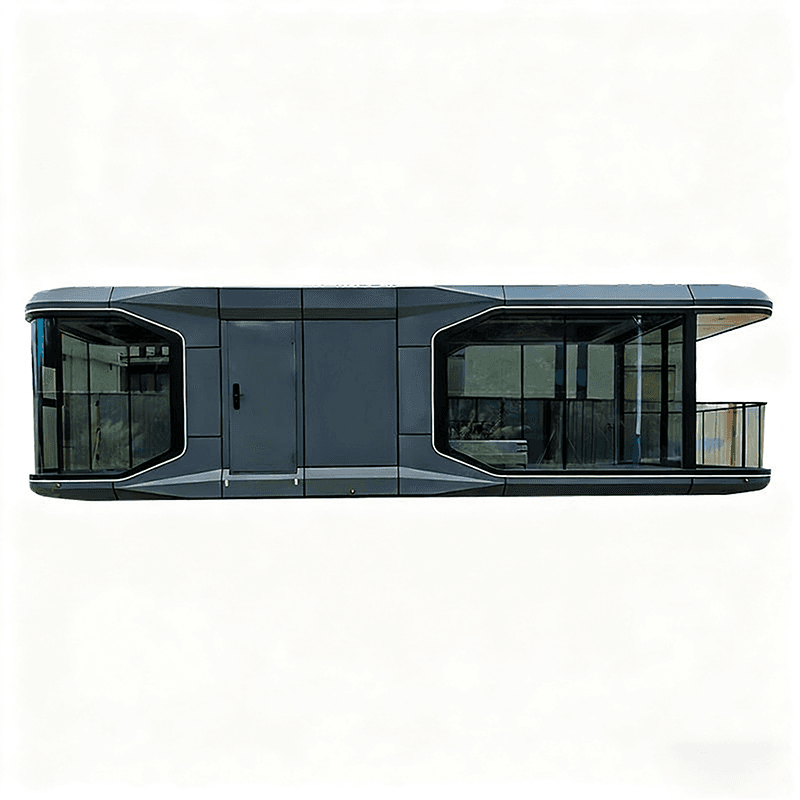
Structural Design Principle
The main frame is made of lightweight color-coated steel plates, which are spliced together using standardized plates to form the basic structure. Metal locks are used to secure the connection points of various components, ensuring overall stability and resistance to wind and earthquakes. The internal interlayer is filled with closed-cell foam material, which not only provides thermal insulation to adapt to different climatic conditions but also cushions impacts during transportation, reducing the risk of component damage. The top and edges are finished with color-coated steel trim, secured with both sealing strips and rivets to form a continuous waterproof layer, effectively preventing rainwater leakage and odor diffusion.
Modular design is one of the core advantages. All components are divided into independent modules according to their functions (such as walls, roofs, and door frames), which can be quickly assembled through standardized interfaces. The loose-parts shipping model allows for adjustments in installation positions based on site conditions. For example, in narrow spaces, components can be transported in batches and assembled on-site with adjustable feet to accommodate uneven ground. The universal design of components ensures that damaged parts of the same toilet model can be quickly replaced, reducing maintenance costs.
Waste Collection System Principle
Since it is not connected to the municipal sewage network, a closed-top fecal storage tank or a detachable fecal bucket is used as the core collection device at the bottom. The fecal storage tank is typically made of high-density polyethylene, with a capacity designed according to the usage scenario (e.g., 200-500 liters for toilets in scenic spots). The interior of the tank is smoothly finished to prevent fecal adhesion, and the top opening is connected to the toilet's squat or sit toilet via a sealed pipe to ensure that waste directly falls into the tank. Some models are equipped with plastic observation windows made of transparent acrylic material embedded on the side of the tank and secured with clips, allowing staff to visually inspect the fecal level and avoid overflow risks.
The design of the detachable fecal bucket focuses more on ease of cleaning. The bucket is connected to the toilet body via quick connectors, and during cleaning, it can be removed as a whole by simply releasing the clips. Some high-end models add biodegradable bacteria agents to the fecal bucket to reduce odor production through microbial decomposition and extend the cleaning cycle. All collection devices require regular manual cleaning, with the cleaning frequency adjusted according to the number of users (e.g., a toilet used by an average of 50 people per day requires cleaning every 3-5 days). During cleaning, protective gear must be worn, and the waste should be transported to designated disposal points for harmless treatment.



