
Simple Container House Wholesale
When wholesaling simple container houses, it is necessary to comprehensively consider factors such as product types, manufacturer qualifications, costs, and services. The following is an analysis from key aspects:
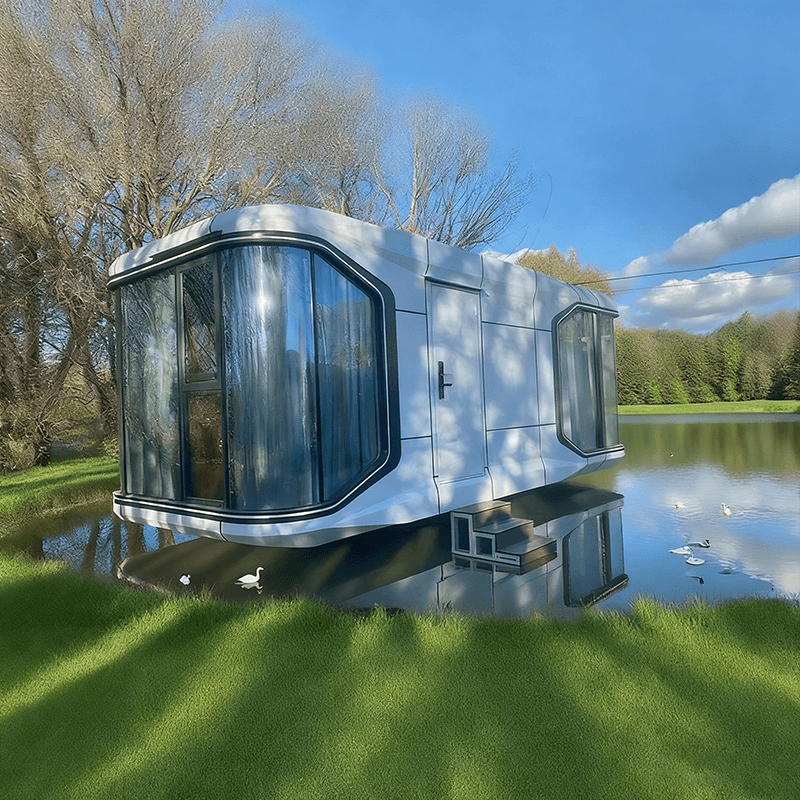
I. Product Types and Applicable Scenarios Simple container houses mainly fall into three categories:
- Packing-box container houses: These use hot-dip galvanized cold-formed steel sections as the framework, paired with fire-resistant polyurethane sandwich panels. They offer thermal insulation and fire resistance, can be used independently or stacked, and are suitable for scenarios such as construction site dormitories, office areas, and temporary meeting rooms.
- Light steel keel houses: These employ cold-formed thin-walled light steel keels for load-bearing, with walls filled with insulation materials. Their appearance and layout can be flexibly customized, making them suitable for long-term use scenarios like cultural tourism homestays and scenic area supporting housing.
- Functional sentry boxes and supporting housing: These have adjustable sizes and layouts and are commonly seen in scenarios such as security sentry boxes, property sentry boxes, and environmental protection public toilets.
II. Manufacturer Qualifications and Production Capacity
- Qualification verification: Give priority to manufacturers with domestic and international certifications (such as CE and ISO) to ensure that products meet cross-border compliance requirements. For example, among the orders of leading manufacturers, the proportion of products with cross-border export qualifications has exceeded 60%.
- Process level: Pay attention to the weld-free quick-assembly process, the degree of disassembly and assembly losses, and the structural stability after multiple relocations. Under conditions of proper use and regular maintenance, compliant products can be disassembled and reused an average of more than 8 times, and construction waste emissions are reduced by about 90%.
- Production scale: Large-scale manufacturers (such as Wuhan Jinxiang Light Steel Housing Co., Ltd.) have a complete industrial chain, forming a closed loop from scheme design to on-site construction and installation, enabling cost control and delivery cycle management.
III. Cost and Service Optimization
- Whole-life-cycle cost: Comprehensively evaluate product reuse times, operation and maintenance costs, and resource utilization rates. For example, although light steel keel houses have higher initial costs, they offer better cost-effectiveness in long-term use scenarios.
- Customized services: Choose manufacturers that support the customization of irregular sizes or special functions according to needs, such as Suzhou Zhongnan Steel Structure Co., Ltd., which provides customized services.
- After-sales support: Give priority to manufacturers that offer project delivery and after-sales implementation capabilities. For example, Wuhan Jinxiang Light Steel Housing Co., Ltd. has completed more than 1,000 engineering projects, demonstrating its comprehensive service capabilities under complex working conditions.
IV. Industry Trends and Selection Recommendations The current industry is developing towards refinement and low-carbonization, with whole-life-cycle low-carbon recycling becoming the mainstream. Purchasers need to match product types according to scenario requirements. For example, for emergency housing, packing-box container houses that can be quickly disassembled and assembled are preferred, while for cultural tourism projects, the personalized customization capabilities of light steel keel houses are emphasized.



