
Shuiquan Prefabricated House
Currently, there is no complete definition or specific product introduction directly targeting 'Shuiquan Prefabricated House'. However, based on relevant cases and types of prefabricated houses, it can be inferred that it may fall within the category of prefabricated buildings or cement prefabricated houses, with specific characteristics requiring analysis based on actual scenarios.
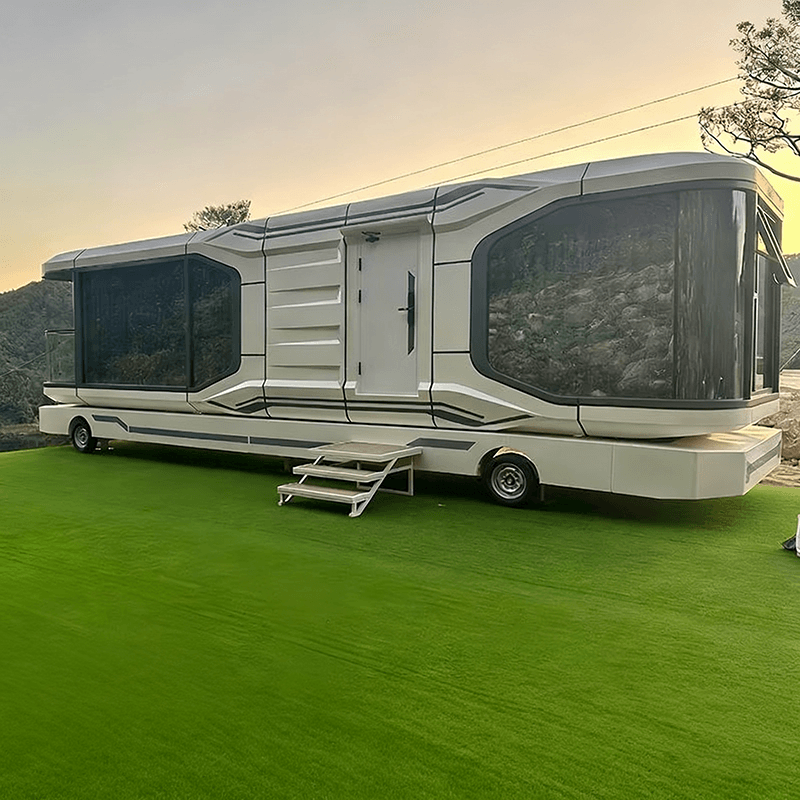
Core Concepts and Types of Prefabricated Houses
Prefabricated houses generally refer to buildings where building components (such as walls, floors, beams, and columns) are pre-processed in factories and then transported to the site for assembly. Depending on the materials and processes, they can be classified into the following types:
- Prefabricated Buildings: Taking the relocation building in Shuiquan Community, High-tech Zone, Tai'an City as an example, it uses standardized factory-produced components connected by bolts or welding, reducing on-site wet operations (such as concrete pouring). Such buildings offer significant advantages in environmental protection and energy efficiency, with construction periods shortened by 30%-50% and labor costs reduced by approximately 20%.
- Cement Prefabricated Houses: Materials include concrete, color-coated steel, etc., with processes covering traditional pouring or welding. For example, some mobile cement houses use light steel frames with concrete sandwich panels, allowing for rapid disassembly and reassembly, suitable for temporary offices, post-disaster reconstruction, and other scenarios.
- Functional Prefabricated Houses: Such as reinforced concrete prefabricated pump houses, which achieve intelligent control and remote monitoring functions through modular design, meeting industrial or municipal needs.
Possible Forms and Characteristics of 'Shuiquan Prefabricated House'
If 'Shuiquan Prefabricated House' refers to prefabricated buildings applied in the Shuiquan area, it may exhibit the following characteristics:
- Materials and Processes: If referencing the case of Shuiquan Community in Tai'an, it may primarily use concrete components and adopt prefabricated technology, emphasizing structural safety and construction efficiency; if for rural housing renovation (such as in Shuiquan Village, Longyang Town), it may combine light steel or color-coated steel materials to reduce costs and adapt to the rural environment.
- Functional Positioning: Relocation buildings focus on residential functions and need to comply with seismic and energy-saving standards; rural housing renovation may兼顾 (take into account) both residential and agricultural ancillary housing needs, such as storage and breeding spaces.
- Customization Level: Prefabricated houses can be adjusted in size, layout, and even integrated with water and electricity pipelines according to needs, but the level of customization is limited by the factory's production capacity.
Considerations for Choosing Prefabricated Houses
- Compliance: It is necessary to confirm whether local building codes allow prefabricated structures, especially for rural housing renovation, which needs to comply with rural self-built housing policies.
- Cost-Effectiveness: In the short term, the unit price of prefabricated houses may be higher than that of traditional buildings, but in the long term, they can save on maintenance and energy costs.
- Supplier Qualifications: Choose qualified factories to ensure the quality of components and transportation and installation services.



