
Shifang Modular Container House
The Shifang modular container house is a building form prefabricated in factories and rapidly assembled on-site. It offers advantages such as a short construction period, environmental friendliness, and controllable quality, making it widely applicable in areas like temporary housing, tourist homestays, and commercial pop-ups.
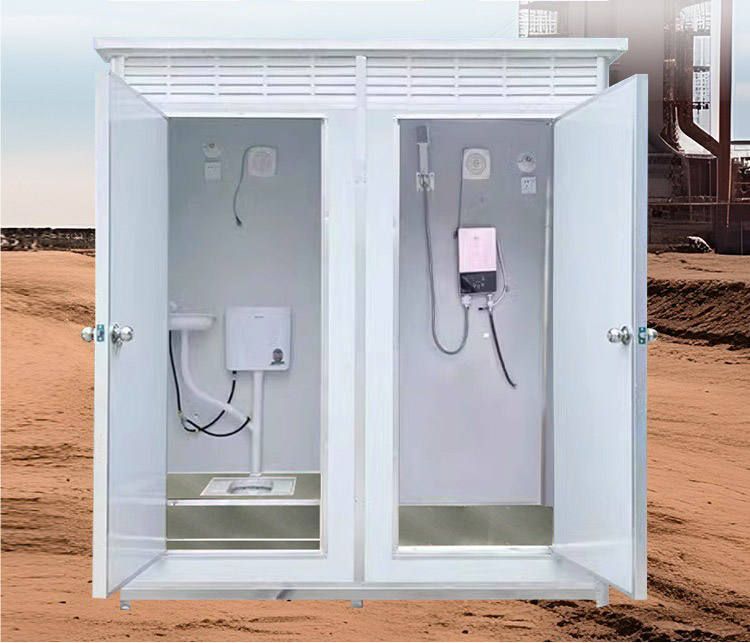
Definition and Characteristics of Modular Container Houses
Modular container houses are a type of modular integrated housing. Their core lies in dividing buildings into standardized modules, completing the prefabrication of the main structure, interior decoration, and equipment pipelines in factories, and then transporting them to construction sites for rapid assembly. This construction method does not rely on traditional wet operations, shortening the construction period by more than 50%, with errors controlled at the millimeter level. Their seismic resistance, airtightness, and thermal insulation have all been verified through building codes. Their greatest advantage is reversibility—building modules can be disassembled, moved, stacked, or upgraded, significantly improving land resource utilization.
Application Scenarios of Modular Container Houses
Temporary Housing and Emergency Needs
In natural disasters or temporary housing for engineering projects, modular container houses can be quickly set up as dormitories, offices, or medical stations. For example, construction site dormitories use double-layer anti-condensation treatment, aluminum foil composite insulation boards, and fresh air systems to effectively solve issues of dampness and stuffiness, enhancing living comfort.Tourist Homestays and Commercial Spaces
Due to their modernity and flexibility, modular container houses are widely used in scenic homestays, pop-up shops, and other scenarios. Through staggered assembly and designs like wood-grain fluorocarbon paint exteriors, creative and practical buildings can be created, such as L-shaped office-living complexes and glass-curtain-wall vacation homes.Permanent Housing and Overseas Projects
As technology matures, modular container houses can now meet the needs of permanent housing. For example, in a modular hotel project in Papua New Guinea, domestic production, ocean transportation, and on-site assembly reduced the delivery period from 14-18 months to 7 months, while also cutting labor and local material costs by 60%-70%.
Technical Advantages of Modular Container Houses
- Industrial Production: Standardized CNC cutting in factories reduces material waste from 8%-12% on traditional construction sites to 3%-5%. Welding and assembly processes are completed by robots, with precision maintained at 1-2 millimeters.
- Environmental Protection and Low Carbon: Lightweight steel structure modules reduce the consumption of foundation materials and generate less construction waste, aligning with green building trends.
- Flexible Customization: Module sizes and functions can be adjusted according to needs. For example, 20-foot/40-foot containers can be expanded into multi-bedroom homes or integrated with bathrooms and kitchens.



