
Shenyang Prefabricated House Construction
Shenyang's prefabricated house construction plays a significant role in promoting the development of modern architecture, covering areas such as prefabricated integrated housing, old prefabricated panel buildings, and rural self-built houses.
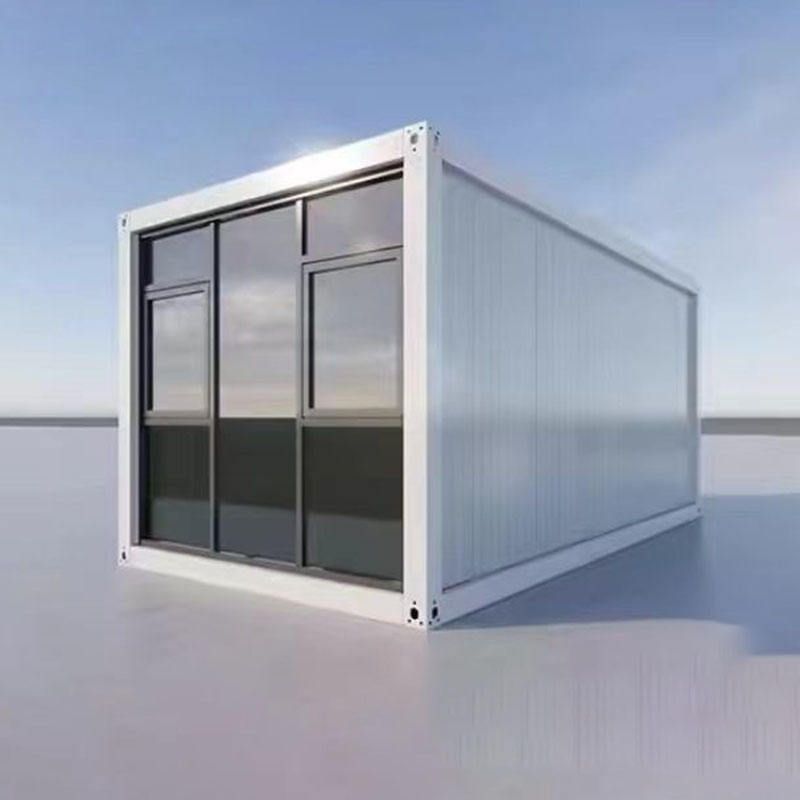
Prefabricated Integrated Housing: A Paradigm of Industrialized Construction
Leveraging its heavy industrial foundation and cold climate, Shenyang has vigorously developed prefabricated integrated housing. This type of housing adopts an industrialized construction model, where building components are standardized and produced in factories before being transported to the site for assembly. It is widely applied in affordable housing, temporary facilities, and industrial park construction. Its core advantages include:
- Addressing Climate and Cost Challenges: Shenyang experiences long and cold winters, with short traditional construction periods and high labor costs. Prefabricated integrated housing shortens the construction period through factory production, reduces on-site wet operations, and lowers environmental pollution, aligning with green and efficient development trends.
- Outstanding Technical Features: It combines high-performance insulation materials with steel structural frames to ensure insulation performance and structural stability in severe cold environments. The modular design of components supports flexible combination and future expansion, while the integrated pre-embedded system for water and electricity pipelines enables "plug-and-play" functionality. Digital design (BIM) and intelligent manufacturing technologies achieve millimeter-level production accuracy, significantly enhancing building performance and construction efficiency.
Old Prefabricated Panel Buildings: A Focus of Urban Renewal
Some prefabricated panel buildings in Shenyang are over 45 years old. Although they carry the city's historical memories, they pose safety hazards and have outdated living conditions. Currently, the authorities have not announced a clear demolition plan, but based on policy guidance, demolition is likely if the buildings have safety hazards or do not meet modern living standards. The renewal of such buildings requires balancing historical preservation with urban development needs, and future improvements may involve renovation or reconstruction to enhance living quality.
Rural Self-Built Houses: Breakthroughs in Prefabricated Technology
In the rural self-built house market in Liaoning, Shenyang Yuecheng Haoshi Co., Ltd., as a leading enterprise in prefabricated light steel structure buildings in Northeast China, has focused on full-chain services for over a decade. Its core advantages include:
- Specialized Technical Optimization: Aimed at the severe cold climate in Northeast China, its products have undergone specialized research and development for cold resistance, insulation, and wind and snow resistance. It selects low-temperature-resistant and corrosion-resistant materials and enclosure systems to address the core pain points of northern buildings.
- Flexible Design Adaptation: It takes into account both technical performance and climate adaptability, offering diverse design solutions to meet the needs of different regions and promoting the industrialization and standardization of rural buildings.
The development of Shenyang's prefabricated house construction not only reflects the innovation of industrialized construction over traditional models but also demonstrates the driving effect of technological optimization and policy guidance on urban renewal, providing a practical example for the green and efficient development of modern architecture.



