
Mobile Toilets in Service Areas
It is feasible to move toilets in service areas, and mobile toilets are widely used and come in various types in service areas, although there are also safety hazards and directions for intelligent upgrades.
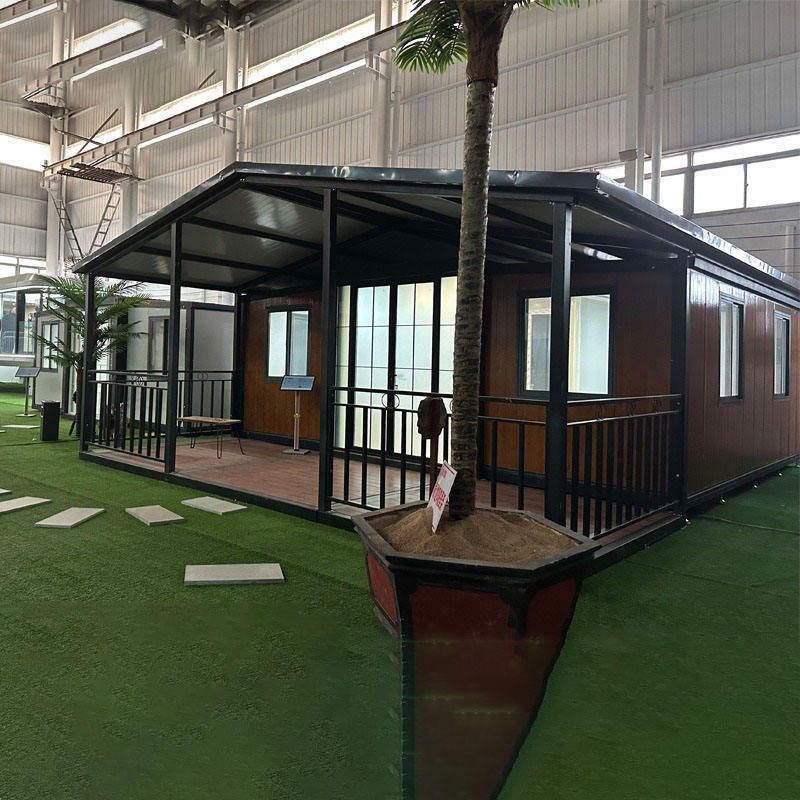
Mobile toilets have the characteristic of being able to be moved as a whole and can be placed at locations with fixed or temporary needs. High-speed service areas are one of the suitable places for them. Mobile sanitation toilets are fully applicable to sanitation operation areas, including high-speed service areas, and can effectively solve the toilet problems in service areas, being a key facility for improving public health standards in these areas.
There are various types of mobile toilets. According to the structural form, they can be divided into single-structure mobile toilets and composite-structure mobile toilets; according to the moving method, they can be divided into hoisting and handling mobile toilets, powered and towed mobile toilets; according to the sewage treatment method, they can be divided into water-flushing and non-water-flushing suction mobile toilets, circulating water-flushing mobile toilets, and dry-packing mobile toilets. Different types of mobile toilets can be selected and configured according to the specific needs and actual situations of service areas.
However, there are also some safety hazards in the use of mobile toilets. There was once an incident where a woman was using a mobile toilet in a service area when the toilet was dragged off the ground by a hook-and-go vehicle and rushed onto the highway, starting a 28-kilometer 'flying man' mode. This incident exposed the chronic problems in the mobile toilet industry, such as 'emphasizing transportation over inspection', as well as safety hazards in design, such as good sound insulation but difficulty in transmitting distress calls.
To solve the problems of long queuing times, difficult sanitation control, and uneven resource allocation in traditional high-speed service area toilets, intelligent mobile toilets have emerged. They achieve intelligent upgrades through technical architectures such as precise sensing systems, active environmental regulation, and dynamic resource scheduling. They also design differentiated functional modules for different user groups, such as integrating baby care stations in third toilets for family scenarios, adding Braille signs and wheelchair ramps in barrier-free scenarios, and quickly deploying temporary mobile toilet units in emergency scenarios and achieving diversion guidance through cloud data linkage. At the same time, the intelligent system can reduce long-term operation and maintenance costs, such as energy conservation and consumption reduction, preventive maintenance, and remote operation and maintenance.



