
Quay lại blog
Bài viết
Self-made Living Container House
Quản trị 16 tháng 9, 2026
When building a self-made living container house, it is necessary to comprehensively consider various factors such as purchase, ground treatment, structural modification, interior decoration, and compliance.
I. Purchase Phase
Selection of Structural Type:
- Welded Integral Box: Factory-welded as a whole, with a direct load path and strong resistance to deformation, suitable for frequent lifting and moving.
- Bolt-connected Modular Box: Uses standard plates connected by bolts, with multiple connection nodes in the load path. It is necessary to check the tightness of the nodes. When purchasing, attention should be paid to the steel wall thickness of the columns and bottom beams, with common specifications ranging from 1.5mm to 3mm. The thicker the wall, the greater the load-bearing redundancy.
Coating Process:
- Hot-dip Galvanizing Treatment: Offers a longer anti-corrosion lifespan, especially in areas with large temperature differences between day and night and significant humidity changes. The quality of the coating directly determines the rusting speed of the container body.
II. Ground Treatment
- Load-bearing Foundation: The bottom beams of container houses are usually I-beams or channel steels, with limited contact area with the ground. It is necessary to ensure that the ground is flat and solid to avoid uneven settlement caused by direct placement on soft soil.
III. Structural Modification and Interior Decoration
Structural Modification:
- Open up the container body according to needs to increase space area.
- Install internal wooden frames, including partitions, and add insulation layers.
Interior Decoration:
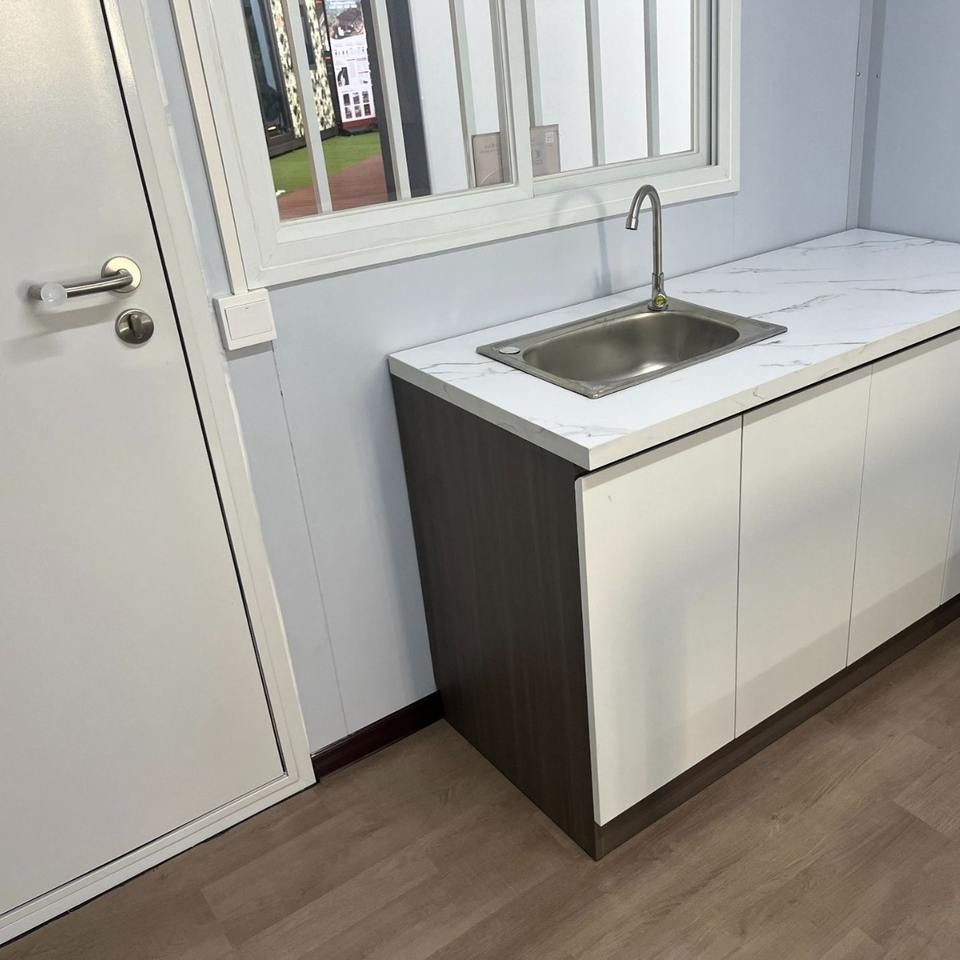
- Walls and Roof: Can use a combination of purification panels, double-sided white, to enhance living comfort.
- Floor: Lay floor leather or wooden floors to increase warmth.
- Doors and Windows: Install sliding windows and specially made color steel plate doors, and reserve air conditioning holes.
- Water and Electricity Installation: Reasonably plan the electrical circuit and water pipeline to ensure electrical safety and water convenience.
IV. Compliance and Approval
- Land Approval: Requires approval from relevant departments to ensure legal land use.
- Building Codes: Follow local building codes and safety standards to ensure the structural safety of the house.



