
Quay lại blog
Bài viết
Second-Hand Container House Weight
Quản trị 17 tháng 9, 2026
The weight of second-hand container houses varies depending on their size, type, and specific condition, with common ranges as follows:
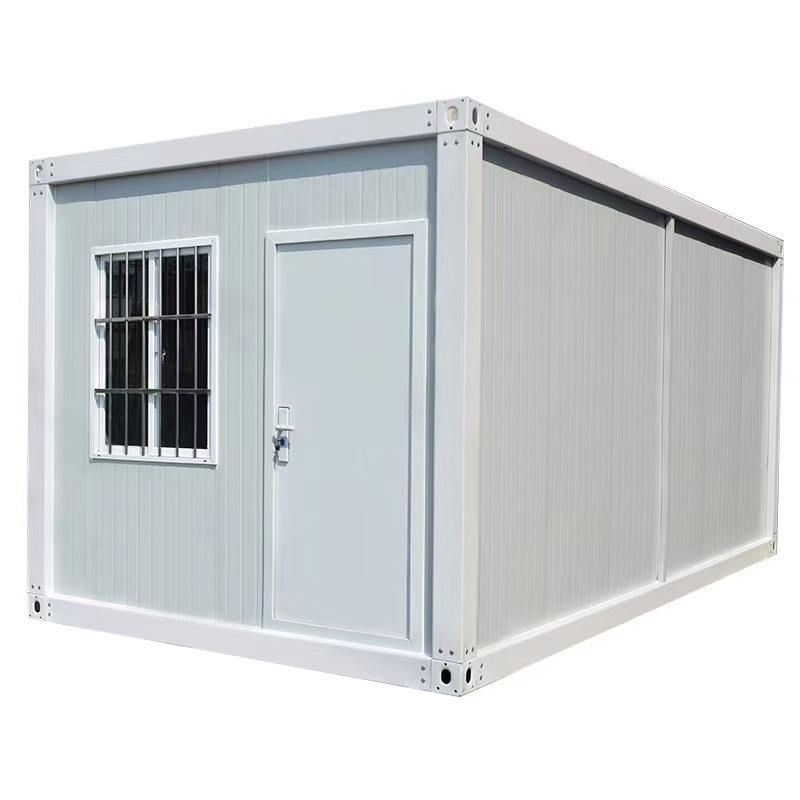
1. Weight Range of Standard-Size Second-Hand Containers
- 20-foot standard second-hand container: The self-weight typically ranges from 2.3 tons to 2.32 tons. Due to their moderate size, these containers are often used as foundational units for small temporary housing or modular buildings. Their weight is relatively less affected by manufacturing materials (such as ordinary steel or high-strength steel) and service life, but long-term use may lead to local rust or slight structural deformation, thereby affecting the actual weight.
- 40-foot standard second-hand container: The self-weight ranges from 3.72 tons to 3.95 tons. As core modules for large temporary buildings, their weight differences primarily stem from manufacturing processes (such as welding methods and steel thickness) and whether they have undergone reinforcement. For example, some second-hand containers may have additional internal support structures due to transportation needs, resulting in increased weight.
2. Weight of Special-Type Second-Hand Containers
- High-strength steel or reinforced second-hand containers: Some second-hand containers may use higher-strength steel or additional reinforcement structures to meet the load-bearing requirements of temporary housing on construction sites, with a total weight of up to 32.5 tons (including cargo). The empty weight of such containers is usually significantly higher than that of standard models, with specific values depending on design parameters.
3. Key Factors Affecting Weight
- Manufacturing materials: The weight difference between ordinary carbon steel containers and high-strength steel containers can reach 10%-15%, with the latter being heavier due to higher material density.
- Service life: Containers exposed to humid or corrosive environments for long periods may experience a slight increase in weight due to surface rust (rust layer adhesion), but severe rust can weaken structural integrity and require careful evaluation.
- Modification and reinforcement: Adding doors, windows, insulation layers, or internal support structures can significantly increase weight. For example, containers modified for residential use may have additional lightweight partitions or composite floors, increasing weight by approximately 0.5 tons to 1 ton.
Summary: The weight of second-hand container houses must be comprehensively evaluated based on their specific size, type, and service condition. When purchasing, it is recommended to have the structural integrity tested by a professional agency and refer to the original data or test reports provided by the manufacturer to ensure the weight meets transportation, installation, and safety requirements.



