
Renovated House from Scrap Containers
Renovating houses from scrap containers is feasible, but it requires comprehensive consideration of factors such as legality, safety, living conditions, and renovation techniques.
1. Legality and Policy Restrictions
The legality of renovating houses from scrap containers varies by region. Some cities explicitly prohibit using containers as permanent living spaces. For example, the comprehensive law enforcement department in Laiyang City once cleared illegally constructed container houses due to their occupation of public spaces or non-compliance with land use planning. However, in some areas, if they comply with building codes, pass approvals, and pay land use fees, container houses can be used as temporary buildings or creative spaces, as seen in cases like Shanghai's container creative park and container homestays in Mogan Mountain, Zhejiang.
2. Safety and Structural Renovation
Containers are essentially transportation tools and require professional renovation to meet residential safety standards:
- Structural Reinforcement: Weld and reinforce the connections between container bodies, add crossbeams or columns to enhance load-bearing capacity, and prevent deformation during stacking or high-rise use.
- Fire and Moisture Prevention: Wrap the container body with fire-resistant panels and apply fire-resistant coatings internally; lay moisture-proof layers on the ground and install thermal insulation materials (such as rock wool panels) on the walls to avoid high temperatures and stuffiness in summer.
- Ventilation and Lighting: Cut the container body to add windows or skylights, and equip with exhaust fans or fresh air systems to improve ventilation; use glass curtain walls or transparent panels to enhance lighting effects.
3. Optimization of Living Conditions
Renovation should balance functionality and comfort:
- Internal Layout: Divide areas such as bedrooms, kitchens, and bathrooms, and utilize the modular characteristics of containers to achieve flexible space combinations. For example, expand the usable area by splicing multiple containers or add extension cabins to increase height.
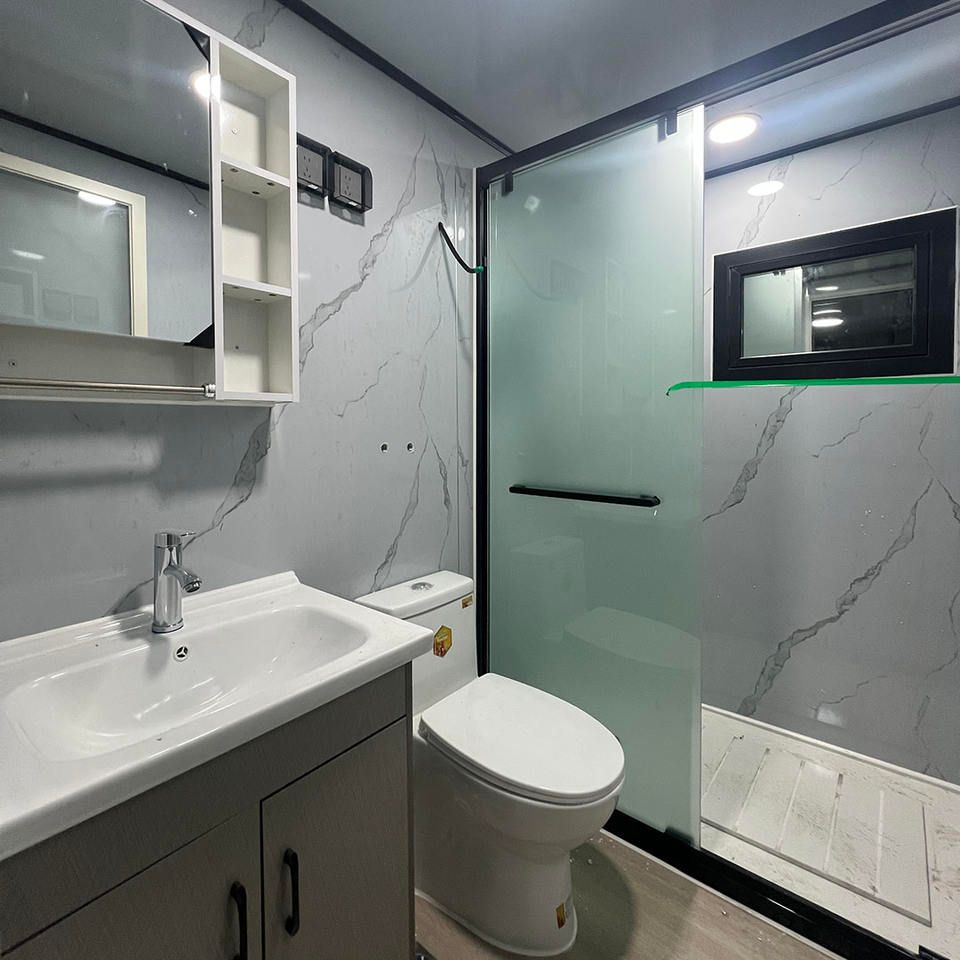
- Facility Configuration: Connect water and electricity pipelines, install sanitary facilities, air conditioners, and underfloor heating; some cases also integrate solar power generation and rainwater collection systems to enhance environmental performance.
- Decorative Design: Use materials such as bamboo and wood veneers and metal brushing to enhance the interior texture, and create a warm atmosphere through soft furnishings (such as green plants and calligraphy and paintings).
4. Cost and Industrial Chain Support
Renovation costs vary by scale and configuration:
- Basic Renovation: The renovation cost for a single container body is approximately 10,000 to 20,000 yuan, including structural reinforcement, water and electricity connection, and simple interior decoration.
- High-end Customization: For example, Shanghai's "Million-Dollar Luxury Container Building Complex" can cost tens of thousands of yuan per container body, featuring five-star hotel-standard decoration and equipped with facilities such as swimming pools and bars.
- Industrial Chain Maturity: China has formed a complete industrial chain from the recycling, renovation, sales, and leasing of second-hand containers. Professional companies can provide integrated services of "design-construction-transportation," reducing renovation difficulty.
5. Typical Application Scenarios
- Temporary Housing: Suitable for scenarios such as construction sites and post-disaster reconstruction, offering rapid setup and low cost.
- Creative Spaces: Cafes, youth hostels, art studios, etc., attract young groups through personalized design.
- Cultural and Tourism Projects: Such as the "Bamboo Language Mountain House" homestay in Mogan Mountain, which combines natural landscapes to create a unique accommodation experience and enhance added value.



