
Rural Self-Living Precast Concrete House
A rural self-living precast concrete house is a building form that adopts standardized factory production and on-site assembly construction, featuring a stable structure, a short construction period, and relatively affordable prices.
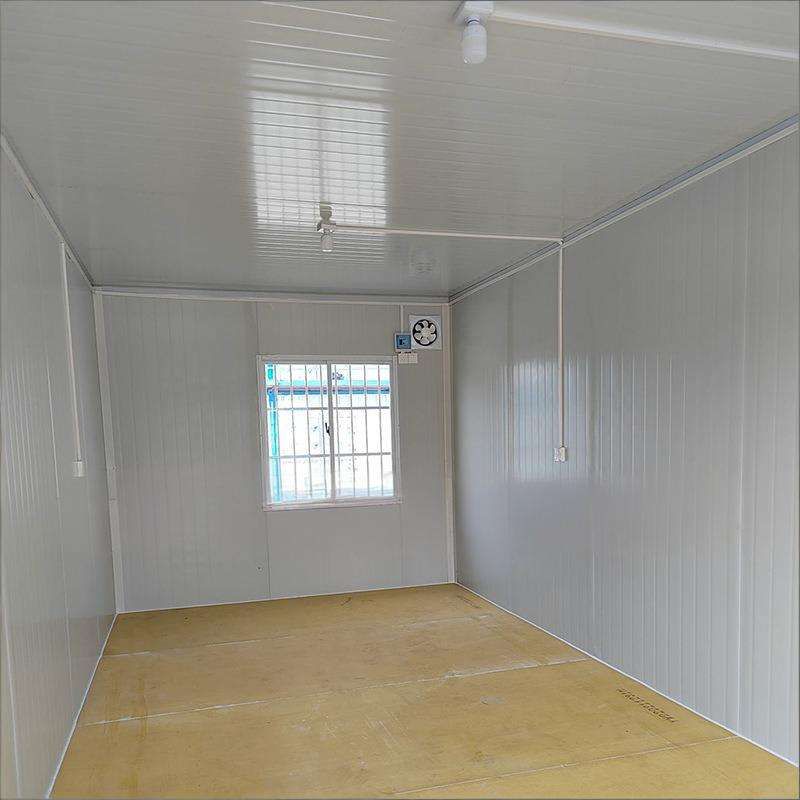
I. Structural and Production Characteristics
Rural self-living precast concrete houses are constructed with a full reinforced concrete structure. The wall thickness is uniformly 15 centimeters, and the floor height can be customized between 3 meters and 3.6 meters according to needs, with the maximum length of a single room reaching up to 10 meters. The production process is completed in the factory, including reinforcing bar binding, formwork assembly, concrete pouring, steam curing, and other steps, with demolding and hoisting possible the next day. This standardized production method ensures the consistency of component quality while avoiding the impact of adverse weather conditions on on-site construction. For example, precast concrete houses used in rural areas of Henan weigh about 30 tons each, have a stable structure, and can have a residential lifespan of up to 70 years.
II. Construction Efficiency and Advantages
The on-site construction of precast houses is mainly assembly-based, significantly shortening the construction period. Taking Henan as an example, a villa can be built in as fast as four hours, and the main structure of a building can be completed in two days; in rural areas of South Korea, the main structure can be assembled using precast components in 14 days. This efficiency advantage stems from the combination of factory prefabrication and on-site assembly, reducing wet work processes in traditional construction and lowering dependence on manual labor. Additionally, the construction of precast houses is not restricted by weather conditions such as rain, snow, or strong winds, further ensuring the controllability of the construction schedule.
III. Price and Regional Differences
The wholesale prices of precast houses vary depending on the region, manufacturer, and specifications. For example, the price in Xuzhou, Jiangsu, is 500 yuan per square meter; in Jining, Shandong, there are two price options of 500 yuan per square meter and 260 yuan per square meter; in Shijiazhuang, Hebei, options of 400 yuan per square meter and 210 yuan per square meter are available. Taking Henan as an example, the total cost of a large villa can be controlled at around 100,000 yuan, offering significantly better cost-effectiveness compared to traditional brick-concrete structure houses. Price differences mainly stem from material costs, transportation distances, and manufacturer pricing strategies, allowing users to choose appropriate plans based on their budget and needs.
IV. Typical Cases and Technical Details
The precast houses in rural areas of South Korea use 5-ton foundation piles fixed with base plates. The beams are quickly connected using mortise-and-tenon joints, and the stairs are hoisted like building blocks. Finally, a 5-centimeter-thick floor slab is laid, and the gaps are grouted. This design balances structural strength and construction convenience, providing a lightweight solution that can be referenced for rural self-built houses.



