
Is It Easy to Install Rural Mobile Toilets?
The installation of rural mobile toilets is relatively simple, but it requires adaptive adjustments based on the type and site conditions. The installation process is clear, but it must meet structural safety and environmental adaptability requirements, which can be analyzed from the following aspects:
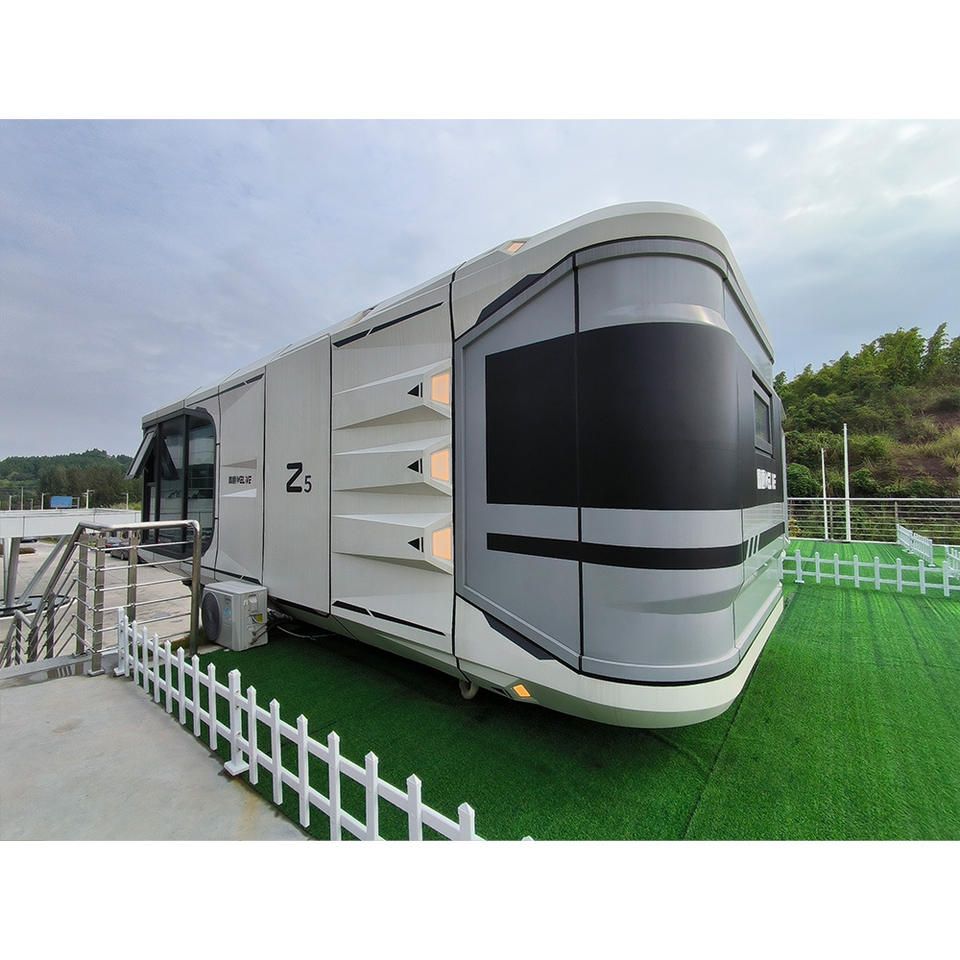
I. Advantages of Installation Convenience
Mobile toilets are usually purchased as finished products, and the installation process does not require complex underground engineering. For example, some models of mobile restrooms have pre-installed internal plumbing, and they can be used simply by connecting external interfaces after arrival, offering high flexibility and suitability for temporary events or areas with high population mobility. The core installation step is to select a flat site for placement, eliminating the need for large-scale civil construction and enabling quick commissioning.
II. Site Condition Requirements
Before installation, an adaptive assessment of the site is required, including:
- Foundation Conditions: The site must be level to avoid structural instability due to ground inclination; the soil bearing capacity must meet the self-weight of the toilet and the applied load to prevent settlement or tilting.
- Pipeline Distribution: The distribution of underground pipelines (such as water pipes and cables) must be measured in advance to avoid damaging existing facilities during installation.
- Sewage System: For types that need to be connected to municipal sewage networks or independent septic tanks, sewage pipelines must be laid and sealed in advance to ensure smooth drainage; environmentally friendly mobile toilets (such as waterless flush types) do not need to be connected to underground sewage pipelines, but the tank must be stably placed on a prefabricated base or adjustable supports.
III. Technical Specifications and Commissioning
- Fixing Methods: The fixing method should be selected based on the type of toilet. For environmentally friendly toilets that do not need to be connected to sewage pipelines, the tank must be fixed to the base using bolts or welding; for types that need to be connected to the network, the sealing of pipeline connections must be ensured to prevent leakage.
- System Commissioning: After installation, the water, electricity, and ventilation systems must be commissioned to ensure that lighting, flushing, exhaust, and other functions operate normally; for intelligent mobile toilets, sensors and automatic control systems must also be tested.
IV. Differences in Applicable Scenarios
For temporary events (such as fairs and exhibitions), lightweight mobile toilets can be chosen for their short installation cycles; for long-term use in rural public toilets, it is recommended to select models with more stable structures and equip them with septic tanks or connect them to municipal sewage networks to reduce later maintenance costs.
Overall, the installation process for rural mobile toilets is clear, but it must be carried out in combination with site conditions and technical specifications. Through scientific planning, efficient and safe deployment can be achieved.



