
Mobile Toilet on Rooftop Terrace
Mobile toilets can be installed on rooftop terraces, but multiple factors need to be comprehensively considered to ensure feasibility and safety.
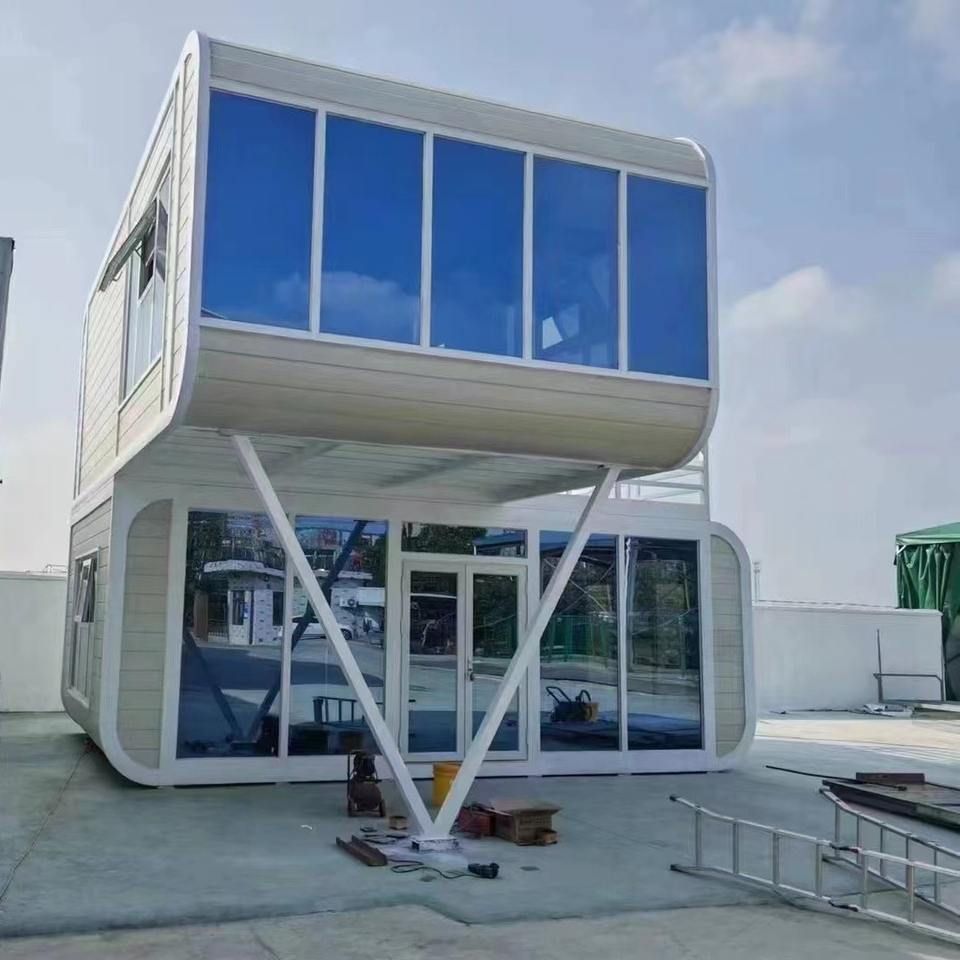
I. Basic Applicability of Mobile Toilets
The core advantage of mobile toilets lies in their mobility, allowing them to be flexibly arranged in fixed or temporary locations according to needs. They were originally designed to serve construction sites, exhibitions, scenic spots, and other scenarios. For example, construction sites can configure mobile toilets with different numbers of squatting positions based on the male-to-female ratio, demonstrating their ability to adapt to different spaces and usage requirements. As an open area of a building, if a rooftop terrace has temporary or long-term usage needs (such as for events, construction, or the lack of a fixed restroom), mobile toilets can theoretically be installed, but specific conditions need to be further evaluated.
II. Key Conditions for Installing Mobile Toilets on Rooftop Terraces
Structural Load-Bearing and Stability
The ground of the rooftop terrace must have sufficient load-bearing capacity to support the weight of the mobile toilet (including internal facilities and sewage storage devices). If the terrace has a lightweight structure (such as wooden or thin-layer concrete), professional structural testing is required to confirm safety and avoid the risk of collapse due to excessive loads.Sewage Disposal and Water-Electricity Support
The sewage disposal method of the mobile toilet must match the conditions of the terrace. If a “packaged” toilet (which does not require external sewage disposal) is chosen, the fecal storage tank needs to be regularly cleaned. If a “direct-discharge” or “circulating-water” type is used, it needs to be connected to a sewer pipe or an independent sewage treatment system. In addition, some mobile toilets require an external power supply (such as for lighting and ventilation equipment), so the convenience of the terrace's power supply needs to be evaluated.Environmental and Aesthetic Coordination
As an open space, the appearance of the mobile toilet on the terrace needs to be in harmony with the architectural style to avoid affecting the overall aesthetics. Customized designs (such as shells that match the material and color of the terrace) can be chosen, or visual impact can be reduced through measures such as green plants and fences.
III. Potential Risks and Countermeasures
Referring to the case where a mobile toilet fell into a sinkhole during the renovation of a luxury house, the following risks need to be guarded against:
- Installation Location Selection: Avoid areas at the edge of the terrace, weak structural areas, or areas with underground cavities. Conduct geological surveys before installation.
- Fixing and Wind-Resistance Measures: Fix the toilet with ground anchors, counterweights, etc., to prevent overturning caused by strong winds.
- Regular Maintenance and Inspections: Establish an inspection system to ensure structural stability and normal operation of the sewage disposal system, and avoid accidents caused by equipment aging or improper operation.
IV. Alternative Solution Suggestions
If the conditions of the rooftop terrace are limited (such as insufficient load-bearing capacity or difficulties in sewage disposal), the following alternative solutions can be considered:
- Use portable toilets (such as folding toilets + biodegradable bags), which are suitable for short-term and low-frequency use.
- Set up a fixed restroom on a nearby floor of the terrace and guide usage with directional signs.



