
Rooftop Container Glass House
A rooftop container glass house is a modular building that combines container structure with glass curtain wall design, commonly used in spaces such as rooftops and terraces, offering functionality, aesthetics, and flexibility.
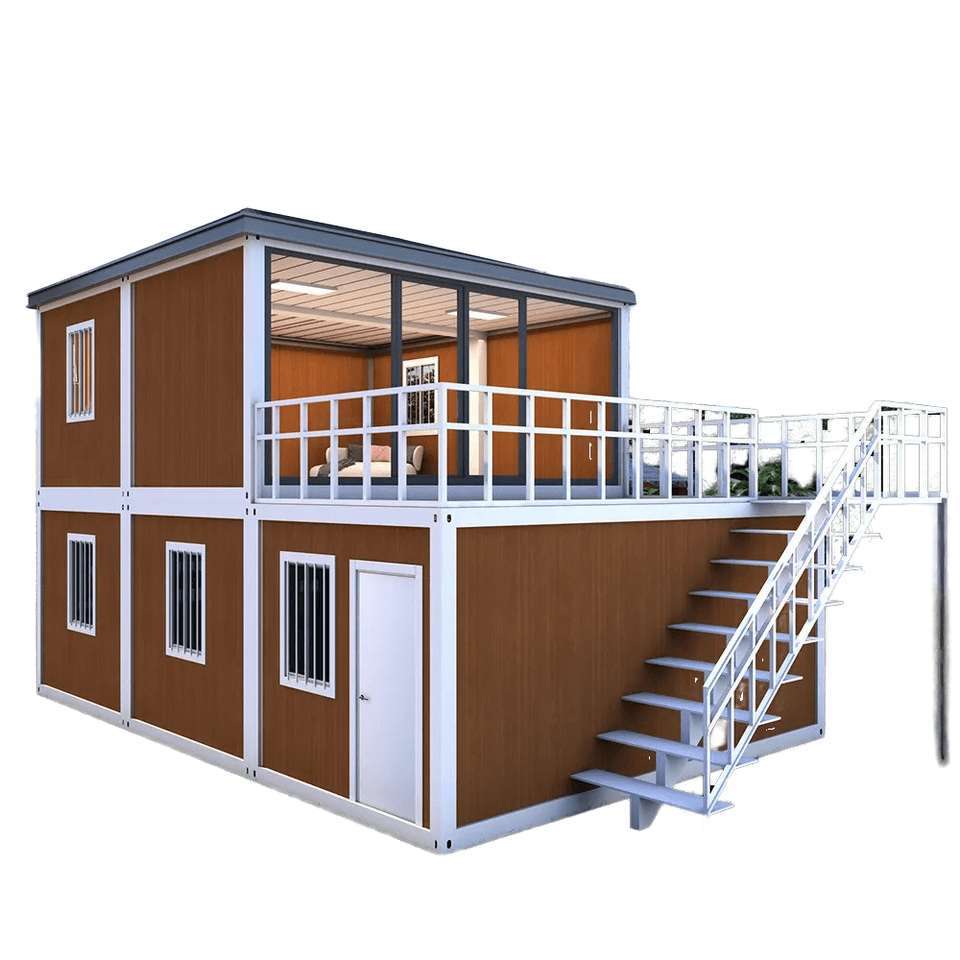
I. Core Features
Modular Structure
Built on standard shipping containers as the base, reinforced with steel structural frames to ensure overall stability. The standardized dimensions of containers (e.g., 20 feet, 40 feet) facilitate easy transportation and rapid assembly, making them suitable for limited spaces like rooftops.Glass Curtain Wall Design
Large areas of tempered or insulated glass are used as walls, achieving seamless integration between indoor and outdoor spaces. The glass curtain wall provides natural lighting and expansive views, while also enabling functional expansions (e.g., shading, power generation) through smart dimming blinds or photovoltaic glass.Flexibility and Customizability
Dimensions, layouts, and functional modules (e.g., offices, sunrooms, leisure areas) can be customized according to needs. Some designs support multi-level stacking or connection with external structures (e.g., circular walkways) to form composite functional spaces.
II. Application Scenarios
Residential and Office Use
- Case Study: The YOU+ International Youth Community in Shenzhen utilizes container combinations to create functional areas such as book bars, kitchens, and cinemas, connecting indoor and outdoor spaces with glass doors to form a multifunctional public area.
- Advantages: Low cost and rapid deployment, suitable for temporary or mobile office needs.
Commercial and Leisure Use
- Case Study: Shanghai's "Geometric Community System" connects rooftop spaces through container renovations to form an urban complex.
- Advantages: Modular design supports commercial forms such as pop-up stores and open-air cafes.
Ecological and Sustainable Design
- Case Study: German companies adopt integrated photovoltaic curtain wall technology, with annual power generation meeting 70% of office needs; some designs achieve natural ventilation through operable glass domes, reducing energy consumption.
- Advantages: Aligns with green building trends and reduces reliance on traditional energy sources.
III. Cost and Advantages
Economy
Compared to traditional buildings, container glass houses can save over 60% in construction costs, with lower material and labor costs.Construction Efficiency
Modular design supports rapid assembly and disassembly, suitable for project-based teams or temporary event needs (e.g., construction site offices, exhibition halls).Aesthetics and Functionality
The glass curtain wall enhances spatial transparency, while the contrast between the metal shell and glass creates a modern industrial aesthetic, meeting practical needs such as lighting and ventilation.



