
Ready-to-Live Container House
The "ready-to-live" container house is a real entity and has been applied in multiple scenarios. The following elaborates on its technical implementation, application scenarios, and advantages:
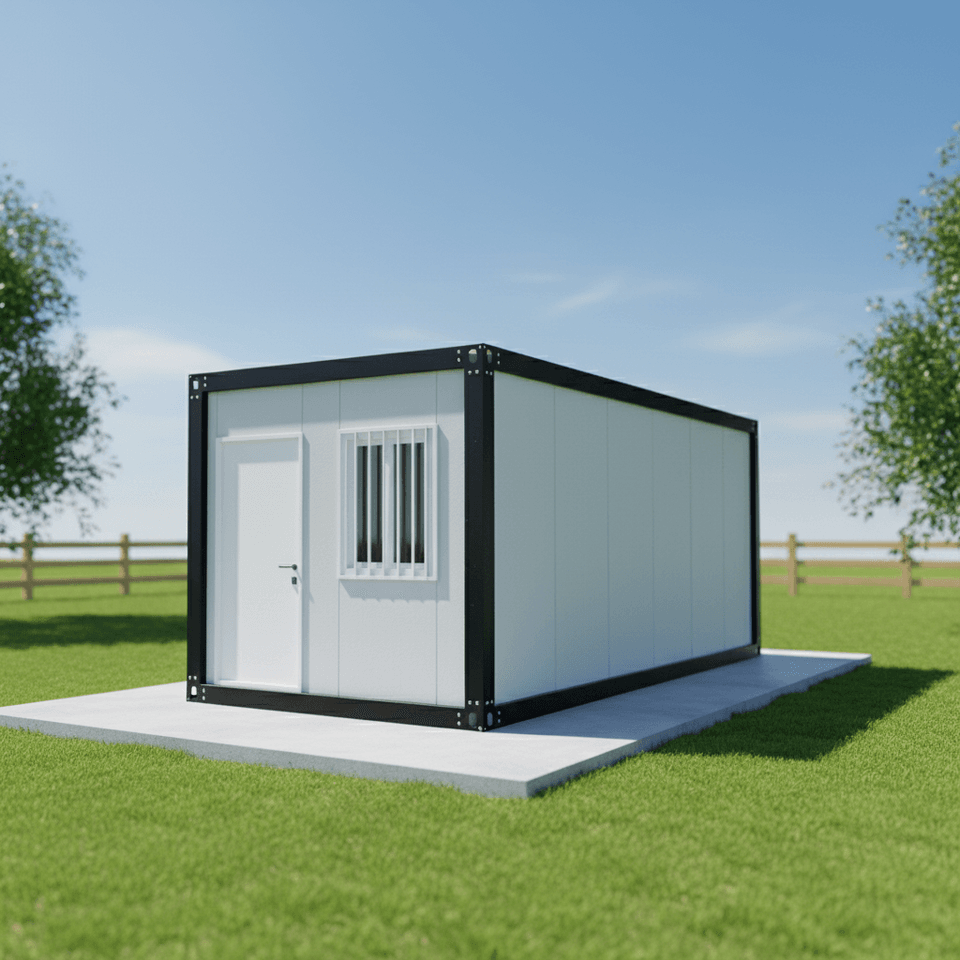
I. Technical Implementation: Modular Design and Factory Prefabrication as the Core
The "ready-to-live" feature of container houses stems from the concept of modular design. Taking the modular houses produced by "Shenshan" as an example, the entire building is divided into independent "room modules". In the factory, steel structure frame welding, wall and roof panel prefabrication, pre-embedding of water and electricity pipelines, and integration of interior soft furnishings (such as floors, lighting fixtures, and bathrooms) are completed. After the modules arrive at the site, only the overall framework needs to be constructed using steel structure roof trusses, and the water and electricity connections are made for occupancy. The entire process is similar to "building with blocks". In addition, foldable container technology further optimizes transportation and installation efficiency. For example, the product of Suzhou Zhongnan Steel Structure Co., Ltd. has a volume that is only 1/5 of its expanded state when folded. A single truck can transport 20 sets, and it takes only 5 minutes to expand on-site, significantly shortening the deployment time.
II. Application Scenarios: Covering Emergency, Temporary, and Long-term Residential Needs
- Emergency Support Scenarios: Due to their portability and low cost, foldable containers have become the first choice for rapid resettlement after earthquakes, floods, and other disasters. For example, in an emergency rescue project transported from Suzhou to Wuhu, Anhui, the product of Suzhou Zhongnan has a transportation cost as low as 150 yuan per set, and an 100㎡ warehouse can store 80 sets, meeting the needs of large-scale deployment.
- Temporary Turnaround Scenarios: In scenarios such as construction site dormitories and temporary offices, the rapid assembly feature of container houses can significantly shorten the construction period. Manufacturers in Shenzhen, Dongguan, and other places offer "quick-assembly packing container houses" that support 72-hour delivery and 24-hour installation.
- Long-term Residential Scenarios: By optimizing the structure and materials, container houses can now meet long-term use requirements. For example, modular houses with steel frames and flame-retardant rock wool sandwich panels integrate heat preservation, fire prevention, sound insulation, and waterproofing, and can be repeatedly disassembled and relocated, making them suitable for cultural tourism homestays, elderly care residences, and other scenarios.
III. Advantages: Balancing Efficiency, Cost, and Environmental Protection
- Efficiency Improvement: The factory prefabrication and on-site assembly model shortens the construction period by more than 50% compared to traditional methods. For example, in an Australian project, it takes only a few days from arrival to occupancy.
- Cost Control: Mass production reduces unit costs, and the reusable disassembly and assembly feature reduces construction waste and secondary investment. For example, in emergency scenarios, the storage cost of foldable containers is 30%-50% lower than that of traditional portable panel houses.
- Enhanced Environmental Protection: Modular construction reduces on-site wet operations, significantly reducing dust and noise pollution. Moreover, steel and sandwich panel materials can be recycled, aligning with the trend of green buildings.
In conclusion, through modular design, factory prefabrication, and standardized installation, container houses have achieved a convenient "ready-to-live" experience and demonstrated significant advantages in terms of efficiency, cost, and environmental protection, becoming an important innovation direction in the modern construction field.



