
Rapid Construction Prefabricated Houses
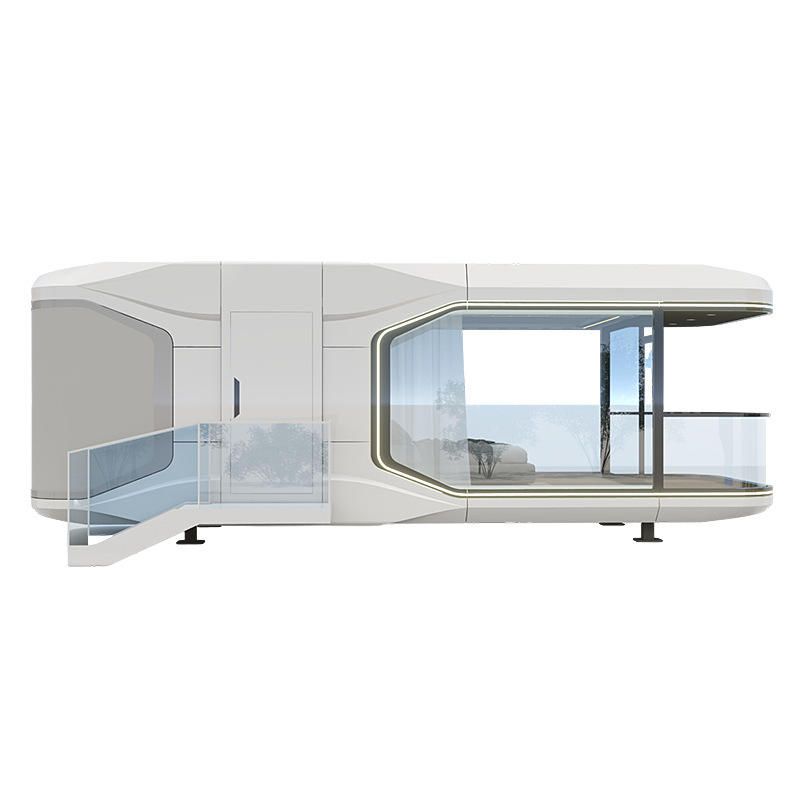
Prefabricated houses for rapid construction are a building model that involves disassembling a building into independent modules, manufacturing them in a factory, and then transporting them to the construction site for assembly.
Construction Process
The construction processes of prefabricated houses vary across different regions. Taking rural areas in South Korea as an example, the process starts with leveling the foundation and pouring a cushion layer. After excavating the foundation pits, a white plastic sheet is laid, and a non-reinforced foundation is poured using a concrete pump truck. Once the concrete has set, anchor plates are installed, and foundation piles weighing about 5 tons are installed using a mobile crane. Beams are installed like building blocks and secured with nuts. The gaps are filled with expanding foam, the nut-fixing points are sealed with cement, and finally, the soil is backfilled to complete the frame structure.
In China, in the new energy factory building in Wujin District, Changzhou, Jiangsu, a fully furnished house adopts lightweight aggregate concrete prefabricated construction. After 90% of the fine decoration is completed in the factory, it is delivered and completed in just 7 days, with all utilities and kitchen and bathroom facilities in place. In the China Construction Hailong Intelligent Construction Industrial Park in Shenzhen, Guangdong, the ceilings, walls, and waterproof layers of bathrooms in houses are all manufactured in the factory, and the park can deliver 20,000 to 30,000 modular buildings annually.
Advantages
- Short construction period: Compared to traditional buildings, the construction period of prefabricated houses is significantly shortened. For example, the modular buildings in the China Construction Hailong Intelligent Construction Industrial Park in Shenzhen, Guangdong, can have their construction period reduced by more than 60%; the fully furnished house in Wujin District, Changzhou, Jiangsu, is completed in just 7 days.
- Controllable quality: Standardized production in the factory ensures the quality and precision of all parts of the building, reducing quality fluctuations caused by factors such as the on-site construction environment.
- Energy-saving and environmentally friendly: Centralized production in the factory reduces dust, noise, and other pollution from on-site construction. At the same time, material utilization is higher, reducing energy consumption.
- Easy maintenance: The modular design makes it more convenient to repair and replace parts of the house, reducing later maintenance costs.
Limitations
This model places extremely high demands on the industrial base, requiring a well-developed technical system, production system, and industrial cluster as support. Only with these conditions can large-scale, low-cost, and high-quality production be achieved, turning 'house building' into a standard industrial product export business.



