
Quick-Assembly Prefabricated Housing
Quick-assembly prefabricated housing generally refers to modular construction, where buildings are disassembled into independent modules, prefabricated in factories, and then transported to the site for assembly. The following provides an introduction from four aspects: construction mode, advantages, application scenarios, and technical support.
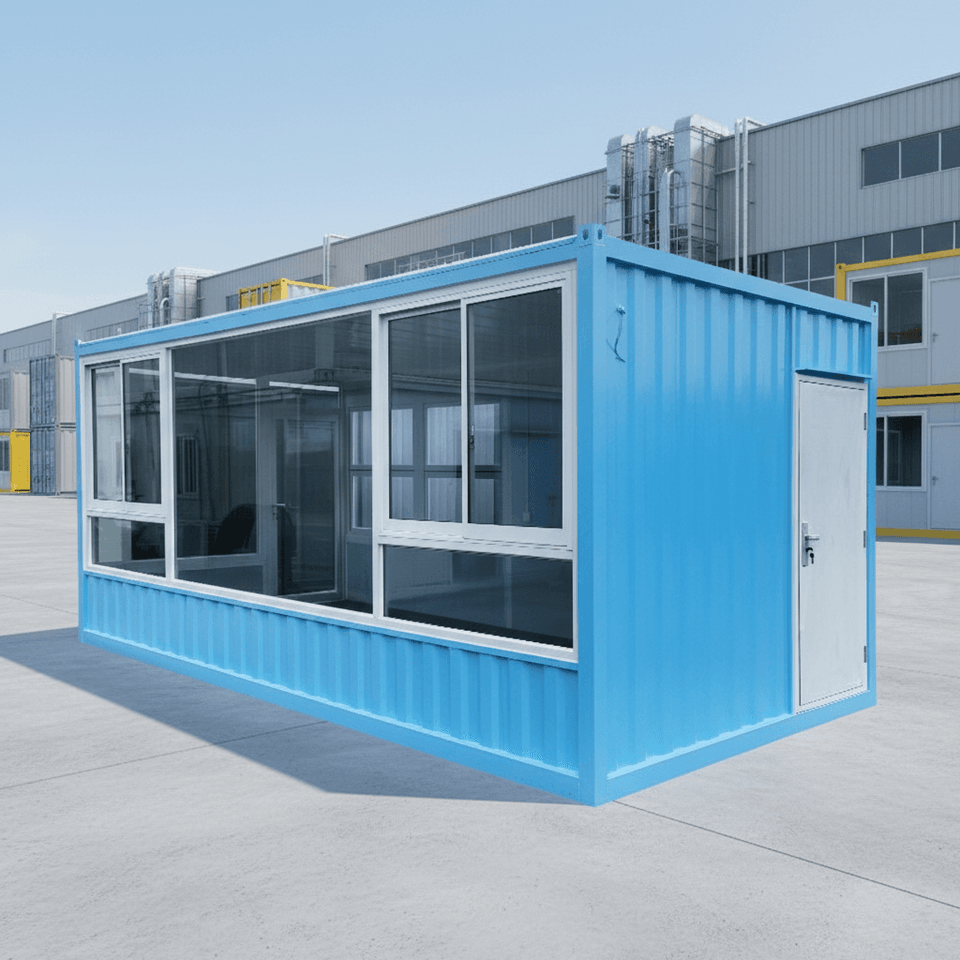
Construction Mode: The core of quick-assembly prefabricated housing lies in the combination of factory prefabrication and on-site assembly. Key components such as ceilings, floors, and water and electricity pipelines are prefabricated on factory assembly lines, and on-site construction is as fast as 'building blocks'. Some projects equip each module with a detailed 'ID card', marking project name, product model, production date, and other information, enabling full lifecycle traceability management. This mode transfers a significant amount of on-site work in traditional construction to factories, significantly improving construction efficiency.
Advantages:
- Short Construction Period: The construction period is reduced by more than 60% compared to traditional buildings. For example, the construction period of a public housing project in Shenzhen, Guangdong, was compressed from 2.5-3 years to 1 year; in a case in Henan, a 200-square-meter house could be assembled in just 4 hours.
- Controllable Quality: Factory production controls errors in millimeters, precisely positioning each steel bar, avoiding quality fluctuations in traditional construction.
- Environmental Protection and Energy Efficiency: Reduces on-site noise, dust, and construction waste, alleviating traffic congestion; adopts sandwich concrete composite exterior wall panels with excellent thermal insulation performance, achieving an energy efficiency level of 85%.
- Low Cost: The case in Henan shows that the cost per square meter is about 300 yuan, and the total cost of a 200-square-meter house is about 60,000 yuan, significantly lower than traditional buildings.
- Flexible Maintenance: For example, in the earthquake-recoverable quick-assembly multi-story and high-rise assembled steel structure system, beam-column joints and supports can detect damage after an earthquake, and only need to replace energy-dissipating components to restore functionality, reducing full lifecycle maintenance costs.
Application Scenarios: Quick-assembly prefabricated housing is suitable for scenarios such as residential buildings, dormitories, and office buildings, with a maximum height of 5 floors and a design service life of up to 50 years. For example, the assembled steel structure villa in Tangshan, Hebei, has verified its long-term durability.
Technical Support: This mode relies on the synergy of technical systems, production systems, and industrial clusters. Factories use welding manipulators, highly automated assembly stations, intelligent production lines, and other equipment to achieve high-precision manufacturing and rapid assembly of modular components, providing a guarantee for large-scale applications.



